
In the last post we wrote about the 304 stainless steel frame behind our lights. We ended with a small promise: every material in a light likes a little care. Today we keep that promise.
To clean light fixtures made from natural materials, you need a soft, dry cloth, a soft brush and a gentle hand. Glass is the one material that takes a damp cloth.
Our lights are made from real stone, wood, fibre and glass. Of our 453 lights, 142 use natural stone, 86 use wood, 22 use plant fibre and 169 use borosilicate glass. None of them needs a special cleaning product.
In this post we take each material in turn. We give the same advice on our product pages.
One simple rule cares for every material
Every material we use came from nature. Stone formed in the earth. Wood grew for years. Cane and jute grew from the soil. A light made from them stays beautiful when you treat it gently.
Our rule has three parts. First, switch the light off and let it cool. Next, dust it with a soft, dry cloth or a soft brush. Last, keep water, acid and strong cleaners away.
Strong cleaners are made for tiles and kitchen counters. On a natural material, they can dull the surface or leave a mark that stays.
A light dusted once a month stays clear in most rooms. Dust on a lit shade shows more than dust on a table, so a quick wipe keeps the glow clean.
Knowing how to clean light fixtures starts with this rule. Each material then asks for one small extra step. We start with stone.
Stone wants a dry cloth and no acid
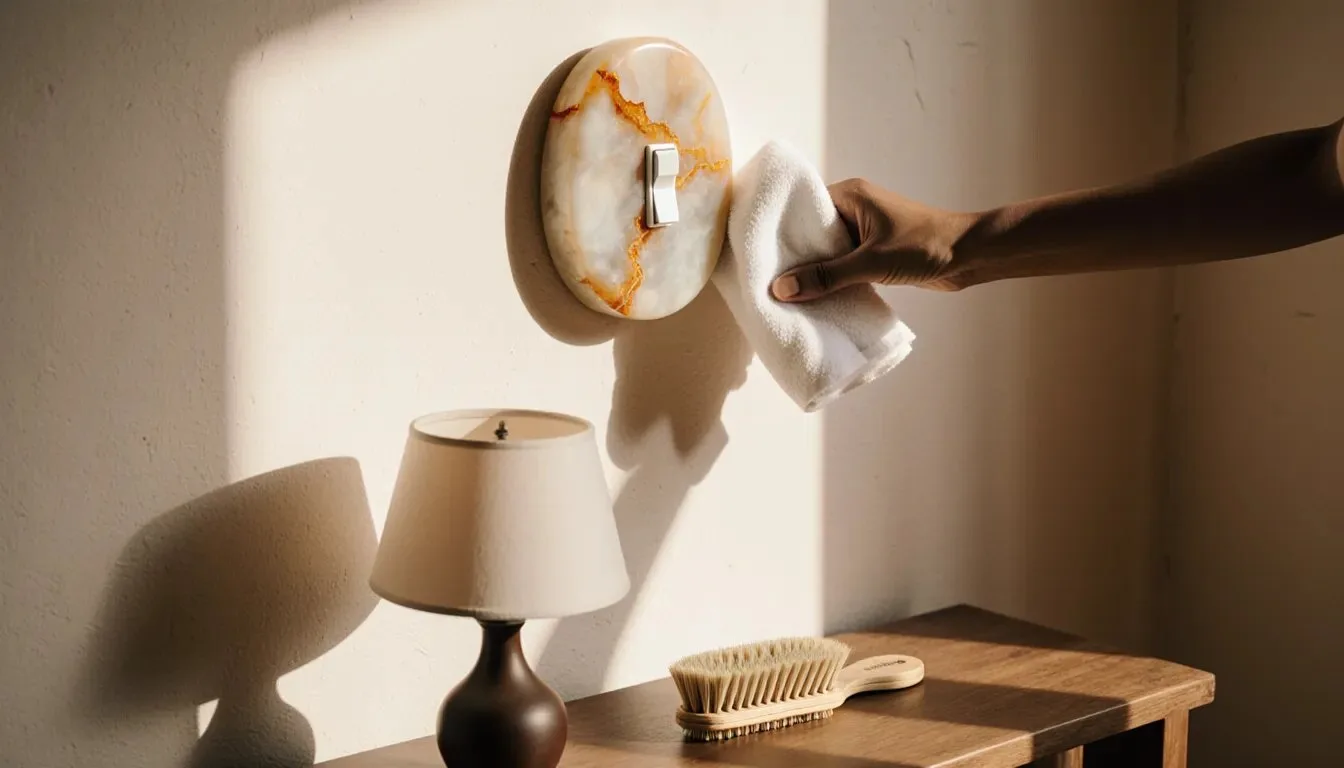
Alabaster is a soft stone. A fingernail can scratch it. Alabaster also dissolves very slowly in water, so water can leave a dull patch on its polished face.
So we clean alabaster only with a soft, dry cloth. No water, no spray. Our guide on how to clean alabaster gives every step.
Travertine and marble are harder stones, but acid harms them. Lemon juice, vinegar and many bathroom cleaners carry acid. Acid eats into the stone and leaves a pale, dull spot. Stone workers call that spot an etch.
For travertine, dust the stone. For a mark, use a soft cloth that is only slightly damp, then dry the stone straight away.
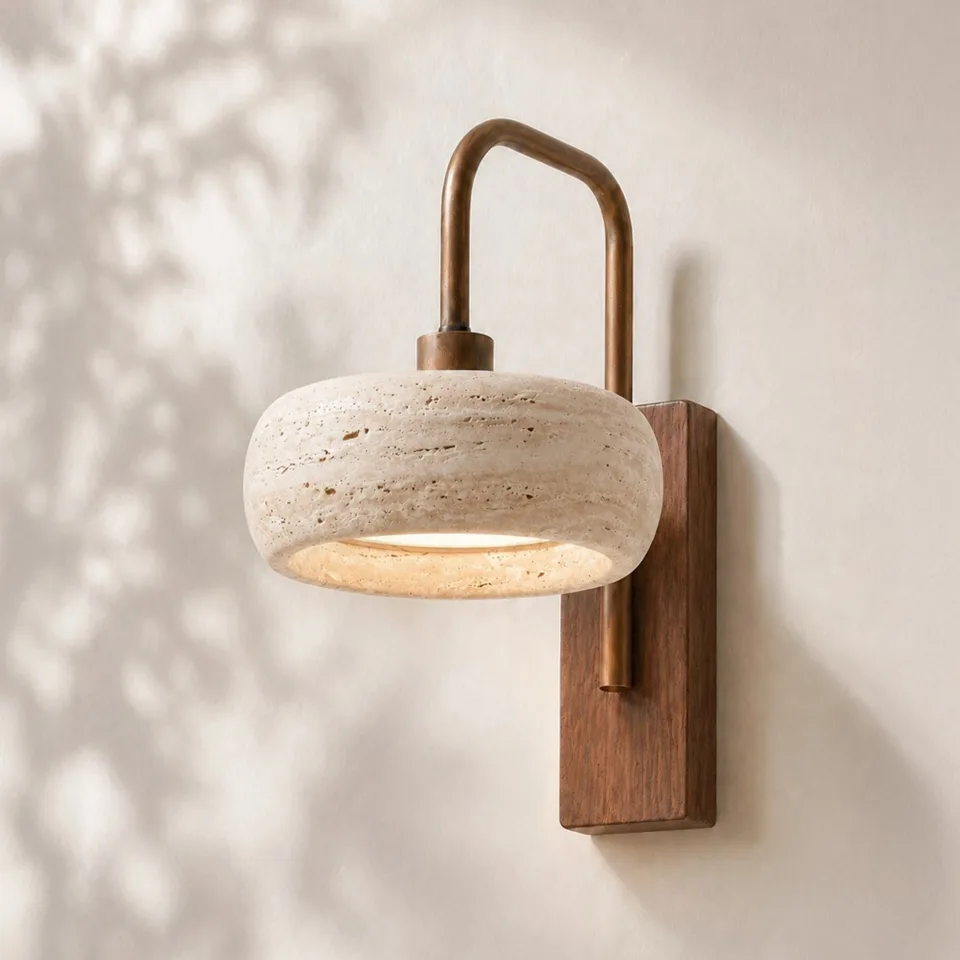
Our travertine gooseneck wall light joins two natural materials. A 20 cm drum of real travertine hangs from the arm, and you can choose a walnut wood backplate. One soft, dry cloth cares for both.
The walnut on that light brings us to wood.
Wood and fibre stay well when they stay dry
Wood takes in water from the air and gives it back. Too much water makes wood swell, and the surface can mark. So we dust wood with a soft, dry cloth and keep it away from damp.
We make our wooden lights for dry rooms indoors. A bathroom or a wet outdoor wall is not the place for them.
Cane, rattan, bamboo, jute and rope are plant fibres. Dust settles in the small gaps of the weave, and a cloth alone misses it. A soft, dry brush reaches into the weave. A vacuum cleaner with a brush head, on low power, works too.
Never wash a woven shade or wipe it wet. Water can stretch the weave out of shape and let mould grow in the gaps.
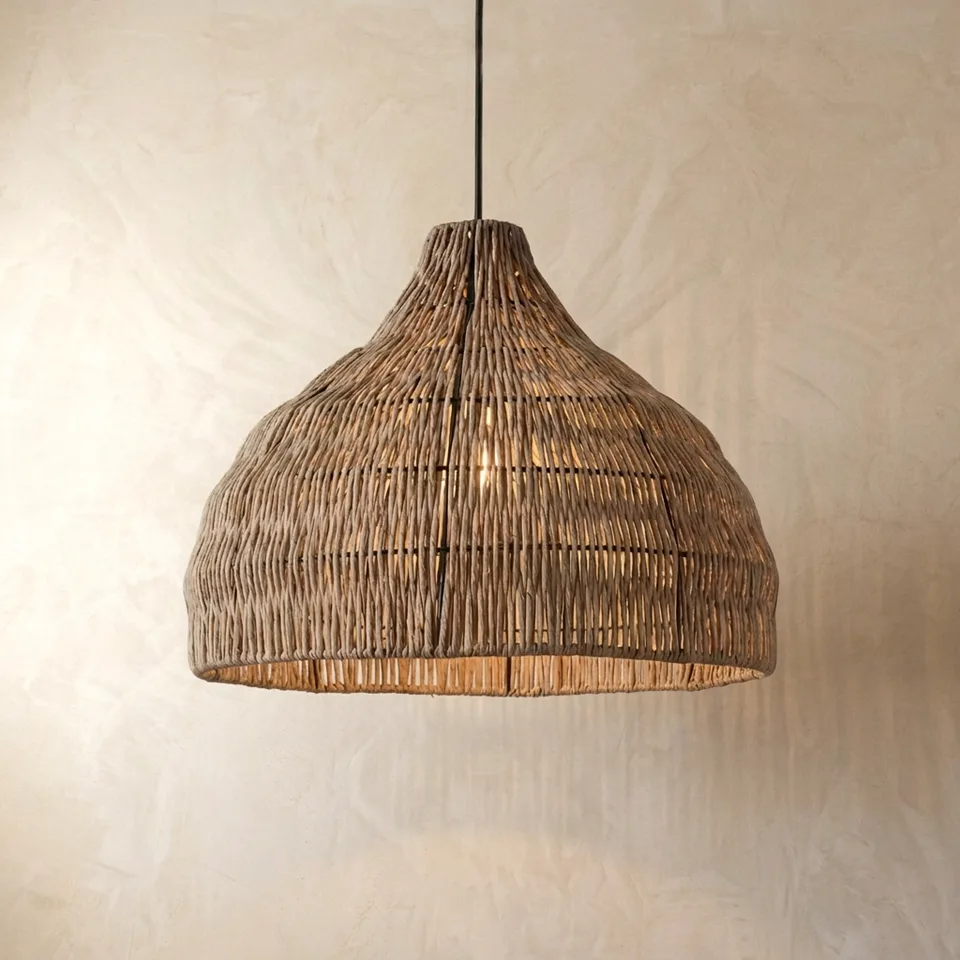
Our woven rope dome pendant light shows why the brush matters. Our craftsmen lay the rope row by row over a 40 cm frame. A soft brush follows the same rows and lifts the dust out.
Linen and cotton shades follow the same rule: dust them gently and keep them dry. Our guide on how to clean lamp shades covers fabric in detail.
Glass is different. Glass is the one material in our lights that takes a little water.
Glass is the one material that likes a damp cloth
Our glass is borosilicate glass, and water does not harm it. Switch the light off and let the glass cool first. Then wipe it with a soft cloth dampened in mild soapy water, and dry it.
A glass bowl that faces up collects dust inside. Lift the bowl out and wash it in warm water once or twice a year.
K9 crystal needs only a dry microfibre cloth. Microfibre is a cloth of very fine threads, and it lifts dust without leaving lines.
When you clean a light, you spend a few minutes close to the material. You see the veins in the stone and the grain in the wood again. We like that. Care is part of living with a real material.
Our craftsmen spend hours shaping each piece by hand. A few minutes of gentle care keeps their work looking the way it left our factory. In the next post, we take you inside that factory in India.
FAQs
How do you clean light fixtures made from natural materials?
Switch the light off, let it cool, and dust it with a soft, dry cloth or a soft brush. Keep water, acid and strong cleaners away; only glass takes a damp cloth. Once a month is enough in most rooms.
Can I use water to clean an alabaster light?
No, keep water away from alabaster. Alabaster is a soft stone that water can mark, so wipe it only with a soft, dry cloth.
Which cleaners should I avoid on natural materials?
Avoid acid cleaners such as lemon juice or vinegar, and strong chemical sprays. They can dull stone, mark wood and harm a woven shade.
Nature gives the material.
Human hands give it meaning.
Vastu inspires harmony.
Light brings it to life.
That is JagMag.
With you.
Read next: Inside our lighting factory: from a block of teak to a finished light
See real stone and wood together: browse our wall lights →