
Natural wood is real wood cut from a tree, not a print or paint that copies it. Its grain makes every piece different. Today 84 of our 453 lights use natural wood.
In the last post we showed how marble and travertine take their pattern from the earth. Wood gets its pattern in a different way. A tree adds it year by year, as it grows.
We call that pattern the grain. Natural wood brings its grain into our lights, and warm light brings the grain forward.
In this post we explain what wood grain is, how our craftsmen keep it, and what light does with it. Nature gives the material, and human hands shape it. Wood shows that idea from our story very clearly. You will see it in many of our decorative lamps.
The grain is a record of how the tree grew
Every year, a tree adds a new layer of wood just under its bark. In spring the tree grows fast. The new wood is light in colour and open.
Later in the year, growth slows. The new wood turns smaller, denser and darker. One light band and one dark band make one ring. A ring stands for one year of growth.
Cut the wood, and these rings show as lines. Those lines, together with the direction of the wood’s fibres, make the wood grain.
The wood also changes from the outside in. The inner wood, called heartwood, is usually darker. The outer wood, called sapwood, is lighter.
No two trees grow in the same way. So no two pieces of natural wood carry the same grain. Our craftsmen work with that fact, not against it. We see natural variation as character, not a flaw.
We name the wood, and we keep it real
Teak and walnut are the woods you will see most in our lights. Each one brings its own grain. Pendants lead our wooden lights, then table lamps and wall lights.
Teak is a hardwood that grows slowly over many years. Its wood is dense, strong and long-lasting. Indian homes have valued teak for a long time. Walnut is darker, with a deep brown, wavy grain.
A few designs need sheets of thin wood pressed together, called plywood. Our slatted teardrop pendant is made of birch plywood, and its product page says so.
We never use a printed sheet or paint made to look like wood grain. A print repeats one picture on every piece. Real grain is new on every piece.
Our craftsmen turn, sand and oil the wood, and leave the grain alone
A craftsman in our own factory reads the grain before the first cut. He decides how the lines should run across the finished shape.
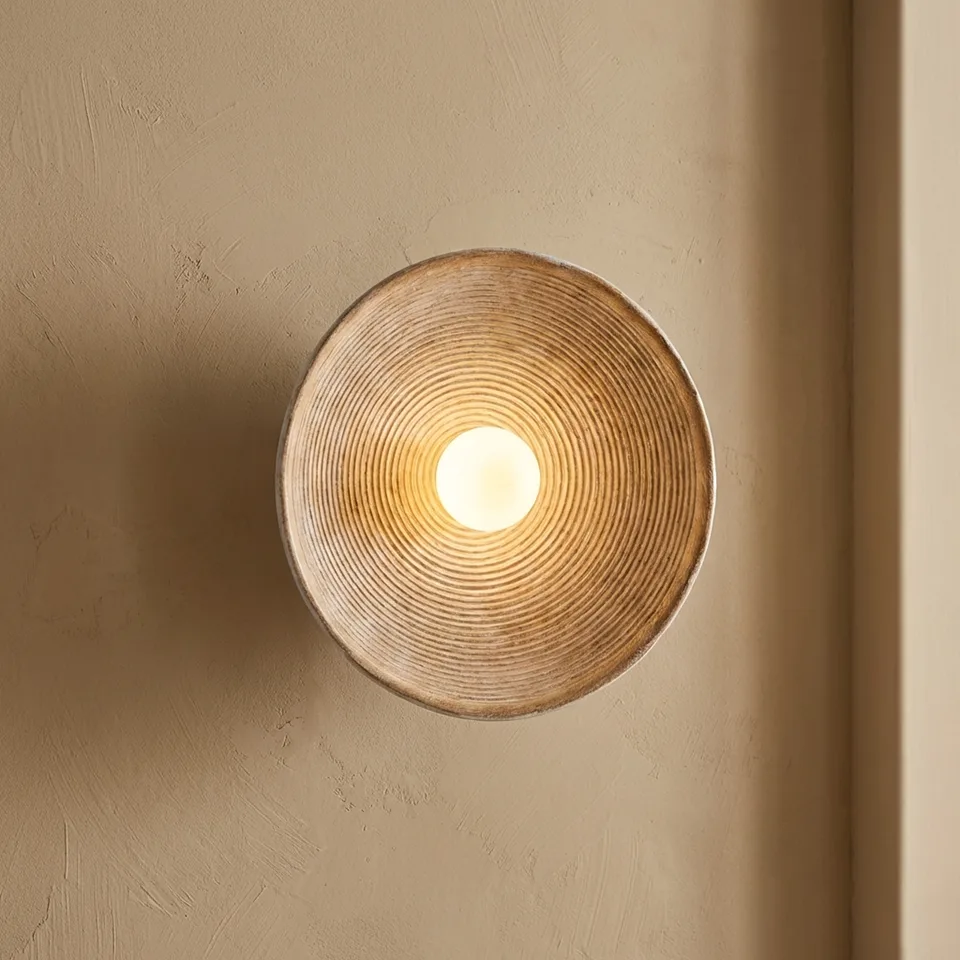
For our teak wood wall light, he sets a block of solid teak on the lathe. A lathe spins the wood while he shapes it with a cutting tool. He turns the bowl one ring at a time until it is 27 cm across.
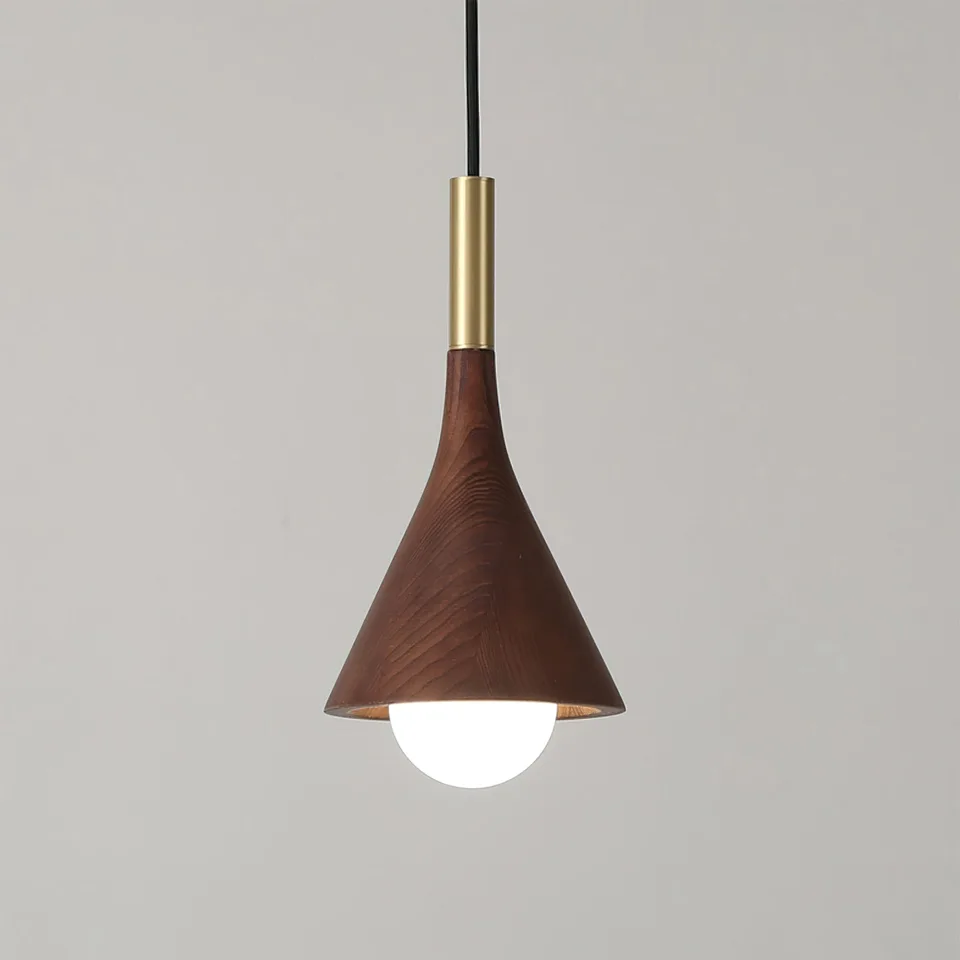
For our wood cone pendant light, he turns a cone of teak on the same lathe. He shapes the long neck and the wide flare. Then he smooths the wood and finishes it.
On our Arlo chandelier, he turns a block of teak into the hub, sands it smooth and oils it. The oil protects the surface and lets the grain show.
Behind every wooden piece are hours of patient human effort. The craftsman gives the wood its shape. The tree has already given it its grain.
Warm light brings the grain forward
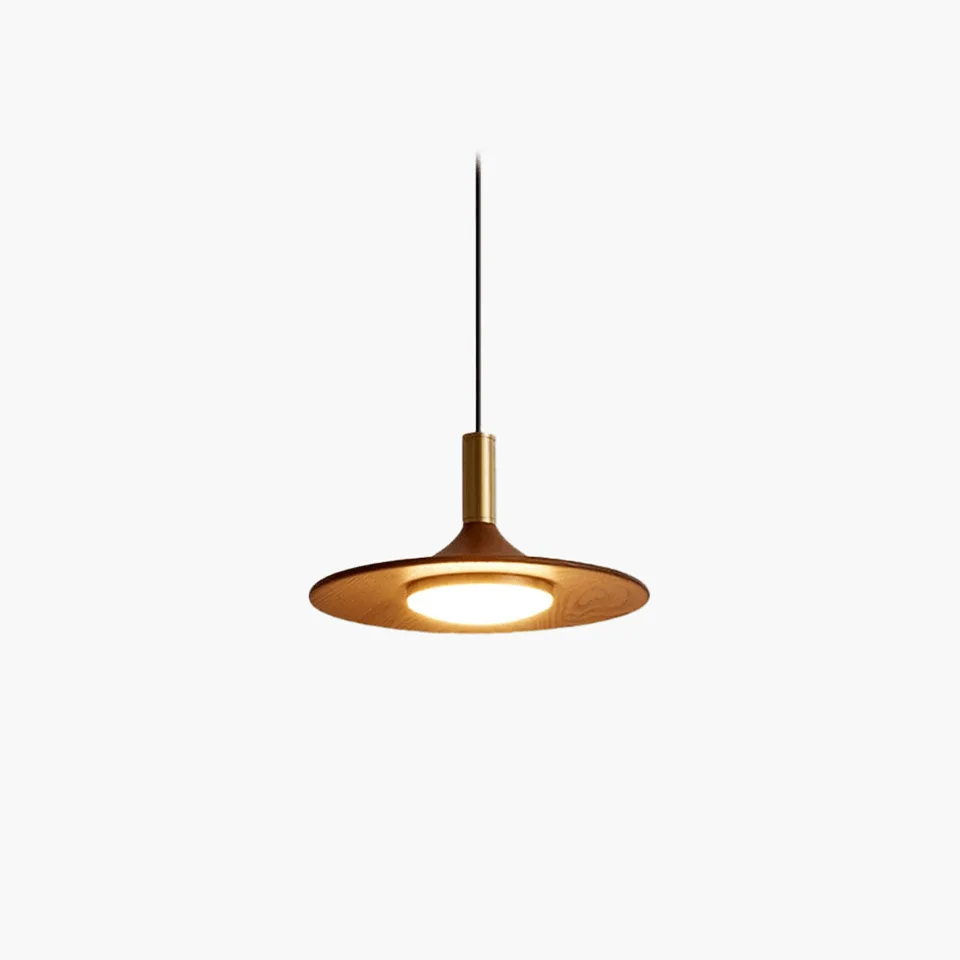
Switch on a wooden light and the grain changes. Our walnut wood pendant light is a 25 cm saucer of real walnut. Its built-in LED gives a warm 3000K light. The grain on top catches the spill of light and turns a deep honey brown.
On the teak wall light, the turned grooves glow gold. Wood and warm light belong together in our work.
Many people feel calmer in a room with natural wood. We feel it too, most of all in the evening. Natural wood also keeps a room close to nature, an idea Vastu thinking values. We take it as inspiration, not as a promise.
Wood grows from the soil over many years. Some plant fibres grow far faster, and we weave them by hand. In the next post, we turn to bamboo, cane, rattan and jute.
FAQs
What is wood grain?
Wood grain is the pattern of lines on cut wood. The lines come from the tree’s yearly growth rings and the direction of its fibres, so every piece of wood shows its own grain.
Which natural wood does JagMag use?
We mostly use teak and walnut. A few designs use birch plywood, and the product page says so.
Will my wooden light match the photo exactly?
Not exactly. The shape and size will match. The grain and tone will shift a little, because each piece is cut from its own piece of wood.
Nature gives the material.
Human hands give it meaning.
Vastu inspires harmony.
Light brings it to life.
That is JagMag.
With you.
Related: Sheesham wood vs teak wood, in numbers.
Read next: Natural fibres: bamboo, cane, rattan and jute in our lights
Bring warm wood into your room: explore our wooden and rattan table lamps →