
In the last two posts, we looked at two elements of Vastu: earth and fire. Earth gives a home weight. Fire gives a home light and warmth.
Now we bring these ideas into real rooms. Each room in a home has its own job. So each room asks for its own light.
In this post, we share our Vastu tips for lighting, room by room. We start at the front door and end at the pooja room. These tips belong to our story: how we think about light, inspired by Vastu.
The entrance welcomes you home
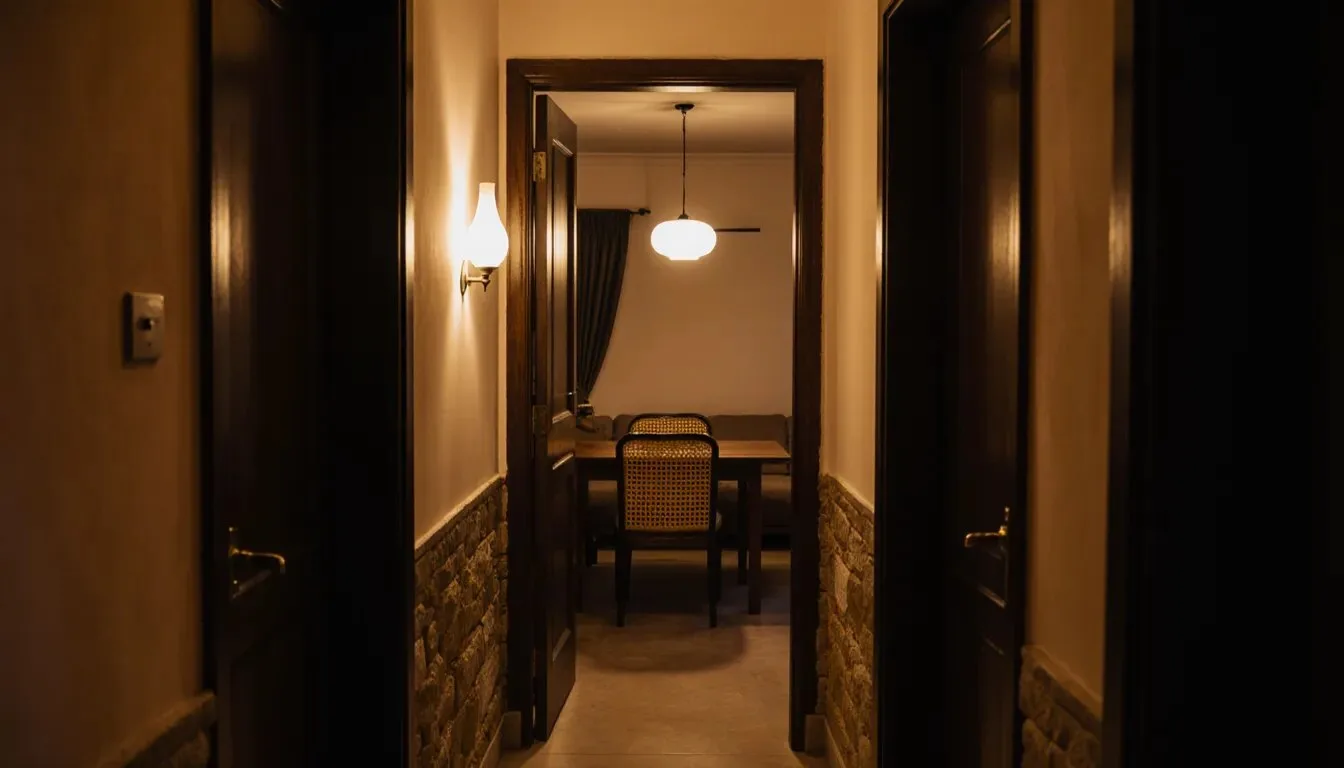
Vastu gives the main entrance special care. Vastu guides ask for a clean, well-lit door. A dark entrance feels closed. A lit entrance feels open.
A warm wall light beside the door does this job well. The glow falls on the door, the name plate and the step. You find your keys, and your guests find your door.
Keep the entrance light warm, not blue-white. A warm glow at the door greets your family at the end of the day. From the door, the light leads you inside.
The living room and the dining table bring the family together
The living room is where the family gathers. By day, Vastu values natural light from the east, through open windows. In the evening, warm light takes over.
We light a living room from more than one place. A chandelier or pendant lights the centre. Wall lights and lamps warm the edges. Vastu guides ask that no corner of a lived-in room stays fully dark.
For more on placement, read our Vastu guide to chandelier placement.
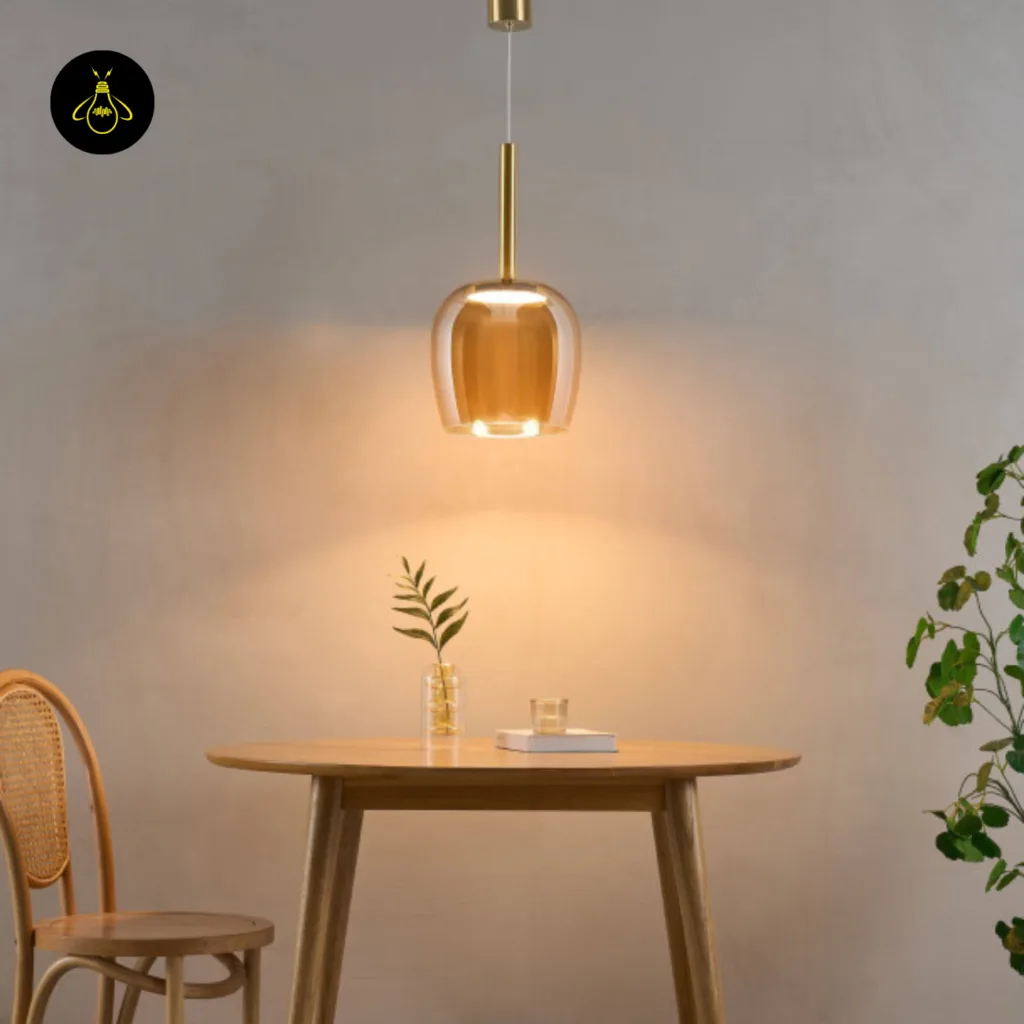
The dining table needs a light of its own. A pendant over the centre of the table pulls everyone into one warm circle.
Our amber bell pendant light does this job. Its 25 cm bell is amber borosilicate glass, blown into shape while hot. A built-in 3000K LED glows inside the bell.
Our post on dining table direction as per Vastu shows where the table and its light can sit.
The bedroom and the pooja room ask for softness
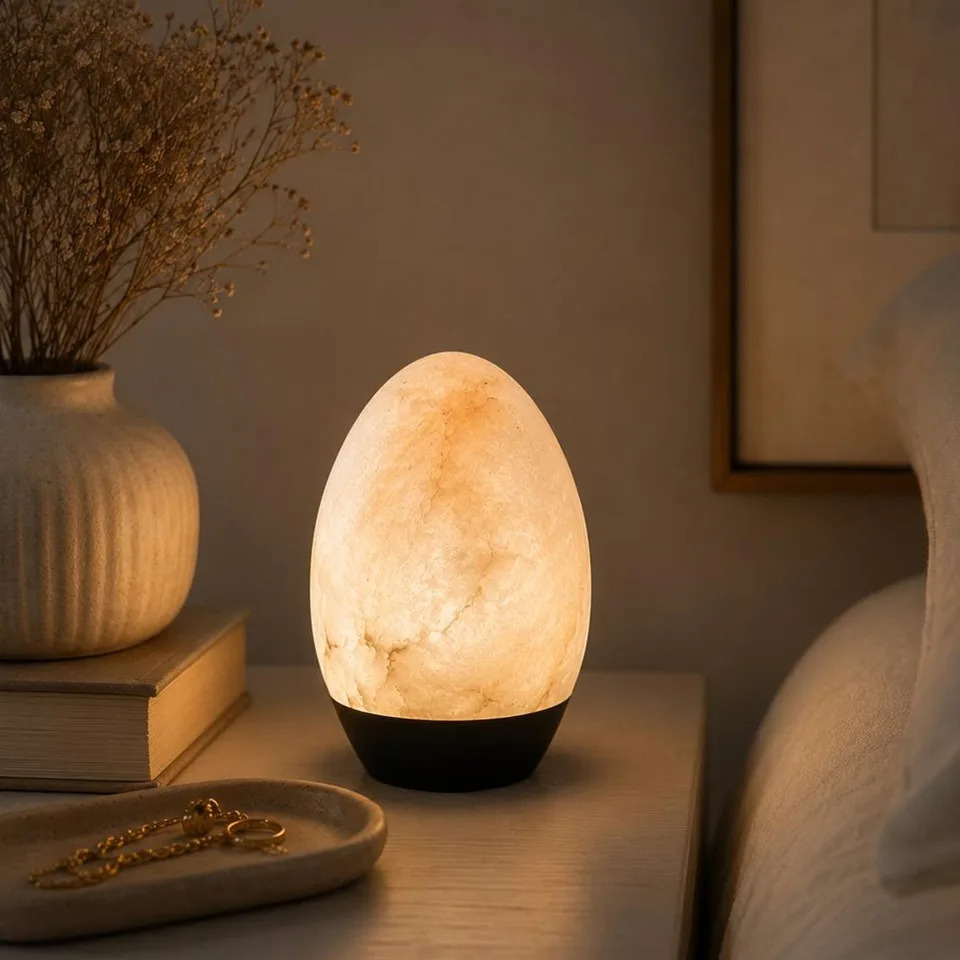
The bedroom is where the day rests. Vastu guides advise against a strong light right above the bed. Soft light at the side of the bed feels calmer.
A small lamp on the bedside table does this well. Our alabaster egg night lamp is real stone. Our craftsman shapes each egg from a natural block, hollows it and polishes it by hand. The small size stands 12.9 cm tall. Browse all our bedside lamps.
Our bedroom Vastu tips cover the bed, the mirror and the lamps in more detail.
The pooja room is the quietest corner of a home. Vastu places the pooja room in the north-east or the east. Vastu guides ask for a soft, steady light there.
The diya stays at the heart of the mandir. A gentle warm light around the diya lets the flame stay the brightest point. Our pooja room lighting ideas show simple ways to do this.
One idea guides every room
All our Vastu tips for lighting grow from one habit. We look at what happens in each room first: welcome, gathering, meals, rest or prayer. The use of the room decides how its light should feel.
Vastu gives that thinking a wider frame. Vastu sees the whole home as one space, with each part in balance. We take inspiration from that idea.
Our craftsmen then shape stone, glass and fibre to give each room the right glow. Every piece carries patient human effort.
We do not promise luck, wealth or health from a light. We promise a room lit with care, for what you do in it. Next in the series, we explain plainly what Vastu means to us, and what Vastu does not mean.
FAQs
What are the basic Vastu tips for lighting?
Keep the entrance well lit and use warm light in the evening. Leave no corner of a lived-in room fully dark. Use soft side light in the bedroom and a soft, steady light in the pooja room.
Which light colour suits a home as per Vastu?
Vastu thinking favours warm, golden light at home in the evening, close to the glow of a diya. All our built-in LEDs glow at 3000K warm white.
Where should the pooja room light go as per Vastu?
Vastu places the pooja room in the north-east or east, with a soft and steady light. Keep the diya at the centre and add only a gentle warm light around it.
Nature gives the material.
Human hands give it meaning.
Vastu inspires harmony.
Light brings it to life.
That is JagMag.
With you.
Read next: Is Vastu real? What we promise and what we don’t
Light your living room with one of our chandeliers →