
To clean lamp shades, switch off, let the bulb cool and take the shade down. Dust it dry first, top to bottom, with a microfibre cloth, a soft brush or a lint roller. Wash it only if dry cleaning fails, for about 10 minutes in cool to lukewarm water with one or two teaspoons of mild detergent. Keep silk dry. A washed shade needs 24 to 48 hours to dry before you hang it back.
Diwali cleaning has reached the ceiling. You look up at the fabric shade on one of your hanging lamps and see a grey line along the top. The light also looks a little dull.
Linen, cotton and silk each need different care, or a water mark stays behind. Below, you will see the steps cleaning guides agree on, a table for each fabric and small sums that pick the method for your shade. The science then shows why dust dulls a lit shade and why silk and water do not mix.
How to clean lamp shades: the steps guides agree on
Three cleaning guides give almost the same order. Start dry, and move to water only when you must.
- Switch the light off at the wall. Let the bulb cool. Hold the shade by its metal fitting, not the fabric, so it does not dent or crease.
- Dust it dry. Wipe inside and outside with a microfibre cloth, from top to bottom. A soft paintbrush reaches into pleats. A lint roller lifts dust from flat linen.
- Blow out trims. One guide uses a hairdryer on cool, held 8 to 10 inches away, or 20 to 25 cm.
- Check how the shade is made. A stitched shade takes water better than a glued one. One guide says to use only cool water on glued shades. One shade maker warns that too much water weakens the glue and bends the frame.
- Wash only if needed. Use cool to lukewarm water, never hot, with one or two teaspoons of gentle detergent. Soak for about 10 minutes, turning the shade so every side gets wet.
- Rinse in clean water, shake gently, and pat with a soft towel. Air dry away from direct sun. Allow 24 to 48 hours, and hang it back only when it is fully dry.
Two warnings come up again and again. Do not rub a stain, because the colour can run. And clean the whole shade, not one spot, or the clean patch shows as a ring.
Dust every one to four weeks, since guides range from weekly to monthly. One shade maker suggests a wash only once or twice a year for linen and cotton. Your fabric decides the rest.
| Shade | Water? | How it behaves wet | Best dry tool |
|---|---|---|---|
| Linen | Careful wash | Takes up water, dries quickly | Lint roller |
| Cotton | Careful wash | Takes up water, dries slowly | Lint roller or cloth |
| Silk | Keep dry | Loses strength, shows water spots | Soft brush down each pleat |
| Cane, rattan or jute | Very little | Too much water can damage or stain it | Soft brush |
How do you wash lamp shades of different sizes?
The size of your shade decides the method. One guide asks for water deep enough to cover at least half the shade.
- Measure the shade’s height. Our scalloped linen drum is 40.5 cm tall.
- Halve it: 40.5 ÷ 2 = 20.25 cm. You need about 20 cm of water.
- Measure the width too. The same drum is 65 cm across, so it needs a tub wider than 65 cm.
- Compare with what you have. Most buckets are much narrower than 65 cm. So a shade this big gets a dry clean and a damp sponge, not a soak.
A second sum shows the size of the problem. Say your bulb’s box says 806 lumens. A lumen measures the total light a bulb gives out, the way litres measure water from a tap. We found no study of dust on a fabric shade. The nearest field data comes from outdoor LED lights studied for the US Department of Energy. One of those lights kept 0.868 of its output after 56 months, a loss of about 13%. Outdoor dirt is not dining room dust, so read this sum as a rough guide.
- 13% of 806 lumens is 806 × 0.13 = about 105 lumens.
- 806 − 105 = about 701 lumens left.
- Cleaning can win back most of that, because dirt comes off and an ageing bulb does not.
A third sum saves your evening. A washed shade needs up to 48 hours to dry, so wash it 2 days before guests come.
We counted our own fabric pendants on 5 Nov 2026. Of the 21 lights in the range, 6 use real silk, and 6 ÷ 21 is about 29%. So nearly 3 in 10 of our shades stay away from water. Another 6 use linen and 1 uses cotton, and 4 carry cane or rattan. 20 of the 21 take a bulb, so step one, letting the bulb cool, applies to almost all of them. All 21 are IP20, meant for dry indoor rooms, so keep water away from the wiring.
Why dust dulls a fabric shade
A fabric shade works like a thin cloud. Light from the bulb hits millions of tiny threads and bounces between them. The light leaves the far side spread out and soft, so you see a glow, not a hot spot.
Dust sits on top of those threads. Each grain blocks or soaks up a little light before it can pass through. So the shade looks grey when off and dull when on.
The same outdoor study found dirt can cut light by more than 25% at some angles, even where total output falls far less. Dust falls and settles mostly on top surfaces, and the grey line shows along the top rim before anywhere else.
Water brings its own risk. Fabric soaks water in through tiny gaps between threads. As a wet patch dries, the water flows out to its edge and carries loose dirt with it. A spilt drop of tea dries with a dark ring for the same reason. So you wet the whole shade evenly, or not at all.
Fibres also change when wet. Textile references say silk loses strength once wet. One fibre chart comes from the CAMEO database at the Museum of Fine Arts, Boston. Silk stretches about 30% before it breaks when wet, against 20 to 25% when dry. Linen moves only from 1.8% to 2.2%. So silk has far more give when wet, and a pleat can lose its shape.
Heat is the reason for the first step. A bulb that has just been on is hot to touch. A cool bulb is safe for your hands and for the fabric next to it.
When guides differ, pick the gentlest method that works. Start with the cloth. Move to the roller, then the sponge, and soak only if all three fail. Guides split on water too. One says lukewarm, while a shade maker says cool, because hot water can shrink natural fibres. So start cool. On silk, one US guide allows detergent, and three others send stains to a professional. A water spot on silk stays, so we side with the three.
The JagMag way: fibre, hands and a clean glow
Nature gives the material. Linen comes from the flax plant, silk from the silkworm, wood from a tree. Our craftsmen stretch, pleat and bind those fibres by hand in our own factory in India, where we have worked since 2015. Light then passes through the weave and connects the room.
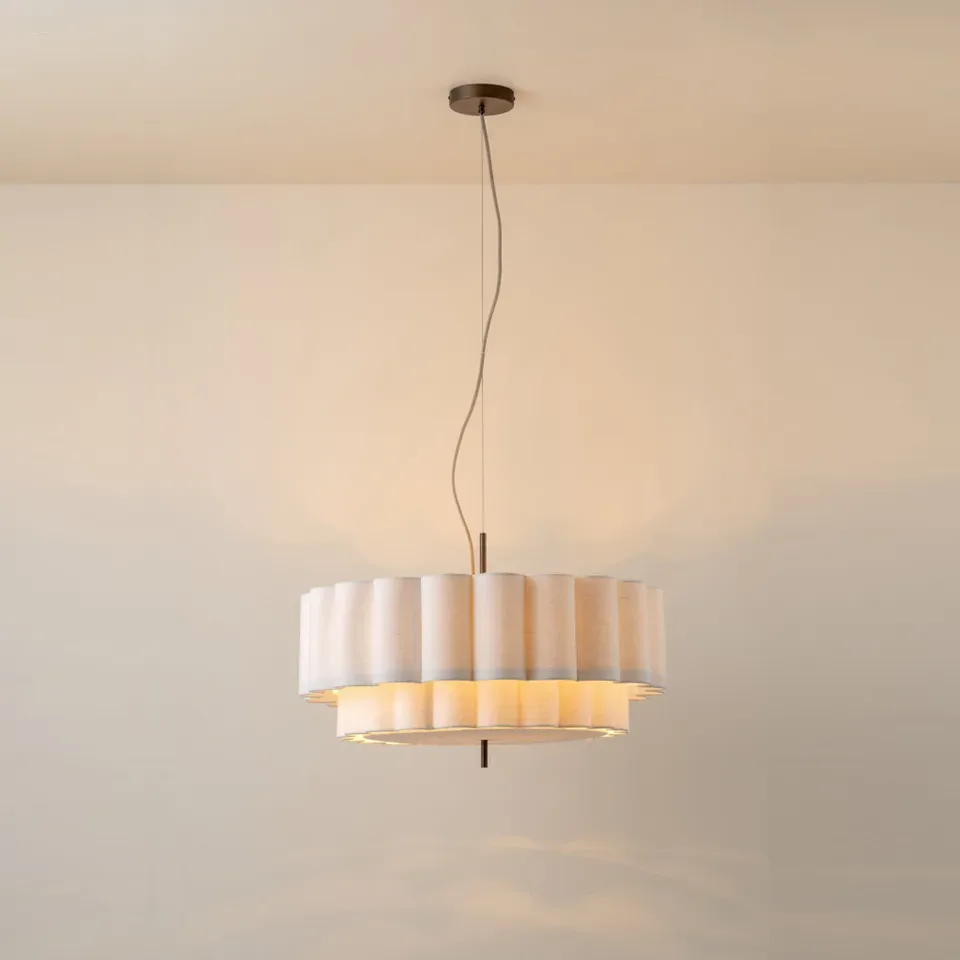
Our scalloped linen drum pendant is 65 cm wide and 40.5 cm tall. Real woven linen sits on a 304-grade stainless steel frame. The pendant takes four E27 bulbs, the standard screw base. Bulbs are not included, so fit 3000K warm-white LEDs. A shade this size gets the dry clean and the damp sponge.
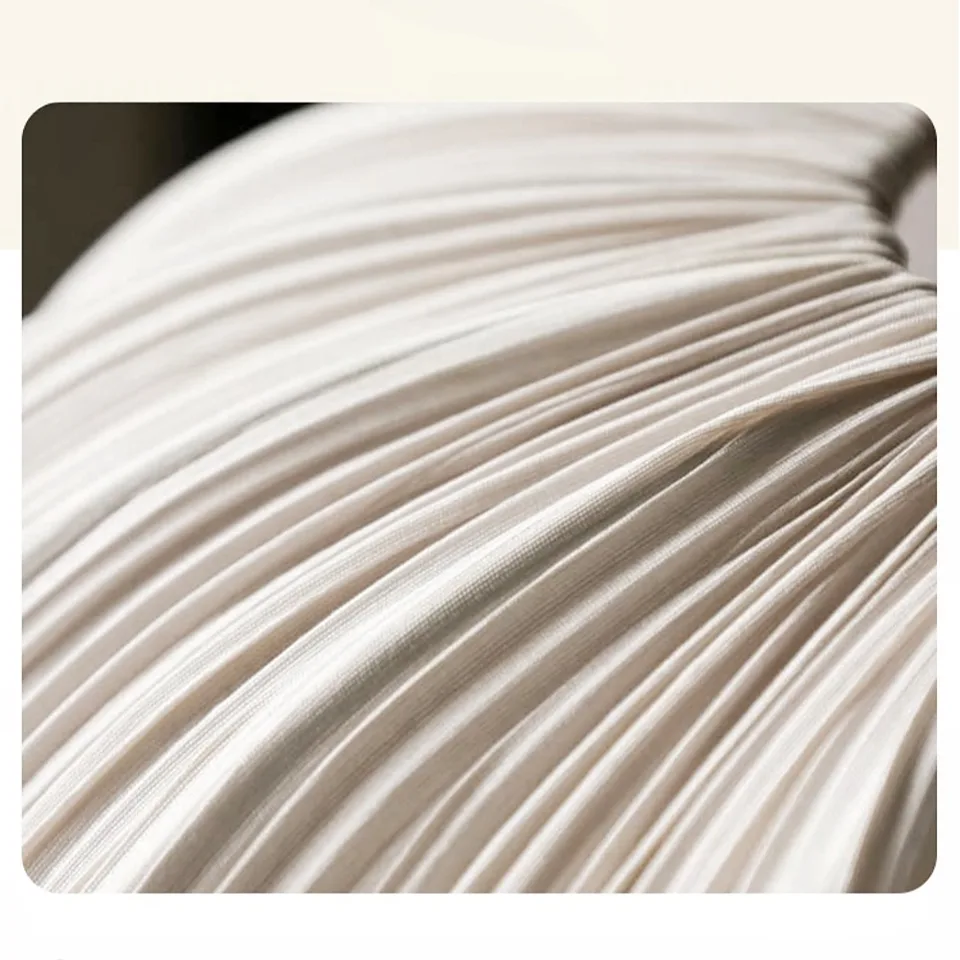
Our silk teardrop pendant is 28 cm wide and 40 cm tall, pleated by hand from real silk. A soft brush down each pleat keeps it clean. Never soak it.
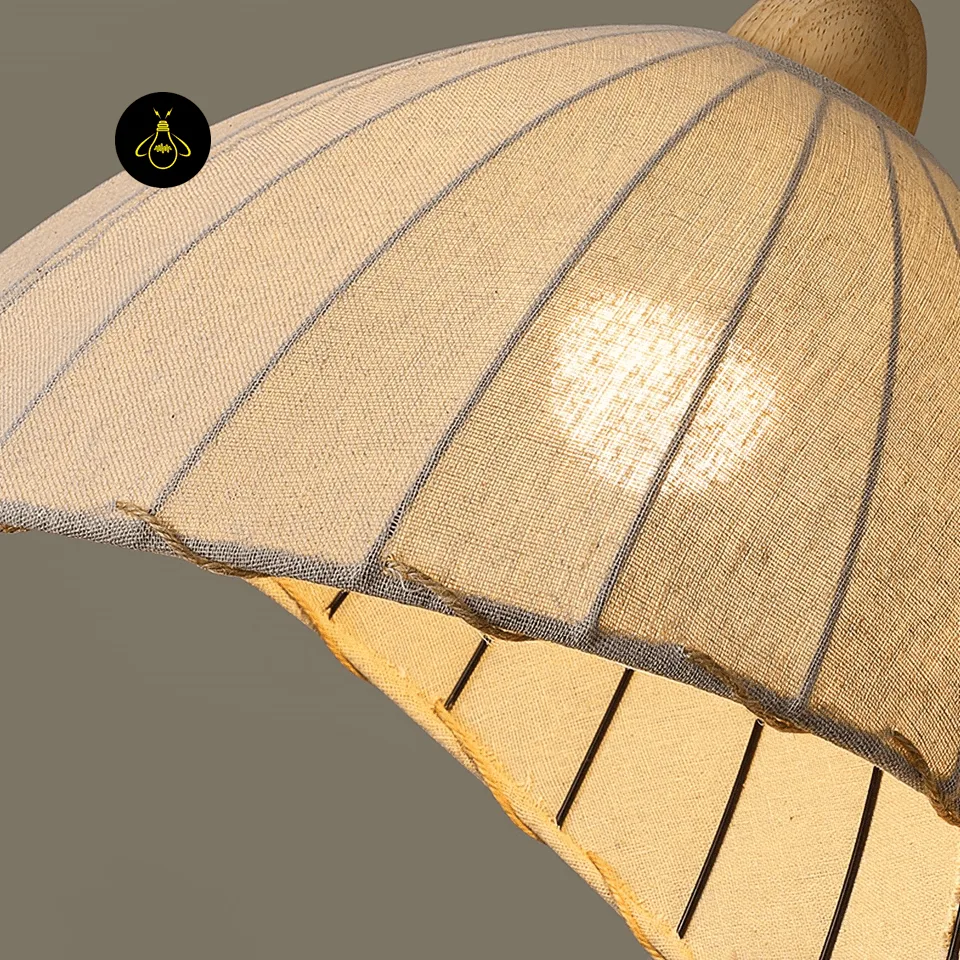
Our linen cloth pendant is a 35 cm dome of natural linen with a turned wood cap. A lint roller over the dome and a dry cloth on the wood are all it needs.
Some shades get too worn to save. We keep spares for 10+ years, so ask us about a new shade before you replace the whole light. Our FAQ page answers the other common questions.
Related: floor lamp shade replacement, with the 3 sizes and the fitter to check.
A clean shade and a soft, warm light bring the calm, natural feel that Vastu thinking values in a home.
FAQs
How to clean lamp shades without water?
Dust them dry with a microfibre cloth, a soft brush or a lint roller, from top to bottom. A hairdryer on cool, 20 to 25 cm away, blows dust out of trims.
How do you clean a fabric lampshade with stains?
Wash the whole shade in lukewarm water with one or two teaspoons of mild detergent, then rinse. Dab the stain with a soft brush, never rub, so the colour does not run.
Can I wash a silk lamp shade?
No, keep silk dry. Use a soft brush along the pleats, and send a stained silk shade to a professional cleaner.
How long does a lampshade take to dry?
A washed shade needs about 24 to 48 hours to dry fully. Air dry it away from direct sun, because a shade hung back damp can spot or grow mildew.
How often should I clean a lamp shade?
Dust it every one to four weeks, and wash linen or cotton only once or twice a year. Silk never gets washed at home.
Nature gives the material. Human hands give it meaning. Vastu inspires harmony. Light brings it to life. That is JagMag.
See all our fabric pendant lights. To choose a shade fabric, read linen, silk or just fabric, and for chandeliers with shades, our fabric chandelier guide. Not sure? Video-call us.
Sources
- Pooky, How to clean a fabric lampshade (read 27 Oct 2026)
- Merry Maids, How to clean lampshades (read 27 Oct 2026)
- Dowsing & Reynolds, How to clean lamp shades (read 27 Oct 2026)
- Davis, Wilkerson and Kinzey, Luminaire Dirt Depreciation: field data, LEUKOS 15(1), via US Department of Energy (read 27 Oct 2026)
- Deegan et al., Capillary flow as the cause of ring stains from dried liquid drops, Nature 389 (1997) (read 27 Oct 2026)
- Lux Lampshades, How to clean a lampshade (read 5 Nov 2026)
- Bob Vila, How to clean a lampshade (read 5 Nov 2026)
- Homes & Gardens, How to clean lampshades (read 5 Nov 2026)
- Pooky, How to dust lampshades (read 5 Nov 2026)
- CAMEO, Museum of Fine Arts Boston, fibre properties chart (PDF) (read 5 Nov 2026)
- Textile Learner, Properties of silk fibre (read 5 Nov 2026)