
In the last post, we looked at the earth element in Vastu. Earth gives a home weight. Now we turn to the element that gives a home light: fire.
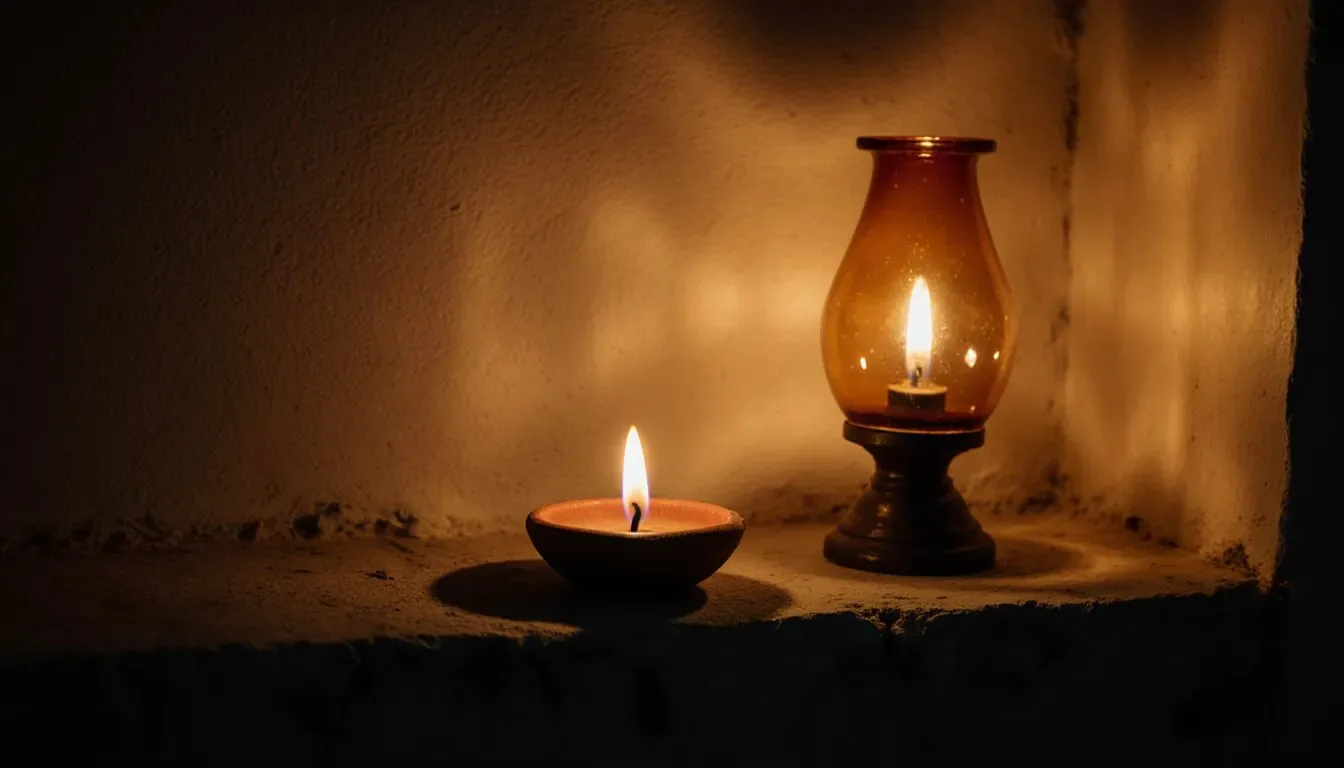
Vastu calls the fire element agni tatva. In an Indian home, the oldest sign of fire is a small flame in a clay diya. Our lights grow from the same warm glow.
In this post, we explain agni tatva in simple words. Then we show how the diya shapes the way we light a room. Together, these ideas add one more chapter to our story.
Agni tatva is the element of light and warmth
Fire is one of the panch tatva, the five elements of Vastu. Fire gives us heat to cook, warmth in the cold and light after sunset.
Vastu places the fire element in the south-east of a home. Vastu calls this corner agneya, the corner of Agni, the god of fire. Many Vastu guides put the kitchen there, because the stove holds the daily fire of the home.
Many Vastu guides link the fire element to warm colours, such as red and orange. You see these colours in a flame. You see them again in the glow of a warm lamp.
For us, fire means one thing above all: light. And in India, light has always started with the diya.
The diya is the first light of an Indian home
A diya is a small lamp made of clay. A cotton wick sits in oil or ghee. Someone lights the wick by hand, and a small flame rises.
Families light a diya during prayer, often every day. On Diwali, rows of diyas line doors, windows and rooftops. The diya stands for light over darkness.
Look closely at a diya flame. The light is small, soft and golden. The flame does not glare. The glow warms the faces around it and leaves the corners in gentle shadow.
We grew up with that glow, like most Indian families. So when we started making lights, we wanted our light to feel the same.
We keep the warmth of the flame in our light
Every light has a colour. Lighting makers measure that colour in kelvin, written as K. A low number means a warm, golden light. A high number means a cool, blue-white light.
A diya or candle flame sits near the bottom of the scale, around 1,900K. Bright midday light sits far higher, near 5,000K.
Every light we make with a built-in LED glows at 3000K warm white. Our legal policies state this rule in writing. A 3000K light is not a flame. Still, the light carries the golden warmth of a flame into your room.
For our lights with a bulb holder, the bulb is not included. We ask you to fit a 3000K warm-white LED bulb, so the glow stays the same. We explain our choice of 3000K in full later in this series.
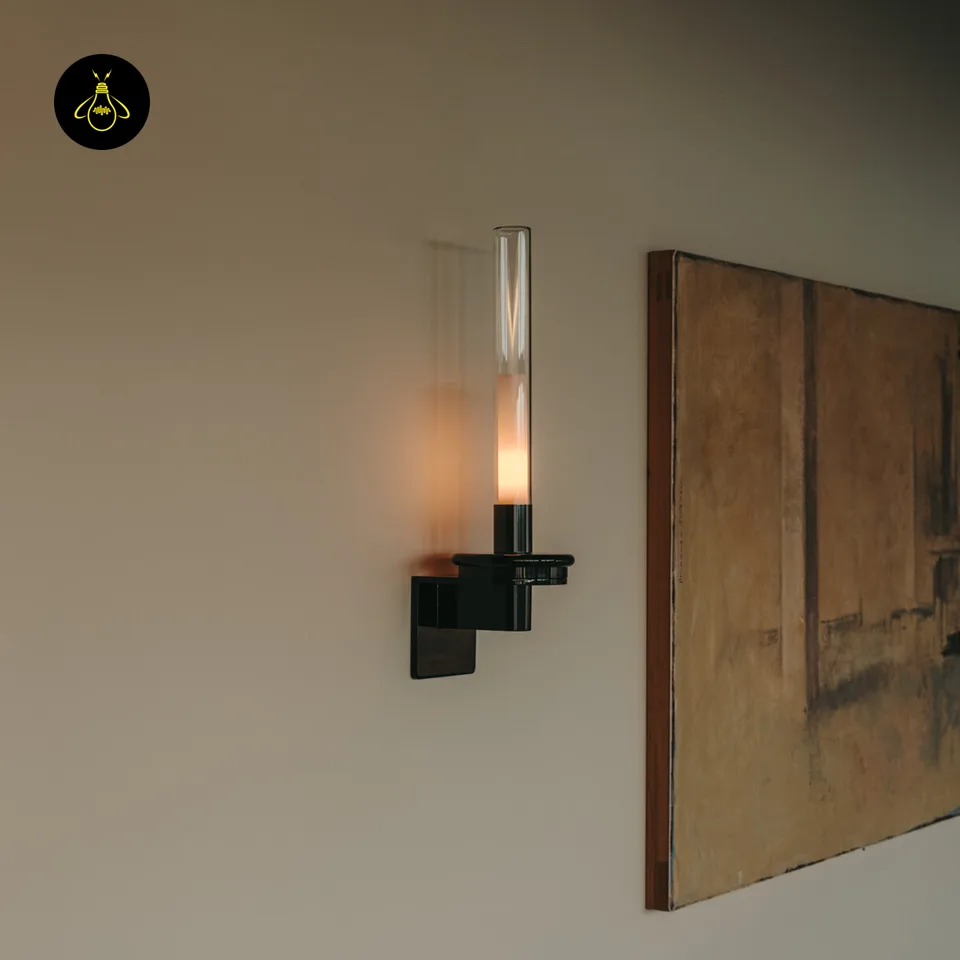
Our candle wall light shows the idea best. A clear borosilicate glass tube stands on a black stainless steel base. Inside the tube, an opal borosilicate glass diffuser holds a built-in LED.
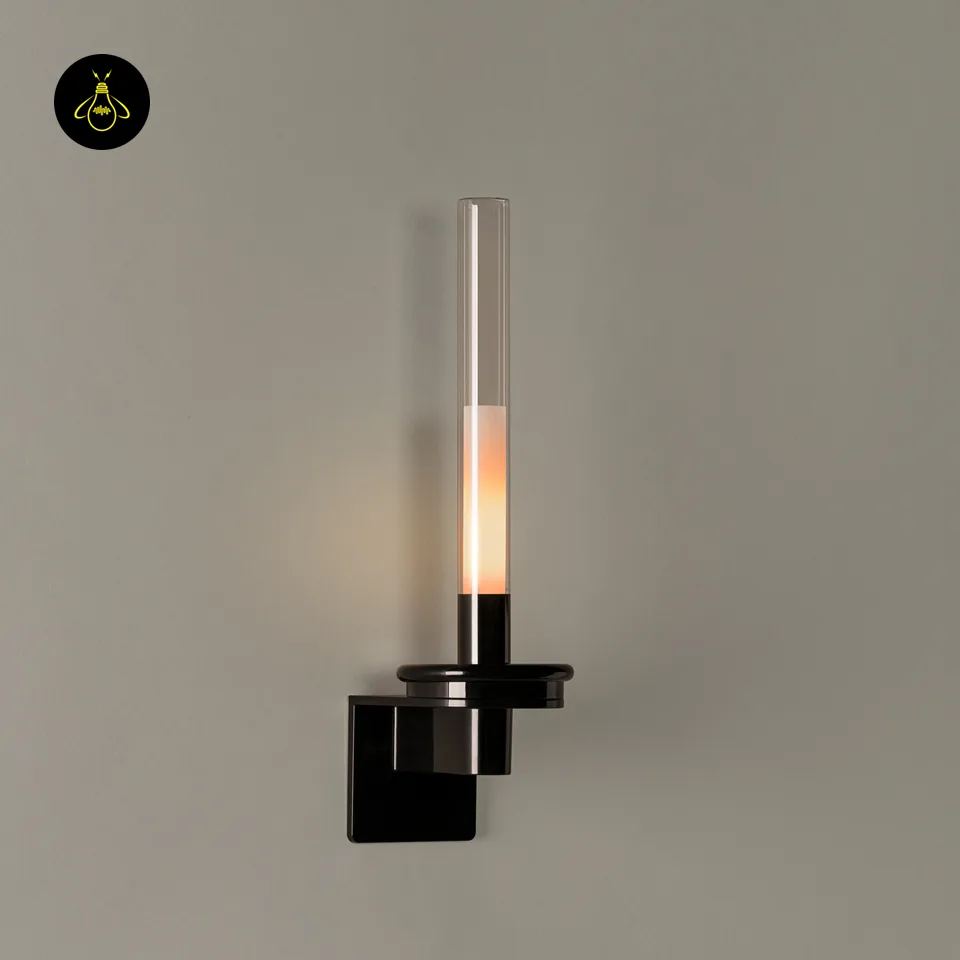
Our craftsman cuts each glass tube to length and polishes the rim by hand. Switch the light on, and a small flame of light rises inside the glass. The wall around it glows warm.
The light needs no oil, no wick and no match. The feeling stays close to a diya on a ledge.
Fire works best in balance
Vastu never asks for more of one element. Vastu asks for balance. Fire in balance gives warmth. Too much fire feels harsh.
Light follows the same rule. A very bright, cool light can feel harsh in a room at night. A small warm light feels like a diya: calm and welcoming.
So we keep our lights warm and gentle. Our craftsmen shape glass, stone and fibre to soften the glow before the light reaches your eyes. Behind each piece is patient human effort.
You can bring Vastu thinking to your own light too. A warm lamp in the south-east corner of a room honours the fire element. A warm glow suits the end of the day, when the home slows down.
We promise nothing more than that. A light cannot bring luck or wealth. A warm light, made by hand, can make a room feel warm and calm in the evening. Next in the series, we take these ideas room by room.
FAQs
What is agni tatva in Vastu?
Agni tatva is the fire element, one of the five elements of Vastu Shastra. The fire element stands for light, heat and energy, and Vastu links it to the south-east of a home.
Which direction is the fire element in Vastu?
Vastu places the fire element in the south-east, the corner called agneya. Many Vastu guides place the kitchen in this corner.
Why do JagMag lights glow warm white?
Our built-in LEDs glow at 3000K warm white, close in feeling to the golden light of a diya. For lights with a bulb holder, fit a 3000K warm-white LED bulb; the bulb is not included.
Nature gives the material.
Human hands give it meaning.
Vastu inspires harmony.
Light brings it to life.
That is JagMag.
With you.
Read next: Vastu tips for lighting: how we light each room
See warm glass and stone in our wall lamps →