
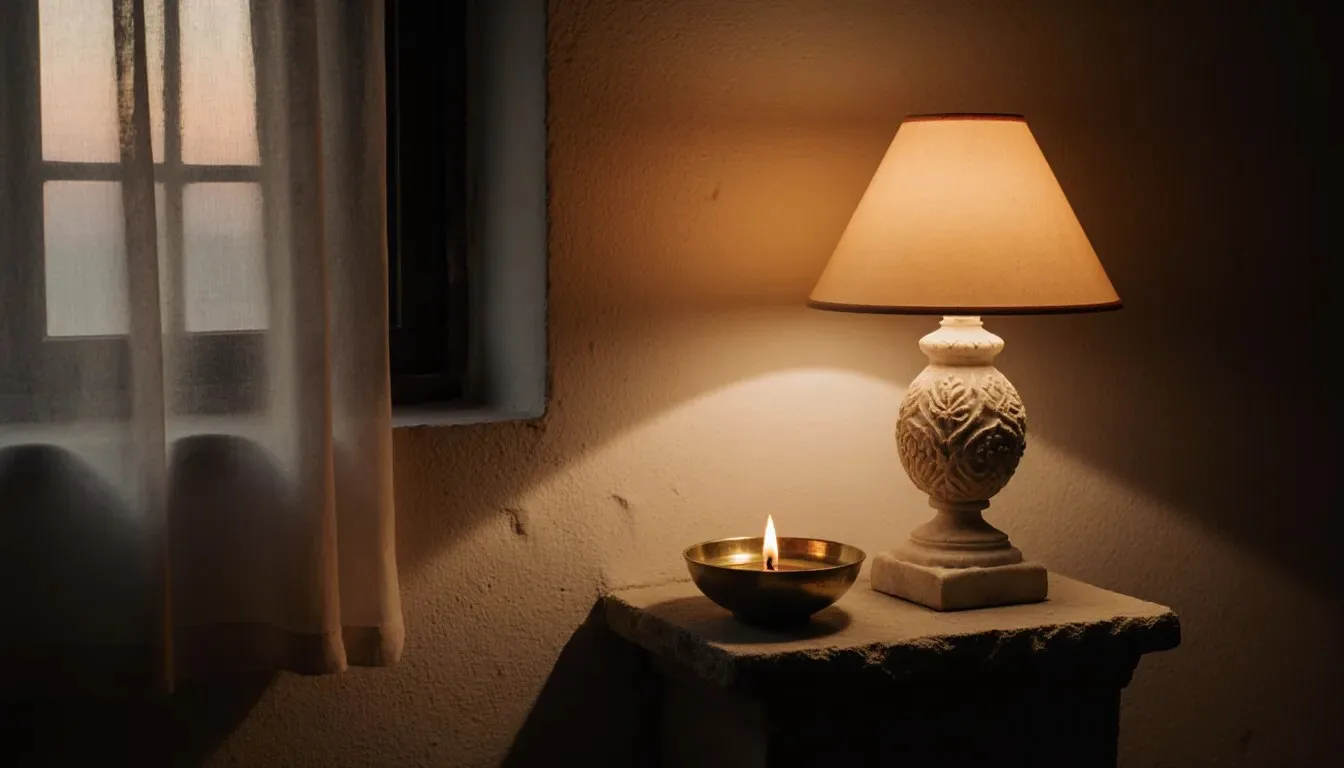
In the last post, we looked at Indian craftsmanship. Skilled hands carry old knowledge into our lights. Now we turn to another old Indian idea behind our work: Vastu Shastra.
Vastu Shastra is the Indian tradition of designing homes and buildings. Indian builders have followed its ideas for centuries, in temples, palaces and homes. At its heart sit the panch tatva, the five elements of nature. In Sanskrit, people also call them the pancha bhoota.
In this post, we explain the five elements in simple words. Then we show how they guide the way we think about light and material, as part of our story.
The panch tatva, in simple words
Panch tatva means “five elements”. Vastu names them earth, water, fire, air and space.
Earth is prithvi. Earth stands for weight and stability. Water is jal. Water stands for flow. Fire is agni. Fire stands for heat and light.
Air is vayu. Air stands for movement and fresh breath in a room. Space is akasha. Space is the open area that holds everything else.
Vastu also links each element to one part of a home. Earth belongs to the south-west, and water to the north-east. Fire belongs to the south-east, and air to the north-west. Space sits at the centre, and Vastu asks you to keep the centre open.
Vastu teaches that a home feels settled when the five elements stay in balance. No single element should crowd out the others.
Vastu Shastra sees a home as a whole
Vastu does not judge one object on its own. Vastu looks at the whole room: the walls, the floor, the open space and the light.
We like this way of seeing. A light never stands alone in a room either. A lamp sits on a table, hangs over a bed or glows on a wall.
So we ask what each light adds to the room, not only how the light looks. The five elements give us a simple way to answer.
One light can carry more than one element
Many of our lights begin as earth. We use real stone, wood and clay, as we explained in our post on natural materials. Each material came out of the ground or grew from it.
Our travertine table lamp shows the idea well. Its base is real travertine, a stone formed beneath the earth. Our craftsman turns the round shape and polishes it by hand. He leaves the stone’s pores and swirls as they are.

Switch the lamp on, and fire joins earth. In Vastu, fire means light and warmth. The fabric shade softens the bulb, and warm light falls on the stone below.
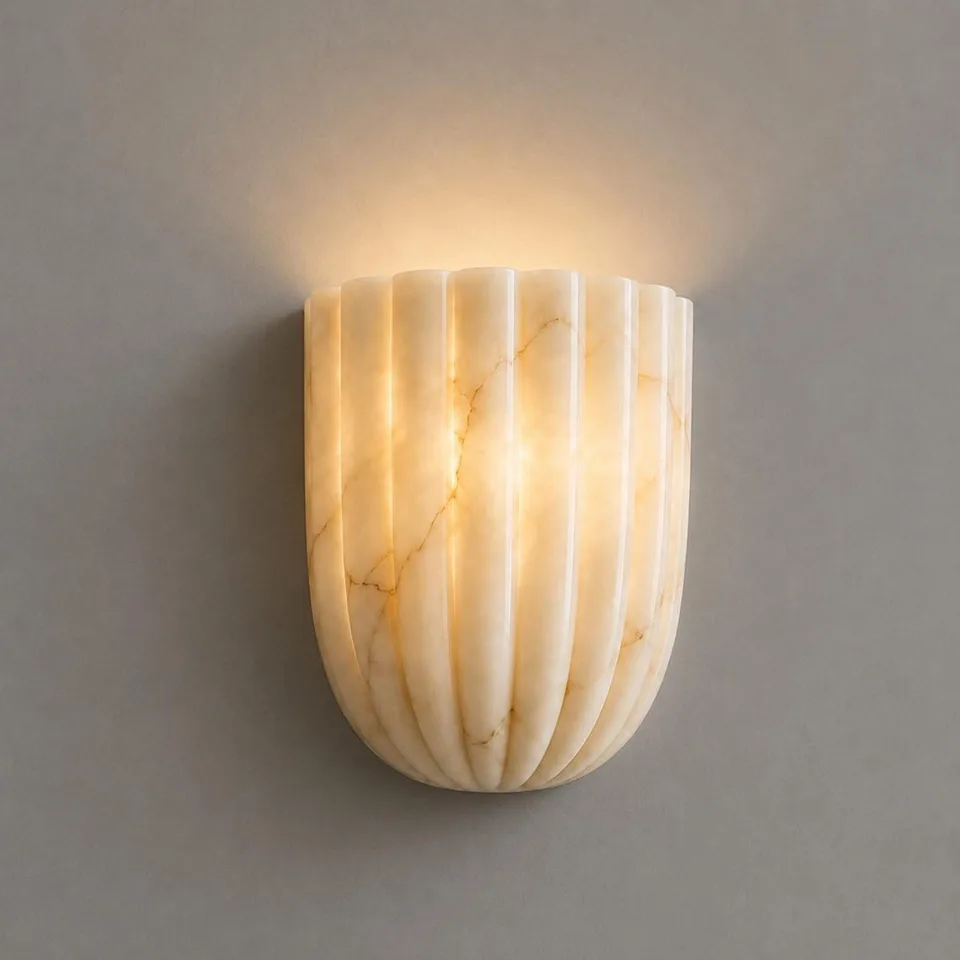
Our scallop alabaster wall light works the same way. A craftsman hollows each shell from one block of alabaster and carves the flutes by hand. Light shines up from the open top, and the stone glows from inside.
Air and space matter too. A light needs room around it. A lamp in an open corner feels calm. The same lamp in a crowded corner gets lost.
So we keep our forms simple. We size each piece to sit easily in a room and leave space around it.
Water is the one element a light does not carry. Vastu gives water its own place, in the north-east of the home. We leave water to that corner, and to the plants and flowers you keep.
So one light holds earth and fire, and leaves room for air and space. In a small way, one corner of your room can hold four of the five elements.
Vastu is our inspiration, not a promise
We take inspiration from Vastu. We do not sell Vastu as magic.
Our lights cannot bring luck, wealth or health. No object can promise that. A light can do something simpler. A good light makes a room feel warm, grounded and calm in the evening.
We bring the five elements together in a plain way. Nature gives the material. Our craftsmen shape it in our own factory. Warm light brings it to life.
Behind every piece is patient human effort. You see that effort each time the light comes on.
For practical ideas on placement, read our Vastu tips for chandeliers and home lighting. In the next post, we look closely at the first element: earth.
FAQs
What is panch tatva in Vastu?
Panch tatva are the five elements of nature in Vastu Shastra: earth, water, fire, air and space. Vastu teaches that a home feels settled when these five stay in balance.
Are panch tatva and pancha bhoota the same?
Yes, panch tatva and pancha bhoota are two names for the same five elements. Both names come from Sanskrit.
Can a light bring good luck as per Vastu?
No, we do not promise luck, wealth or health from any light. We use Vastu as inspiration for rooms that feel warm, natural and calm.
Nature gives the material.
Human hands give it meaning.
Vastu inspires harmony.
Light brings it to life.
That is JagMag.
With you.
Read next: The earth element in Vastu: stone, clay and wood in our lights
Find a lamp of real stone or clay in our table lamps →