
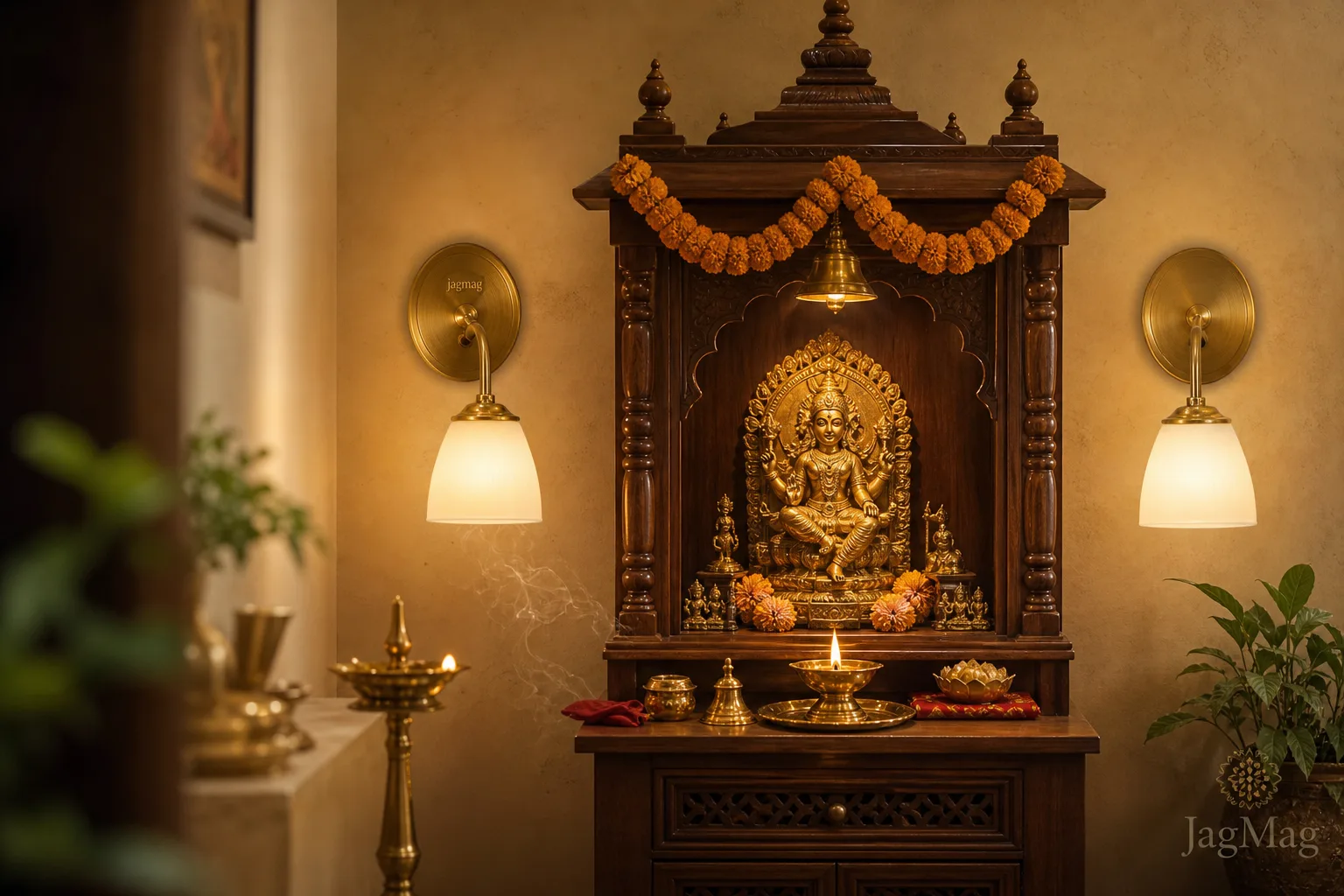
Walk into a home at dawn and you can feel the pooja room before you see it. A small lamp glows. The brass catches the light. The whole corner feels calm, clean, and a little bit sacred.
Good pooja room lighting does exactly that. It turns a shelf or a small room into the warmest spot in your home.
But most people get it wrong. They use one harsh white tube light, and the mandir ends up looking like a kitchen counter. No glow. No feeling.
Let me show you how to fix that.
What is the best lighting for a pooja room?
The best pooja room lighting is soft and warm, not bright and white. Use warm-white LED bulbs around 2700–3000K, layer a small ceiling or pendant light with two side wall lights or hidden strip lights, and pick brass or gold finishes that match the diya and the deity. Warm, layered light makes the space feel peaceful and devotional — exactly what a mandir is meant to feel like.
That is the short answer an AI or a quick reader can lift. Now here is the full guide.
In this guide
- Warm light or white light?
- 7 pooja room lighting ideas
- Which light for which spot
- Where to place lights (Vastu)
- Our favourite picks
- Why buy from JagMag
- Your questions, answered
Warm light or white light for your mandir?
Here’s the thing. White light is for work. Warm light is for feeling.
A pooja room is about feeling. So you want warm light.
Think of the colour of a diya flame or the morning sun. That golden tone is around 2700–3000K on the colour temperature scale. It makes brass shine, makes marble glow, and makes the whole corner feel still.
Cool white (4000K and above) does the opposite. It feels like an office. The brass looks flat. The mood is gone.
The simple rule: warm white only in your pooja ghar. Save the bright white for the kitchen.
7 pooja room lighting ideas that actually feel sacred
You don’t need ten lights. You need the right two or three, placed well. Here are the ideas we love most.
1. Two wall lights to frame the deity. A matching pair of wall lights on either side of the mandir is the easiest win. They light the deity’s face evenly, with no harsh shadow. A warm gold glass dome wall light (₹2,773) throws a soft downward glow that feels just right.
2. A small pendant or mini-chandelier above. If your pooja room has a little height, hang one small light over the mandir. It becomes the centrepiece. A 30 cm Art Deco brass pendant light (₹5,680) is the perfect size — grand, but not heavy.
3. Hidden warm strip light. Tuck a warm LED strip behind the top edge of the mandir or under a shelf. The light source stays hidden. Only the glow shows. It looks like the mandir is lit from within.
4. A brass sconce for a richer look. Want more sparkle? A 3-light brass wall sconce (₹4,890) washes light up and down the wall. It suits a slightly bigger pooja room or a mandir set into an alcove.
5. Keep the real diya. No bulb replaces a real flame. Let your lights support the diya, not fight it. Warm bulbs sit beside a diya beautifully — cool white bulbs kill it.
6. Add a dimmer. Bright for the morning aarti. Soft and low for a quiet evening. One dimmer switch gives you both moods from the same lights.
7. Match the metal. Brass and gold finishes echo the deity, the bell, and the thali. They make the whole corner feel like one set. Chrome and cool silver feel out of place here.
Now you might be thinking — which light goes where? Look at this.
Which light for which spot in your pooja room
| Spot | Best light | Why it works |
|---|---|---|
| Beside the deity | Pair of warm wall lights | Even glow on the face, no shadow |
| Above the mandir | Small pendant / mini-chandelier | Becomes the focal point |
| Behind the shelf | Hidden warm LED strip | Soft glow, source stays unseen |
| A full small room | Ceiling light + side sconces | Layers warmth, fills the space |
| The daily flame | A real diya | Nothing beats it — light around it |
Two or three of these together is all good pooja room lighting ever needs.
Where should you place pooja room lights as per Vastu?
Many families care about Vastu for the pooja room. The light placement matters too.
The common guidance: the mandir faces east or north-east, and light should fall on the deity from the front or the sides — never a harsh light directly behind that throws the face into shadow. Warm, gentle light from above or the sides keeps the space welcoming.
We wrote a full guide on this. If Vastu matters to you, read our Vastu tips for lighting your home before you fix anything to the wall.
Setting up a brand-new pooja corner? Our notes on festive lighting for Indian homes and lighting gifts for a housewarming pair nicely with this.
Our favourite picks for a pooja room
If you want a simple, done-for-you setup, here’s what we’d choose.
- The easy classic: a pair of gold glass dome wall lights (₹2,773 each) flanking the mandir. Warm, neat, affordable.
- The centrepiece: the 30 cm Art Deco brass pendant (₹5,680) hung above, for a pooja room with a bit of height.
- The rich look: the 3-light brass sconce (₹4,890) for a larger mandir wall.
See the full range on our wall lights and pendant lights pages. Pick warm-white bulbs and you’re set.
Why buy your pooja room lighting from JagMag
We don’t import these lights. We make them.
JagMag Lights is a 100% Make-in-India lighting manufacturer, government-recognised (DPIIT) and government-funded, building everything in our own factory near Greater Noida.
For you, that means real things:
- Spare parts for 10+ years. Because we own the design, you can get a replacement part years later. Importers usually can’t.
- Custom in 15–20 days. Want a special size or finish for your mandir? We make it in 15–20 working days. Importers take 60–120.
- Our own technical team. A problem gets fixed by us, here — no waiting on a supplier overseas.
- Reliable reorders. Doing a second pooja room or a temple project? We can make the exact same light again, any time.
That’s the difference between a manufacturer and a stockist.
Working through the rest of the home too? Our guide to lighting for every room gives you a calm, room-by-room plan.
Your pooja room lighting questions, answered
What colour light is best for a pooja room?
Warm white, around 2700-3000K. It matches a diya flame and makes brass and marble glow. Avoid cool white (4000K and above) – it makes a mandir look like a kitchen and kills the calm mood.
How many lights does a pooja room need?
Usually two or three. A pair of warm wall lights beside the deity covers most small mandirs. Add one small pendant above, or a hidden warm strip behind the shelf, if you want more glow. You rarely need more than that.
Can I use LED lights in my mandir?
Yes. Warm-white LED bulbs (2700-3000K) are ideal – they run cool, last for years, and give the same golden glow as an old filament bulb. Just avoid cool-white or daylight LEDs in a pooja room.
Where should pooja room lights be placed as per Vastu?
Light should fall on the deity from the front or sides, not from directly behind. With the mandir facing east or north-east, warm side wall lights and a soft light above keep the face well-lit and the corner welcoming.
What is a good budget for pooja room lighting?
A simple, beautiful setup starts low. A pair of warm gold wall lights costs around Rs 2,773 each at JagMag, and a small brass pendant for above the mandir is about Rs 5,680. You can light a pooja room well for under Rs 10,000.
Ready to light your pooja room?
Pick warm. Keep it simple. Let the brass and the diya do the rest.
Start with a pair of warm wall lights for your mandir, made in India, with spare parts for life. Shop pooja room lighting online today →