A woven light can show the texture of natural fibre even when it is off. When it is on, the gaps, the lamp inside and the distance to nearby surfaces determine what you see: a pattern, a gentle glow, or sometimes a bright bulb visible through the weave.
This guide helps you compare cane and rattan shades by looking at their construction, light effect and bulb requirements before you buy.
Key takeaways
- Ask which material and which part of the plant are used; the names are used differently in trade.
- Look at the actual shade switched on from the places where you will sit and walk.
- Match the bulb to the fixture’s instructions, including its base, shape, maximum wattage and permitted lamp type. LEDs produce heat too.
- Choose the right shade for the intended location and follow the maker’s care instructions.
Cane or rattan: what is the difference?
Rattan comes from a group of climbing palms. The UN Food and Agriculture Organization uses “cane” for the rattan stem after its leaf sheath is removed. The stem may be used whole or split; its outer peel can also be prepared as strips for weaving.
In furniture and lighting, sellers may use “cane” for the flat outer strips used in webbing and “rattan” for rounder stems or the material generally. Ask for the actual material rather than assuming every seller uses these names identically.
Wicker describes a woven construction rather than one particular plant. It can be made using different natural or synthetic materials. Ask whether a shade is rattan, bamboo, another fibre or a synthetic look-alike. Explore our cane and rattan pendants.

Why does a woven light create patterns?
Some light passes through the openings; strands block or redirect some of it. A shade’s shape, gaps, lamp position and the room’s surfaces all change the result. A woven shade does not guarantee a sharp pattern or a glare-free view.
Try the light in a similar setting if possible. Look up from the dining chair or sofa: can you see the bright lamp through the gaps or open bottom? The International Commission on Illumination (CIE) describes glare as discomfort or reduced visibility associated with unsuitable brightness or contrast. A different lamp or approved diffuser may help, but only use combinations the fixture maker permits.
Worked example: comparing openings. Imagine a flat, square grid made of 2 mm-wide strips with a 10 mm square opening. One repeating cell measures 12 mm × 12 mm, or 144 mm²; its opening is 10 mm × 10 mm, or 100 mm². The open area is 100 ÷ 144 ≈ 69%. This is a geometric illustration, not a measurement of a real woven lamp or a prediction that 69% of its light reaches the room. Curved strands, overlaps, bulb position and reflections change the result.
A warm-white bulb is a popular aesthetic choice, but 3000K does not by itself tell you how bright a fitting is or whether it will glare. Compare the compatible bulb’s lumens and colour appearance, then check the complete fitting in the room.
Cane pendant lights for the dining table and living room
Choose the shade for both the view and the job. Above a dining table, look at it while seated and check whether the table receives enough usable light. In a living room, check views from the sofa and from the doorway. If a woven pendant gives attractive patterns but insufficient light for a task, plan additional lighting separately.
- For a broad woven shape, see the rattan hat pendant.
- For a rounded form, explore the rattan globe pendant.
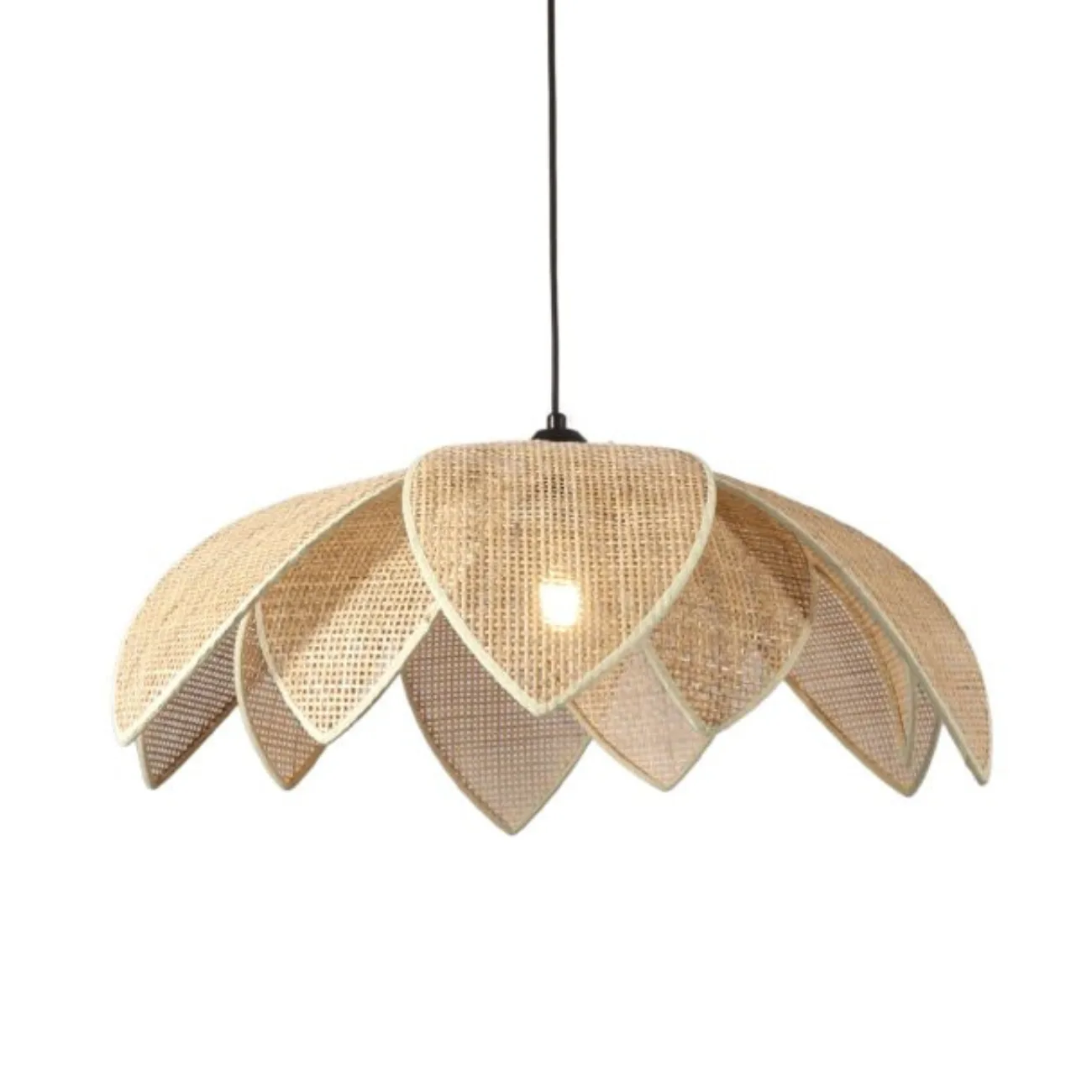
- For a smaller decorative form, see the rattan flower pendant.
Check the current product specifications for each model, including shade dimensions, lamp holder and whether a bulb is included. Ask a qualified installer to assess the mounting and clearance for the actual location.
A rattan lamp for the console or the corner
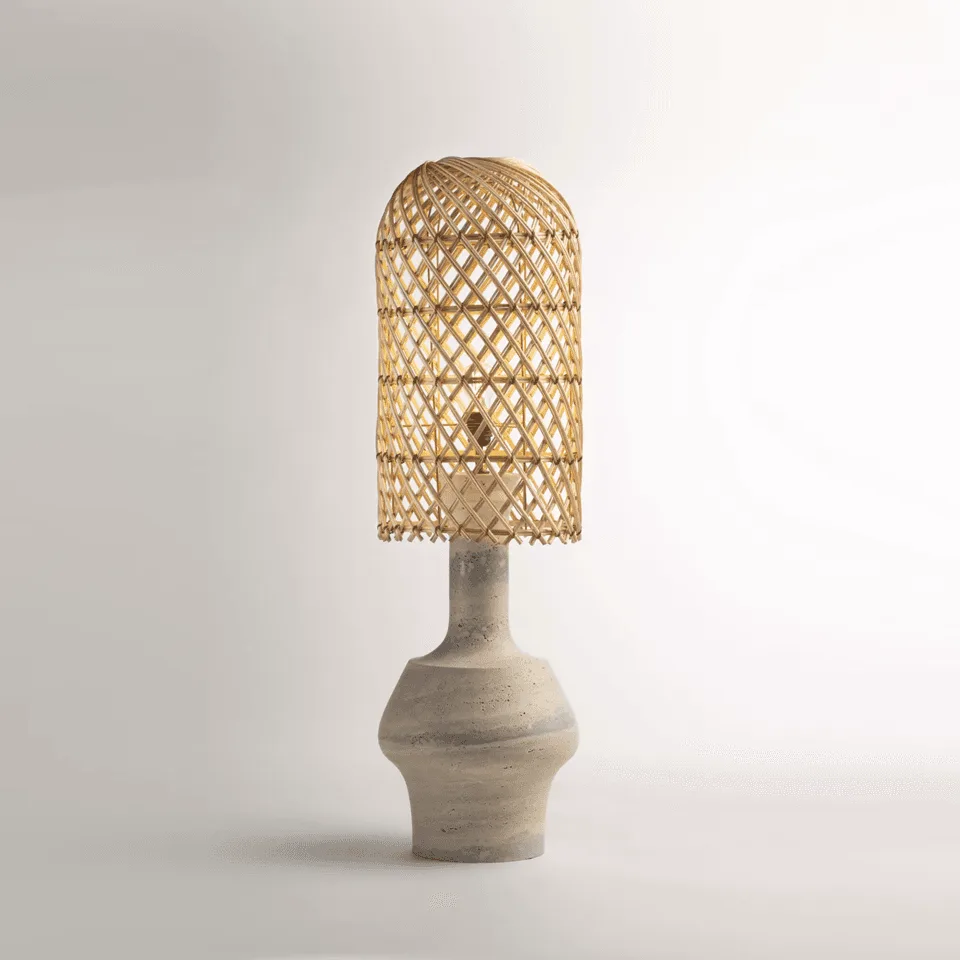
A table lamp puts its shade closer to seated eye level, making the view through the weave particularly important. Check the lamp’s footprint, stability, switch position and cable route as well as its appearance. The Milos rattan table lamp combines woven texture and a stone base; check its current measurements against your surface.
What about bamboo lights?
Bamboo is a grass, while rattan comes from palms. Both can be shaped or woven into shades, but their appearance and construction vary. Ask whether the piece uses round rods, split strips or a backing, and compare the effect with a compatible light source. Browse the bamboo hanging light for an example.
Which cane light suits which room?
| Location | What to check | Why it matters |
|---|---|---|
| Dining table | View from seated height and light on the table | A visible bulb or strong pattern may distract diners |
| Living room | View from sofas and walking routes | Different angles expose different parts of the lamp |
| Bedroom | View from the bed and separate reading needs | A decorative glow may not provide suitable reading light |
| Kitchen | Exposure to grease and steam; cleanability | Ask whether the specific shade is suitable for the location |
| Passage | Clearance and overall route lighting | Confirm that people can pass and see the route comfortably |
Will cane crack, fade or get hot?
- Bulb and heat: follow the fitting label and instructions for lamp type, wattage, dimensions and separation. LEDs also generate heat. The U.S. Department of Energy advises checking lamp suitability for enclosed fixtures.
- Location: keep indoor-only fittings away from rain and wet locations. Check the exact product’s rating and intended use; do not infer outdoor suitability from the material name.
- Care: switch off and allow the light to cool, then dust gently using the manufacturer’s recommended method. Avoid soaking and harsh cleaners unless the maker explicitly permits them.
- Ageing: fibre colour and condition can change with exposure and use; ask about the product’s finish, care and replacement options.
Natural fibre, warm light and Vastu
Some customers choose plant materials as part of their Vastu practice. That is a cultural and design preference, not proof that a shade causes luck or a measurable health outcome. Choose the weave and light appearance that feel right for the space, while checking visibility and safety separately.
Why buy cane lights from a maker
Ask who makes the shade, what the fibre and frame are made from, how the light is assembled, and whether the shade or other parts can be replaced. Request a written quote and current lead time for a custom size. Compare the warranty terms for each component.
For other plant-based materials, read our wooden lights guide.
FAQs
Are cane and rattan the same thing?
They are closely related in common trade use, but “cane” can mean the whole prepared rattan stem or its outer strips depending on context. Ask which material and part is used.
Will a woven pendant always cast patterns?
No. The weave, bulb, shade shape, distances and surrounding light affect whether a pattern appears and how clear it looks. View the actual fitting switched on if possible.
Do LED bulbs stay cool?
No. LEDs generate heat even though their operation differs from incandescent lamps. Use only lamps permitted by the fixture maker and follow the stated wattage and clearance instructions.
Can a wicker lamp be used outside?
“Wicker” does not establish a fixture’s outdoor rating. Check that the complete fitting and its components are intended for the exposure and installed to the manufacturer’s instructions.
Can you make a cane light in a custom size?
Contact Jagmag with the intended location, size and reference image. We can discuss whether the design is feasible and confirm a quotation and lead time.
Explore cane and rattan pendant lights or contact us to compare options.