
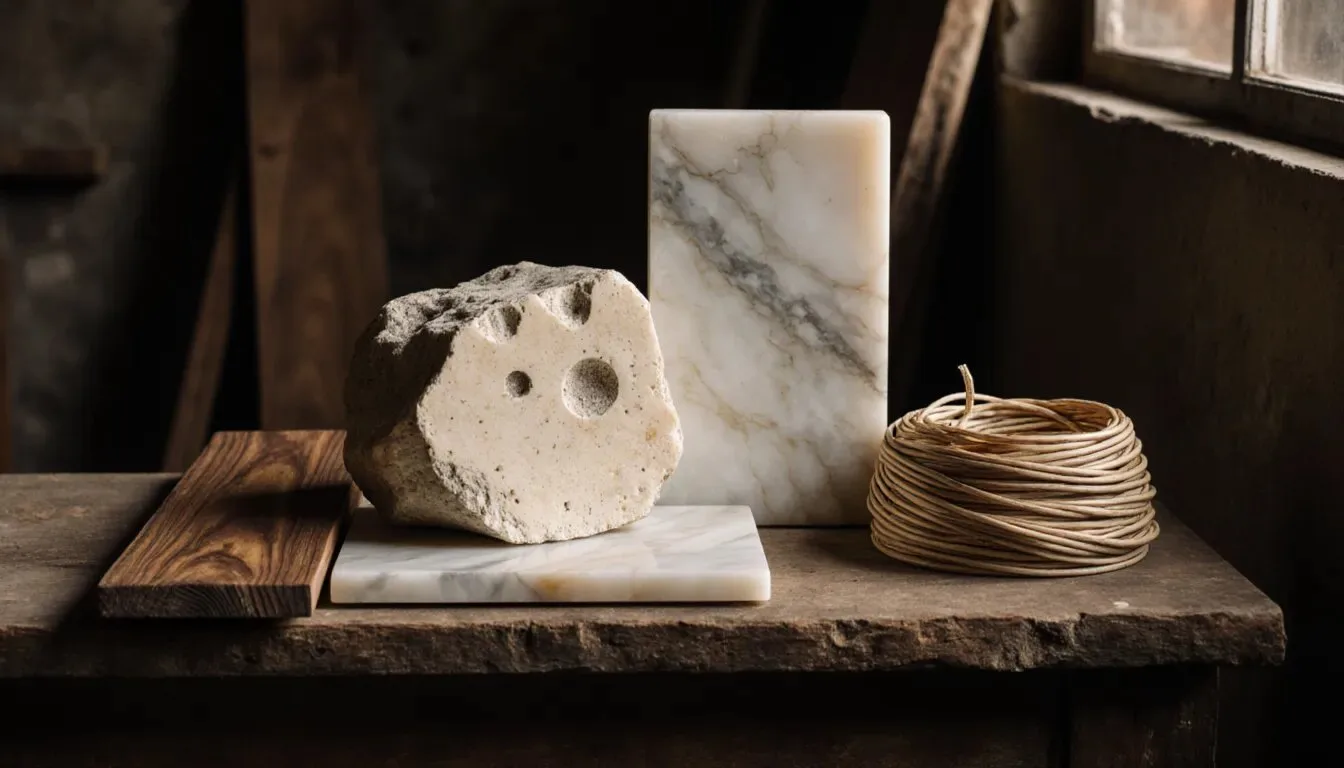
Natural materials come from nature, not from a chemical factory. Stone, wood, clay, cane and jute are all natural materials.
At JagMag Lights we build with them, from our pendant lights to our table lamps. Today 215 of our 453 lights use natural stone, wood or plant fibre.
In the first two posts we shared how JagMag Lights began and how our work grew over ten years. One change in those years mattered most. We began to look past the shape of a light to the material it is made from.
Our material philosophy grew from that change. In one line: we don’t imitate nature, we build with it.
Below we explain what that belief means to us. We also share why we stay away from copies, and how natural materials shape every light we make.
We value a material for what it is
Every material has its own character. Stone has weight and veins. Wood has grain. Cane and rattan have a weave you can feel with your fingers.
We value a material for what it truly is, not for what it can imitate. So we choose real natural materials wherever the design allows. We want you to see the material itself, not a picture of it.
When you choose a light, you also choose the material you will live with for years. You see it every evening. You touch it when you clean it or switch it on. So the material should be honest.
For us, nature is not only an idea for a design. Nature is part of the material itself. For the same reason, we stay away from copies.
A copy shows only the surface
Many things today only look natural. A printed sheet can show the pattern of wood grain or marble. Paint can make plastic look like stone. In a photo, these copies can look quite good.
A copy carries only the surface, though. Touch it, and it feels flat. Look at ten pieces, and each one shows the same printed picture.
Light shows the difference most clearly. Light passes through real cane and throws its weave on the wall. Real stone shows its own pits and veins in the glow. A print has nothing behind it to reveal.
We do not want to sell you a picture of nature. We want to give you the real thing.
Real travertine, not a “travertine finish”
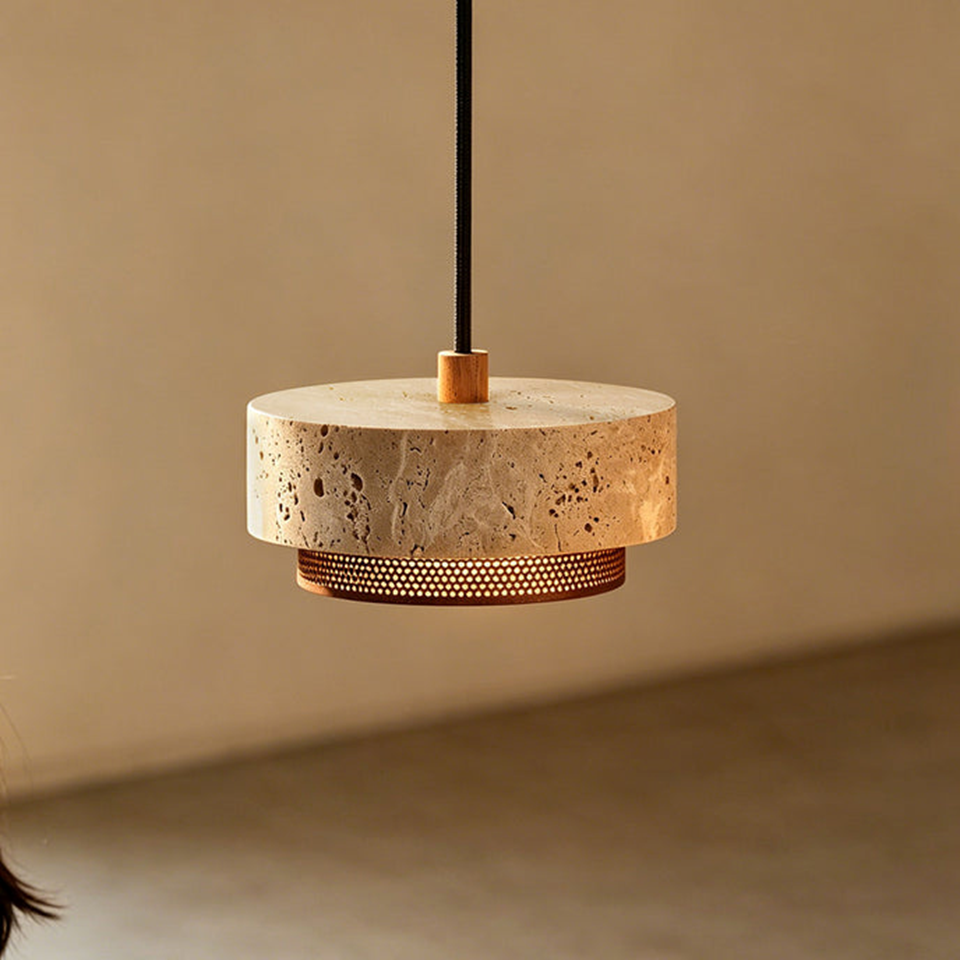
Our travertine drum pendant light shows what we mean. Travertine is a natural stone laid down by mineral water. The small pits you see are part of the stone.
Our craftsman reads each piece before he cuts it. He turns the 16 cm drum, hones the edge and leaves the natural pits open. Honing means rubbing the stone smooth and soft to the touch, without making it shiny.
So no two drums have the same tone or texture. The drum is real stone, not a coating made to look like stone.
The same rule runs through our whole catalogue. Today 137 of our lights use natural stone such as alabaster, travertine and marble. 84 use wood. 22 use plant fibres like rattan, cane and bamboo.
Each material has its own story in this series: alabaster, marble and travertine, wood, plant fibres, terracotta, fabrics and borosilicate glass.
A few designs also need a man-made part, such as an acrylic diffuser that spreads the light evenly. Today 11 of our 453 lights use acrylic, resin or silicone, and we name it on the product page. Honesty about every material is part of the same rule.
Nature stays nature in our hands
Building with nature also means accepting nature as it is. A real material is never fully uniform. The grain changes. The veins move. One piece is a little warmer in colour than the next.
We don’t try to erase these differences. Our job is to reveal them.
So when you order a natural piece from us, expect it to differ a little from the photo. The difference is proof that the material is real.
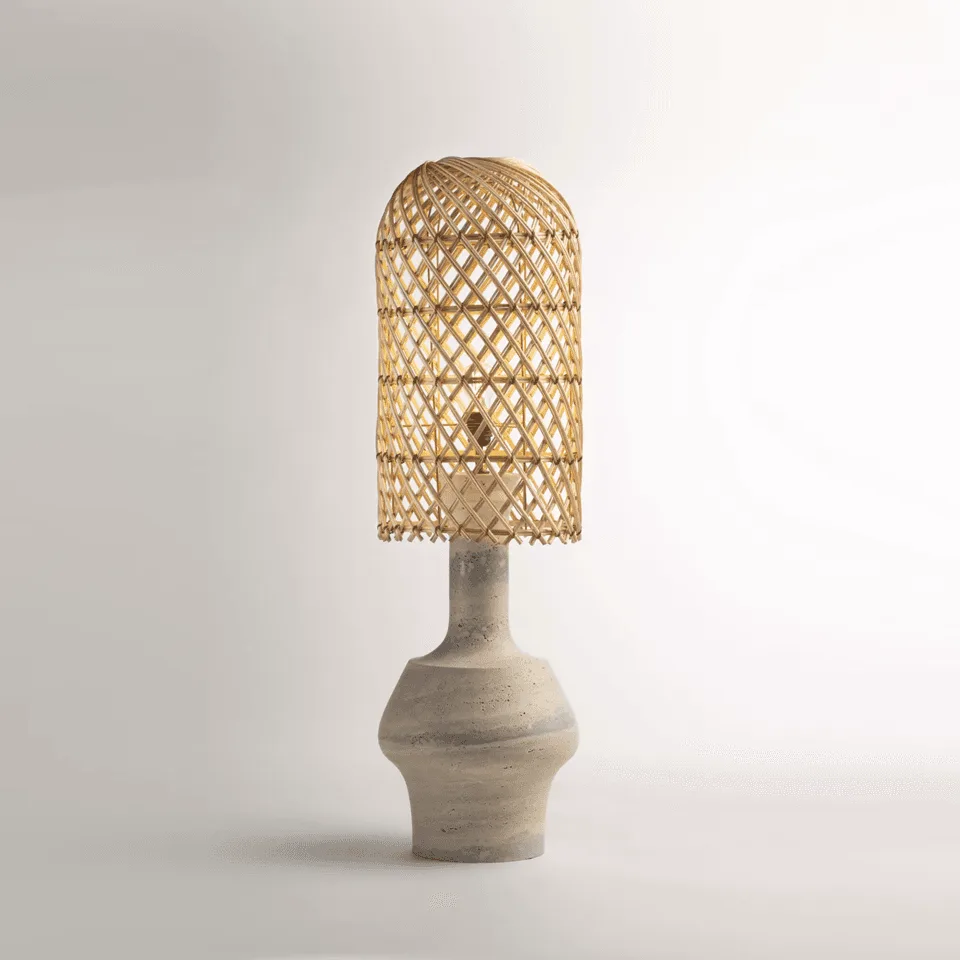
Our 105 cm tall Milos table lamp brings two natural materials together. A hand-woven rattan shade sits on a travertine base. No two bases carry the same stone banding.
Natural materials also sit well with Vastu thinking, which values the elements of nature inside a home. We take that as inspiration for harmony, not as a promise.
A real material still needs human hands to give it form. In the next post, we show what made by hand means in our own factory.
FAQs
What are natural materials in lighting?
Natural materials in lighting are real stone, wood, clay, plant fibre and fabric, shaped into a light. We use them wherever the design allows. We never sell a copy as the real thing.
Does JagMag use any man-made materials?
Yes, a few designs need one, such as an acrylic diffuser, and most lights need a metal frame. When a light has a made material, we name it on the product page.
How can I tell real stone from a printed copy?
Look closely and touch it. Real stone has its own pits, veins and colour changes, so every piece is a little different. A printed copy repeats the same pattern on every piece.
Nature gives the material.
Human hands give it meaning.
Vastu inspires harmony.
Light brings it to life.
That is JagMag.
With you.
Read next: Handmade lights: what made by hand means at JagMag
See real stone up close: explore our alabaster and stone ceiling lights →