You are about to hang a glass light over your dining table or your child’s bed. A small worry comes up about the hot bulb inside it, and about what happens if the shade cracks. Many buyers type the same line into Google: is borosilicate glass safe.
Every glass part we make is borosilicate glass, so we get this question often. Below you will find the heat limits, three small sums, and the plain science of why this glass stays calm near a bulb.
The short answer
Yes. For a home light, borosilicate glass is a safe choice against heat. The common grade, called borosilicate 3.3, grows about a third as much as normal glass when warmed, and it can work at 450 °C for long periods. The glass can still break if you drop it or splash a hot shade with cold water. Our glass hanging lights use this glass, and an LED bulb keeps the heat low.
Is borosilicate glass safe near heat? The numbers
Normal glass is called soda-lime glass. You know it from windows and bottles. SCHOTT, a German glass maker, publishes full figures for its borosilicate 3.3 grade, so we use those.
| What we measure | Borosilicate 3.3 | Normal soda-lime glass |
|---|---|---|
| Growth per 1 °C of warming | 3.3 parts per million | 9 to 9.5 parts per million |
| Sudden temperature change it survives | 125 to 175 °C, by thickness | under about 56 °C |
| Long-use temperature limit | 450 °C | not given in our sources |
| Weight per cubic cm | 2.23 g | 2.52 g |
The two sudden-change figures come from different tests, so read them as a rough guide. The American Ceramic Society reports a similar gap for cookware: about 330 °F of sudden change for borosilicate, and under 100 °F for soda-lime.
So does borosilicate glass break? Yes. Wikipedia calls it harder to break when dropped. Makers of tempered soda-lime glass claim better drop strength for their own glass. SCHOTT says impact strength depends on the fitting, the size and the thickness. In the match of borosilicate glass vs soda lime glass, borosilicate wins on heat. For knocks, treat it like any glass.
Kitchen buyers also ask about food. SCHOTT reports that water and acids pull out only small amounts of the glass. We make lights, not cookware, so we make no food claims.
How much does a glass shade grow when the bulb warms it?
Take a real shade and a round number. The 60 °C rise below is our example for the sum, not a lab reading.
- Our fluted shade is 25 cm wide, or 250 mm.
- Borosilicate glass: 250 × 0.0000033 × 60 = 0.05 mm of growth.
- Soda-lime glass: 250 × 0.000009 × 60 = 0.135 mm of growth.
- Now divide: 0.135 ÷ 0.0495 = 2.7 times more growth in the soda-lime shade.
The next sum looks at the bulb, because the bulb decides the heat.
- One of our glass pendants lists a 60 W maximum. A watt is the power a bulb draws.
- The US Department of Energy says an old filament bulb turns 90% of its energy into heat: 60 × 0.9 = 54 W of heat.
- A 6 W LED draws only 6 W in total, so its heat can never pass 6 W.
- Now divide: 54 ÷ 6 = 9 times less heat at the very least.
On 2 Nov 2026 we counted the 29 glass pendants in our catalogue. Seven have a built-in 3000K warm-white LED, which is 24%. The other 22 have a holder, the socket for a bulb: 14 E27 (the big screw), 3 E14 (the small screw) and 5 G9 (a tiny two-pin bulb). Bulbs are not included on these 22, so fit a 3000K warm-white LED.
Why a cold splash is riskier than a hot bulb
Glass rarely fails from heat alone. Glass fails when one part is hot and the next part is cool. Follow the steps. The hot part grows. The cool part stays small. The hot part pulls against the cool part, and glass cracks under that pull.
A bulb warms a shade slowly, so the whole shade grows together. Cold water hits one spot, so that spot shrinks fast. SCHOTT tests its plates in just this way: 50 ml of room-temperature water on the middle of a hot plate.
Guides quote different numbers because thickness changes the result. SCHOTT gives 175 °C for thin glass and 125 °C for very thick glass. Use the lower number: 125 ÷ 56 = 2.2 times the soda-lime figure, and the margin still holds. Our shades are blown by hand, so their walls vary, and we have no lab figure of our own to quote. So the answer to “is borosilicate glass safe” stays yes, with one habit. Switch off, let the shade cool, then clean it with a soft cloth.
The science: what boron does inside the glass
All solids grow when warm. Their atoms shake harder and need more room, like people in a crowded lift who start to stretch their arms.
Borosilicate 3.3 is about 81% silica, the main part of sand, and 13% boric oxide. Soda-lime glass is about 74% silica, with soda and lime making up most of the rest. Boric oxide helps build a tighter frame of atoms, so the same warmth pushes the glass apart far less. Wikipedia puts the result at about one-third of the growth of soda-lime glass.
Borosilicate glass is lighter too. Do the sum: (2.52 − 2.23) ÷ 2.52 = 11.5% less weight for the same size of shade.
Nature gives the sand, human hands give the shape
Borosilicate glass starts as silica sand, boric oxide, soda ash and alumina. Nature gives those. Our craftsmen then blow or mould the glass by hand, in our own factory in India, as we have done since 2015. Light connects the rest, and each piece below follows the rules above.
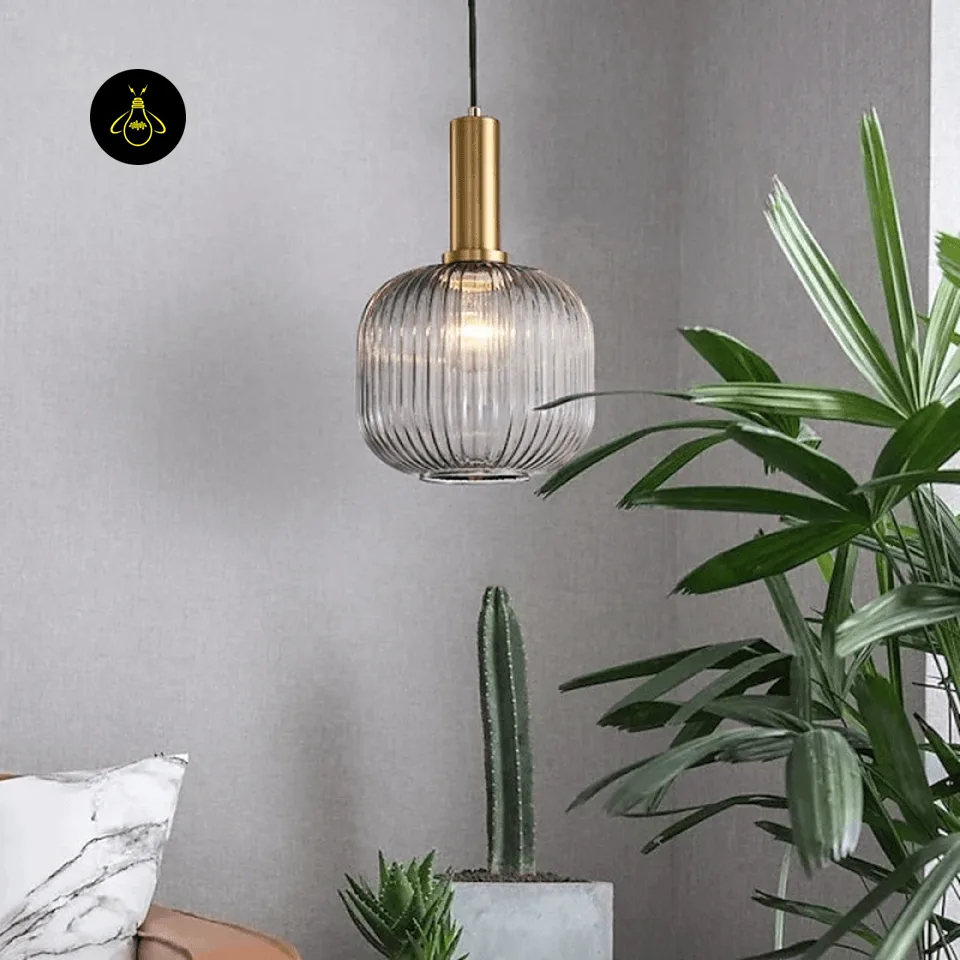
- The fluted glass pendant has a 25 × 36 cm shade and one E27 holder.
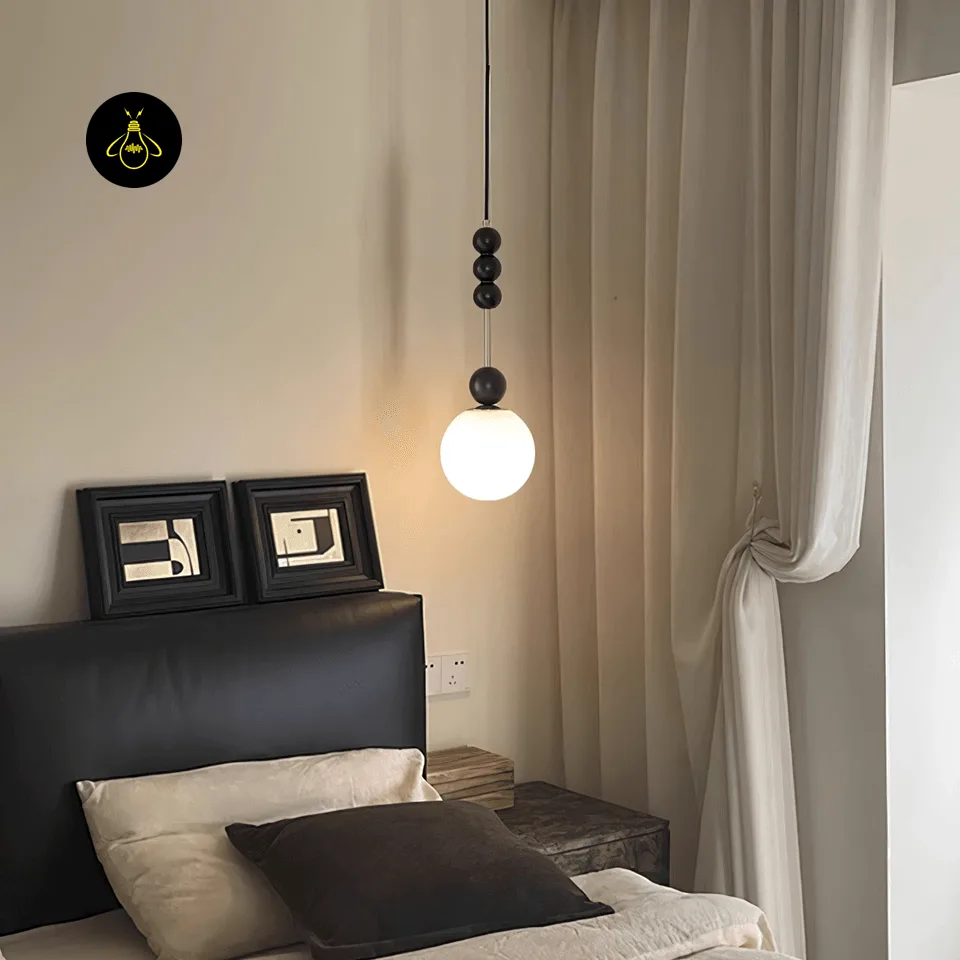
- The glass globe pendant is a 15 cm opal globe with one E27 holder.
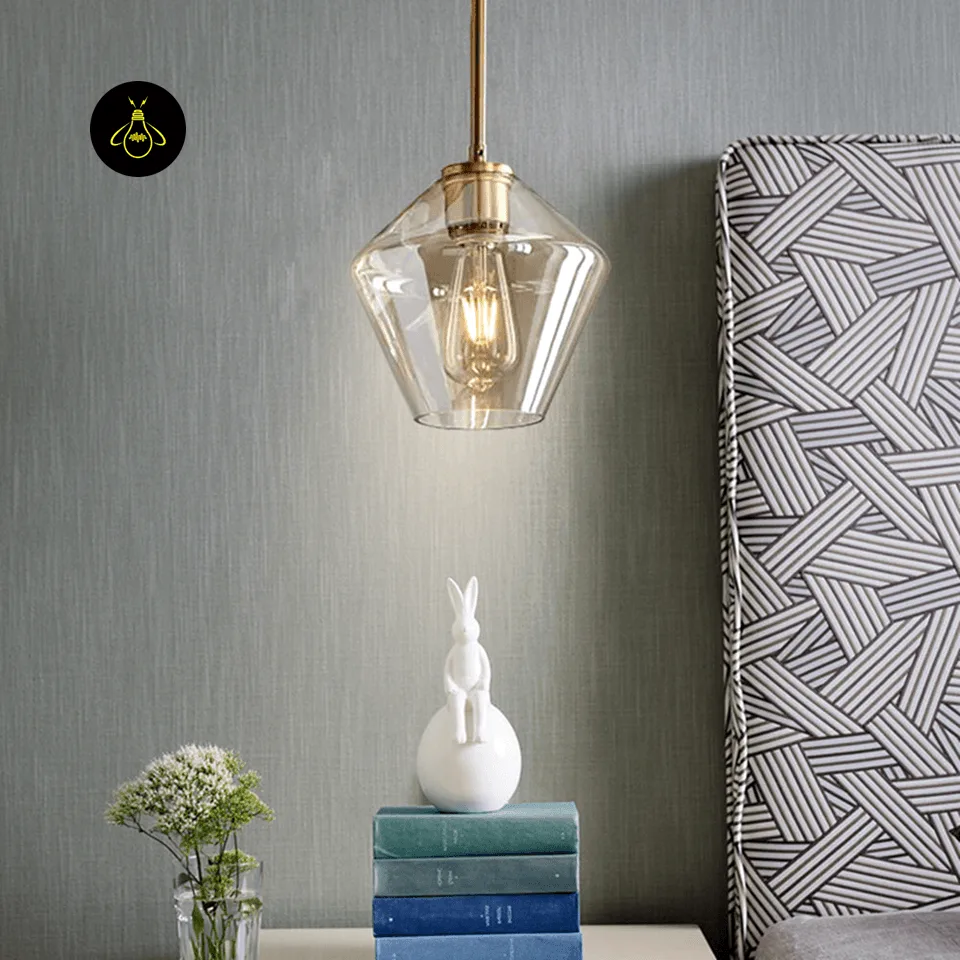
- The faceted amber pendant comes in three sizes, up to 30 × 38 cm.
A shade should also be fixable. We keep spares for 10+ years, so one broken shade does not end the light. Our certifications page lists our CE, UL and ZED marks. Warm light through honest material gives a calm room, the kind of harmony Vastu thinking values.
FAQs
Is borosilicate glass safe with a hot bulb inside?
Yes, borosilicate 3.3 can work at 450 °C for long periods. Fit a 3000K warm-white LED, and the heat stays low.
Does borosilicate glass break?
Yes, it breaks like other glass if dropped or hit. Its strength is heat, so handle the shade with care while you fit it.
What is the difference between borosilicate glass and normal glass?
Borosilicate glass vs normal glass comes down to growth: 3.3 parts per million per °C against about 9. The lower growth lets it take sudden heat changes better.
Can I clean a glass shade with water?
Yes, once the shade is fully cool. Switch off first, and never splash cold water on a warm shade.
Can I replace a broken shade?
Yes, we keep spares for 10+ years. Send us a photo of your light and we will find the part.
Nature gives the material.
Human hands give it meaning.
Vastu inspires harmony.
Light brings it to life.
That is JagMag.
Ready to choose? See our glass pendant lights, made in our own factory in India, with free shipping across India. Read what is borosilicate glass for the making, and does an LED bulb produce heat for the bulb. Not sure? Video-call us.
Sources
- SCHOTT: BOROFLOAT technical details, read 2 Nov 2026.
- SCHOTT: BOROFLOAT 33 data sheet, read 2 Nov 2026.
- American Ceramic Society: thermal stress and glass cookware, read 2 Nov 2026.
- Wikipedia: Borosilicate glass, read 2 Nov 2026.
- Wikipedia: Soda-lime glass, read 2 Nov 2026.
- US Department of Energy: LED lighting, read 2 Nov 2026.