
In the last post we wrote about craftsmanship and the care behind each light. We ended on the quiet side of care. Sometimes the best choice is to leave the material alone.
Today we explain why. A real material always carries its own marks. We see those marks as character, not flaws.
We call this imperfect beauty. Below we show where the marks come from and why we keep them. Then we explain what they mean for the light you bring home.
Every natural material carries its own marks
Nature never makes two pieces the same. Each material shows this in its own way.
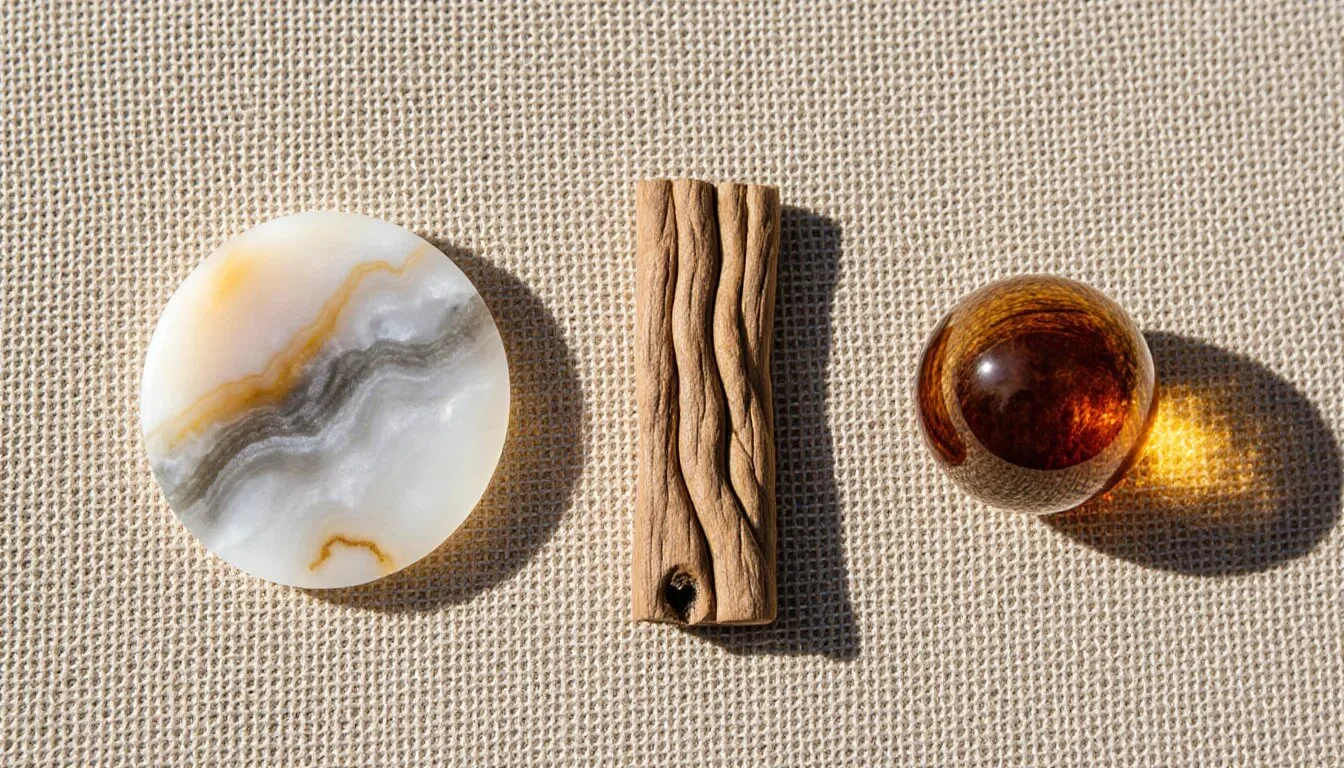
Stone has veins. In alabaster, the veins run along a different line in every block. The colour shifts from cream to soft grey. The edges look darker where the stone is denser.
Wood has grain. A tree grows its rings over many years, so every piece carries its own lines and sometimes a knot.
Hand-blown glass shows the work of the hand. A globe may have a small change in thickness or in its ribs. A woven shade varies a little in tone and in the tightness of its weave.
Light makes these marks easier to see. When the lamp is on, the veins glow, the grain warms and the weave throws its pattern on the wall.
None of these marks is a mistake. Each one records how the material formed, or how a person shaped it.
We choose to keep the marks
A mould can make every piece the same. A print can put one pattern on a thousand pieces. We do not want that sameness in our lights.
Our alabaster disc wall light shows our choice. Our craftsman reads each block before he cuts it. He cuts the disc about 1 cm thin and polishes the face by hand. He leaves the veins where the earth put them.
So no two discs match. Switch one on and the veins rise through the glow. Your disc carries a pattern no other home has.

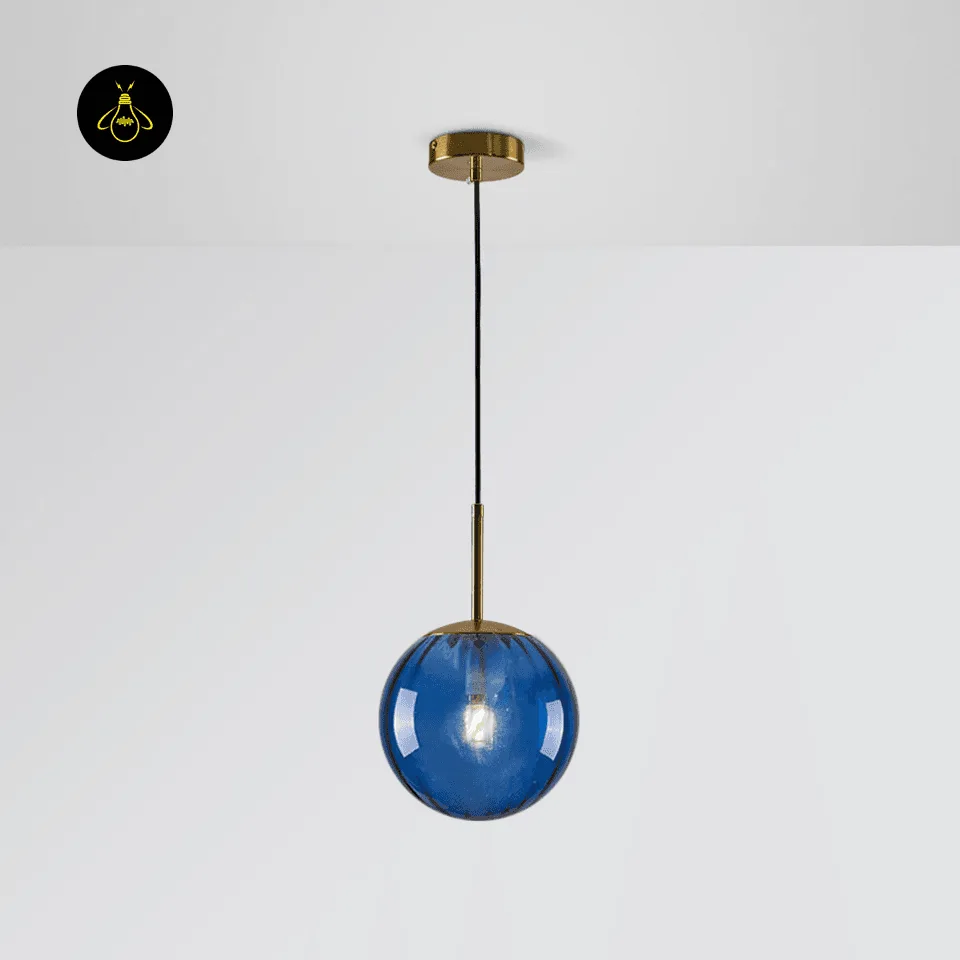
We work the same way with glass. Our globe hanging light is blown by hand, and the ribs are pressed in while the glass is still soft. Look closely and you see small changes in the ribs and in the depth of colour. The hand made those changes. A mould would make every globe the same.
We are not alone in seeing beauty in such marks. Other cultures saw it long before us.
An old Japanese idea says the same
Japan has a name for this way of seeing: wabi-sabi. Wabi-sabi finds beauty in things that are imperfect, simple and natural. A rough clay bowl can be beautiful because of its marks, not in spite of them.
India knows the same feeling. A clay diya shaped by hand is never perfectly round. A handloom fabric shows small changes in its weave. Their small marks tell you a person made them.
Both ideas meet in our work. We do not hide the marks of nature or of the hand. Real materials and warm light also sit well with Vastu thinking, which values the elements of nature in a home. We take that as inspiration, not as a promise.
Knowing all this helps when your own light arrives.
What to expect when your light arrives
Your light will match the design, size and finish on the product page. Its veins, grain, weave or tone will differ a little from the photo. Two pieces of the same design will also differ from each other.
For a pair or a group, tell us when you order. For some stone lights, such as our alabaster hanging light, we can cut matched sets from the same stone batch. The group then feels like one family.
One kind of mark is not character. A crack, a chip or a broken part is damage. If a piece arrives damaged, tell us within 24 hours of delivery with photos, and we sort it.
The natural marks stay with your light for life. Over the years, you will know your light by them.
Some homes need a light that no catalogue holds. In the next post we show how we make a custom light for one room.
FAQs
What is imperfect beauty?
Imperfect beauty means finding beauty in the natural marks of a thing, like veins in stone or grain in wood. We see these marks as the character of a real material, not as flaws.
What does wabi-sabi mean?
Wabi-sabi is a Japanese idea that finds beauty in things that are imperfect, simple and natural. The idea values the marks that nature, time and hands leave on an object.
Is natural variation a defect?
No. Veins, grain, small colour shifts and changes in a weave are natural variation. A crack, chip or broken part is damage, so report it within 24 hours of delivery with photos.
Nature gives the material.
Human hands give it meaning.
Vastu inspires harmony.
Light brings it to life.
That is JagMag.
With you.
Read next: Custom made lights: how we make a light for one room
See stone veins up close: explore our wall lamps →