Borosilicate glass is glass melted from silica sand, boric oxide, soda ash and alumina. The boric oxide helps it take heat and cold far better than window or bottle glass. The glass also stays crystal-clear.
Every glass part we make is borosilicate glass. Today 167 of our 453 lights carry it. Only the stainless steel frame appears in more of our lights.
In the last post we wrote about natural fabrics. Cloth hides the bulb and spreads the light. Glass does the opposite. Clear glass lets light pass straight through.
Our glassblowers shape many of our globes and domes by breath and by hand. In this post we follow the glass from raw earth to the light over your table.
The answer follows our story once again. Nature gives sand and minerals. Human hands, heat and patience turn them into a globe.
What is borosilicate glass? Sand and minerals melted by fire
All glass starts as earth. Borosilicate glass is melted from four natural raw ingredients: silica sand, boric oxide, soda ash and alumina. Boric oxide comes from boron-rich minerals in the earth.
Boric oxide makes the big difference. Most everyday glass, like a window or a bottle, is soda-lime glass. Soda-lime glass expands, or grows a little, when it heats. The glass shrinks again when it cools. Sudden changes in heat can crack it.
Borosilicate glass grows only about a third as much. So it handles heat and cold far better than ordinary glass.
A light needs exactly that. Every evening the bulb warms the glass, and every night the glass cools again. Borosilicate glass takes this daily change, year after year. The glass also stays crystal-clear and pure, so light passes through it clean.
Coloured glass is the same clear glass with a colour added while the glass is made. Opal borosilicate glass has white added, so it glows soft. Amber borosilicate glass has amber added, so it glows warm.
Opal is the glass we use most. More than half of our glass lights carry opal borosilicate glass, and clear borosilicate glass comes next.
Good raw material is only the start. The shape comes from a person.
A glassblower shapes each globe by breath and hand
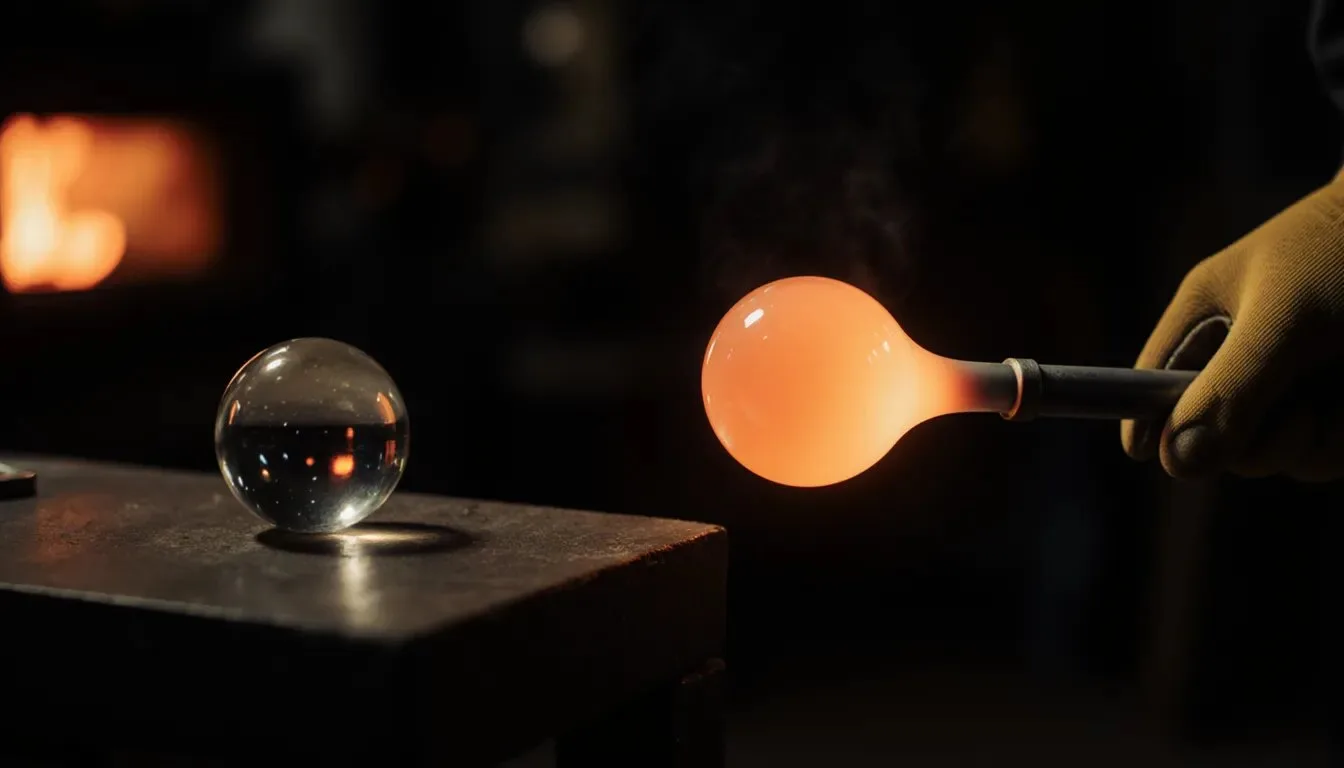
A glassblower dips the end of a long steel pipe into a furnace of molten glass. He lifts out a glowing blob, called a gather. Then he blows into the pipe by mouth, and the gather swells into a bubble.
He turns the pipe all the time, so the soft glass stays round. He reheats it, shapes it with simple tools and blows again. For a ribbed globe, he presses the ribs in while the glass is still soft.
The work is hot and slow. A glassblower learns over years how long to blow, how fast to turn and when to reheat.
Then the glass cools slowly, so it stays strong and does not crack. Only then is a globe ready for the next pair of hands, who fit it to its frame.
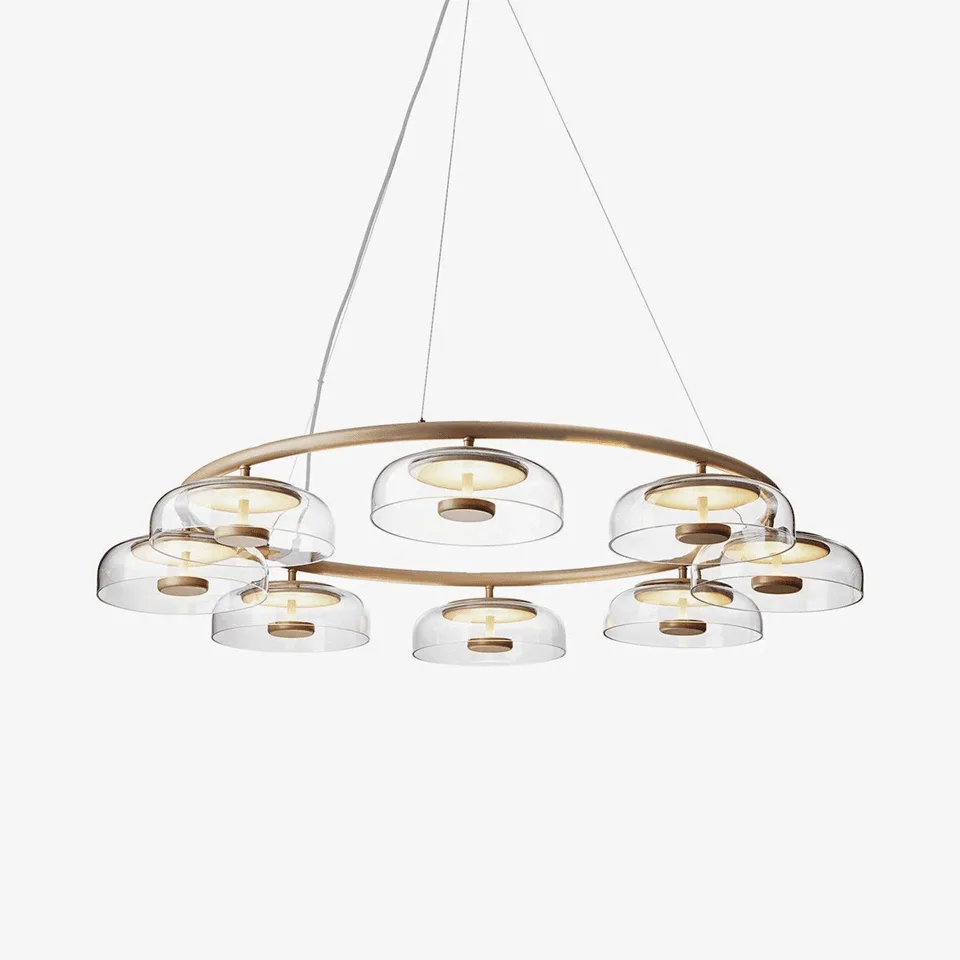
For our glass dome chandelier, the glassblower blows each clear dome by mouth, one at a time. Eight domes then hang on a 100 cm ring.
A machine presses shade after shade from one mould. A glassblower makes one globe at a time, with breath, heat and patience. Human effort shows in the finished glass.
No two hand-blown globes are the same
Breath and hand never repeat exactly. One globe comes out a touch rounder. Another has a slightly thicker wall. The ribs on one sit a little closer than on the next.
We keep these small differences. Each one is the mark of a person, not a mould. We explain why we value such marks in our post on imperfect beauty.
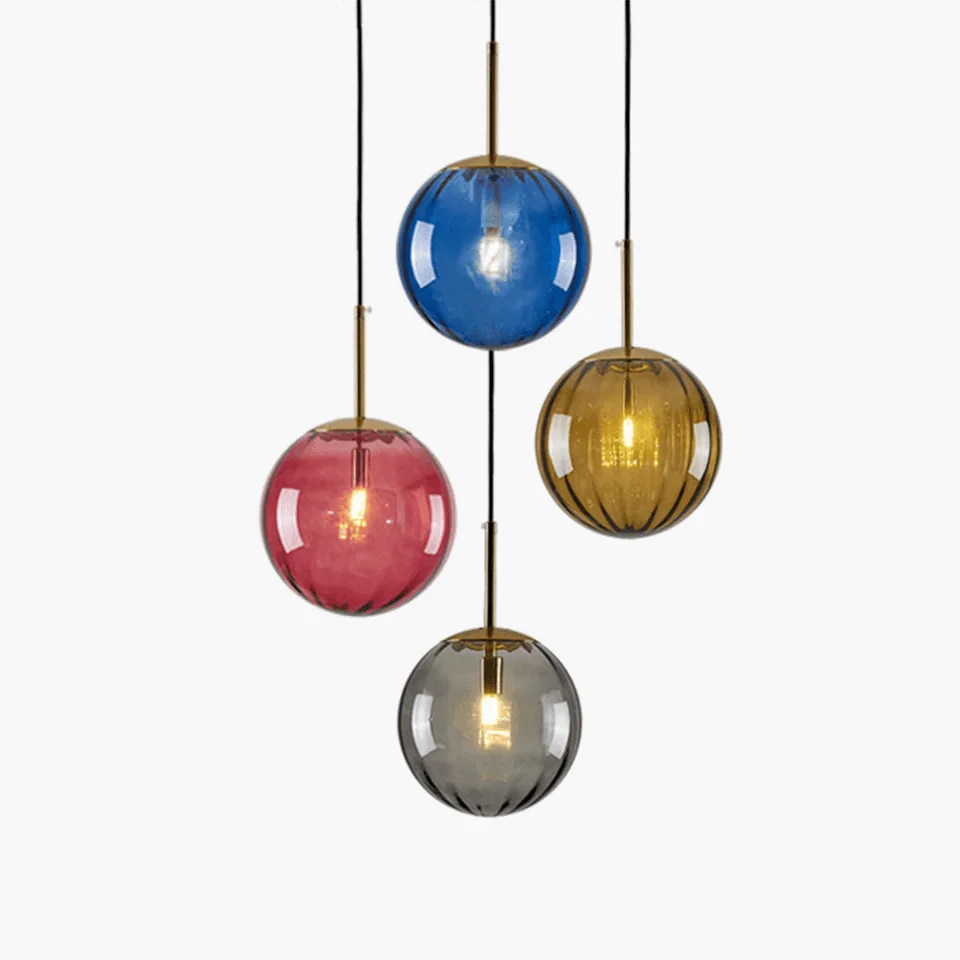
Our globe hanging light shows this well. Each ribbed ball is blown by hand in blue, pink, brown, gold-lustre or smoked borosilicate glass. Hang a few together, and you see how each globe holds the light in its own way.
Put two of the same colour side by side, and you can still tell them apart. Each globe is one of a kind.
Our glass table lamp shows the same thing in another way. Its body is hand-blown opal borosilicate glass, cream with black spots. The spots never fall the same way twice.
Light shows each glass differently. Clear borosilicate glass lets you see the warm bulb inside. Ribbed glass breaks the light into fine lines. Opal borosilicate glass turns the whole globe into a soft, even glow. Amber and smoked glass deepen the light into a warm evening tone.
We suggest a 3000K warm-white LED for every glass light. Warm light keeps clear glass gentle and makes amber glass glow like honey.
Glass begins as sand, and people make it with fire. Some crystals form deep inside the earth on their own. In the next post we look at crystals and gemstones in light, and which of them are natural.
How safe is borosilicate glass near a hot bulb?
Buyers often ask this before they hang glass over a dining table or a child’s bed. For heat, the answer is yes. SCHOTT, a German glass maker, publishes full figures for its borosilicate 3.3 grade, and soda-lime glass is the window and bottle glass you know.
| What we measure | Borosilicate 3.3 | Soda-lime glass |
|---|---|---|
| Growth per 1 °C of warming | 3.3 parts per million | 9 to 9.5 parts per million |
| Sudden temperature change it survives | 125 to 175 °C, by thickness | under about 56 °C |
| Long-use temperature limit | 450 °C | not given in our sources |
| Weight per cubic cm | 2.23 g | 2.52 g |
The two sudden-change figures come from different tests, so read them as a rough guide. The American Ceramic Society reports a similar gap for cookware: about 330 °F of sudden change for borosilicate, against under 100 °F for soda-lime.
The bulb decides most of the heat. The US Department of Energy says an old filament bulb turns about 90% of its energy into heat. A 60 W filament bulb gives 60 × 0.9 = 54 W of heat. A 6 W LED draws 6 W in total, so its heat can never pass 6 W: 54 ÷ 6 = 9 times less, at the very least.
Glass rarely cracks from slow, even heat. Glass cracks when one spot is hot and the spot beside it is cold, because the hot part grows and pulls against the cool part. A cold splash on a warm shade does exactly that. So switch off, let the shade cool, then wipe it with a soft cloth.
Borosilicate glass still breaks if you drop it or knock it hard; its strength is heat, not impact. On 2 November 2026 we counted 29 glass pendants in our catalogue: 7 have a built-in 3000K LED, and 22 have a bulb holder (14 E27, 3 E14 and 5 G9). The bulb is not included on those 22, so fit a 3000K warm-white LED. If a shade ever breaks, we make the spare part, so one broken shade does not end the light.
FAQs
What is borosilicate glass?
Borosilicate glass is glass made from silica sand, boric oxide, soda ash and alumina. The boric oxide helps it handle heat far better than ordinary glass, and it stays crystal-clear. Every glass part we make uses it.
Is borosilicate glass safe near a hot bulb?
Yes, borosilicate 3.3 can work at 450 °C for long periods and grows about a third as much as normal glass when it heats. Use the bulb wattage given on each product page, and never splash cold water on a warm shade.
Why do two hand-blown globes look slightly different?
Each globe is blown and shaped by hand. Its curve and its wall change a little from one globe to the next. We see this as the mark of human work.
Nature gives the material.
Human hands give it meaning.
Vastu inspires harmony.
Light brings it to life.
That is JagMag.
With you.
Read next: Natural crystals in our lights: quartz, jade and K9 crystal
Bring hand-blown glass into your room: see our glass chandeliers →