Terracotta is clay fired in a kiln until it turns hard. The word means “baked earth”. Today 7 of our 453 lights use fired clay: one terracotta pendant, four ceramic leaf chandeliers and two glazed ceramic table lamps.
In the last post we wrote about bamboo, cane, rattan and jute. All four grow from the soil. Today we go one step deeper, to the soil itself.
Clay is earth. Fire turns soft clay into hard terracotta and ceramic. Our craftsmen shape that clay by hand, and light shows its texture.
In this post we show how clay becomes a light. Clay follows the same line as our story: nature gives the material, and human hands shape it.
What is terracotta? Clay that fire has made hard
Clay is very fine earth. When wet, it turns soft and sticky. You can press it, roll it and shape it with your hands.
Wet clay stays soft. Fire changes it for good. The clay goes into a kiln, a very hot oven, often at about 1,000°C. After firing, the clay turns hard and never goes back to mud.
Iron in the clay gives fired clay its warm red-brown colour. Terracotta without a glaze stays porous. Porous means it has tiny holes that let some air and water in.
Terracotta belongs to a larger family called ceramic. Every ceramic is clay hardened by fire. Porcelain uses fine white clay and a hotter fire. A glaze, a thin glassy coat, can seal and colour the surface.
Indian homes have always lived with fired clay
You already know terracotta. The matka keeps drinking water cool because its clay is porous. The diya holds a flame at Diwali. The kulhad holds tea at a railway station.
People in the Indus Valley shaped terracotta figures more than 4,000 years ago. Potters across India still shape clay today.
We bring the same earth into light. The material is old and familiar. The forms are made for modern rooms. Vastu thinking links clay with the earth element, and we take that as inspiration.
Our craftsmen shape, glaze and fire every piece
Clay needs a pair of hands at every step. We do that work in our own factory.
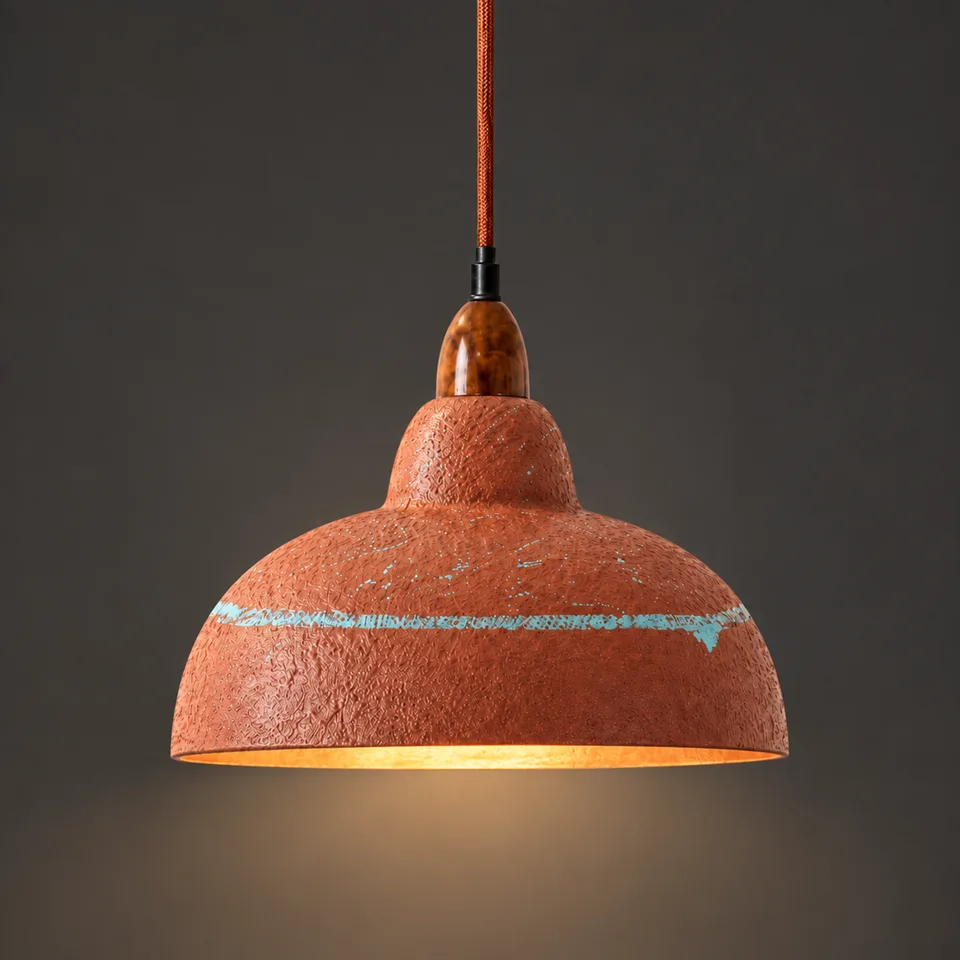
For our terracotta pendant light, a craftsman shapes a 35 cm dome and fires it. He keeps the grainy texture instead of sanding it smooth. Then he paints one blue-green line around the dome by hand and lets the line break and fade in places.
A turned wood finial, 5.5 cm tall, sits on top of the dome. A braided fabric cord in a rust-brown weave carries the light down from the ceiling. Unlit, the dome looks like a piece of rustic pottery.
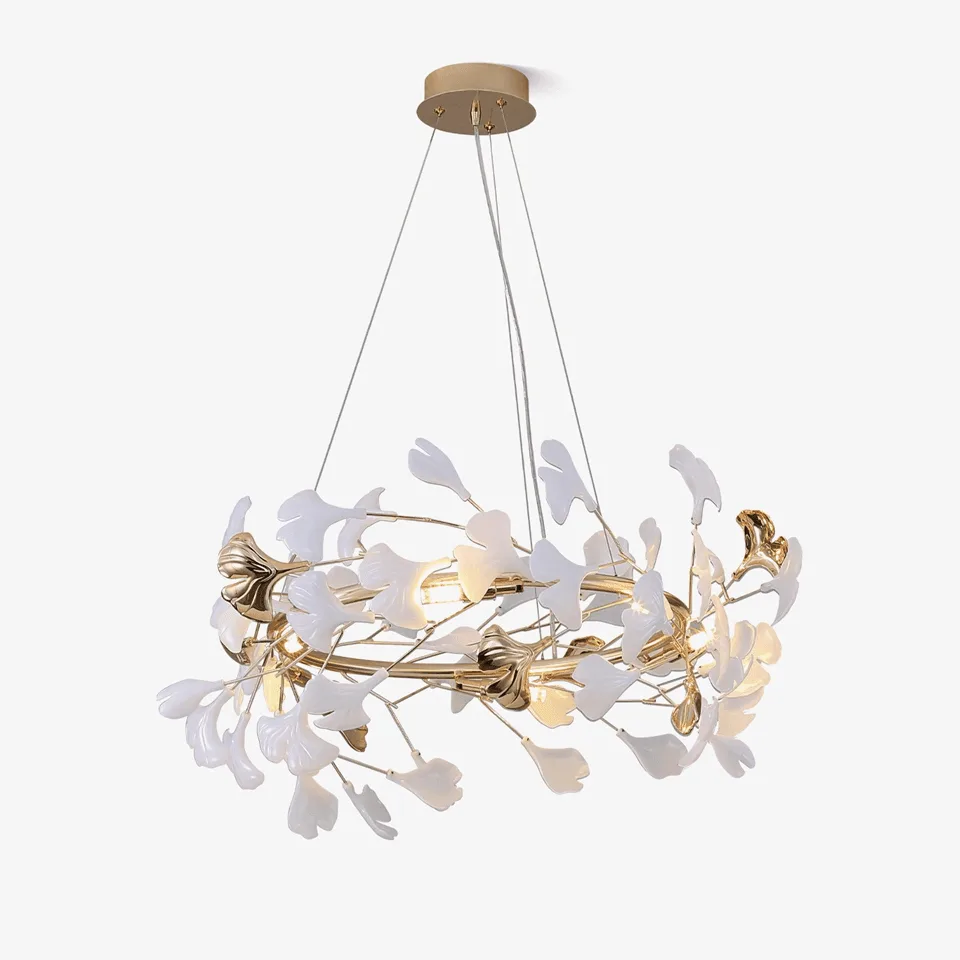
For our ginkgo leaf chandelier, he presses each leaf from clay. He gives it the fan shape of a real ginkgo leaf. Then he glazes the leaf white and fires it. Last, he sets every leaf on its branch by hand, one at a time, around an 80 cm ring.
Clay also takes the shape of a lamp body. Our stacked ceramic table lamp stands 90 cm tall. Its body is six rings of glazed ceramic, each shaped by hand and fired. Our glazed ceramic table lamp has a gourd-shaped base in deep blue.
No two leaves come out exactly alike, and no two domes carry the same painted line. Behind every clay piece is patient human effort, from the first press to the last leaf.
Light shows two sides of fired clay
A thick clay shade holds the light in. Switch on the terracotta pendant, and it sends a warm pool of light down onto your table. The inside of the dome glows a soft amber. The grainy rim catches the light.
A thin glazed leaf lets the light through. On our ceramic petal chandelier, warm light glows through dozens of porcelain leaves along a 120 cm branch. A few leaves are glazed in gold. Each leaf glows softly, layer behind layer, with no hard glare.
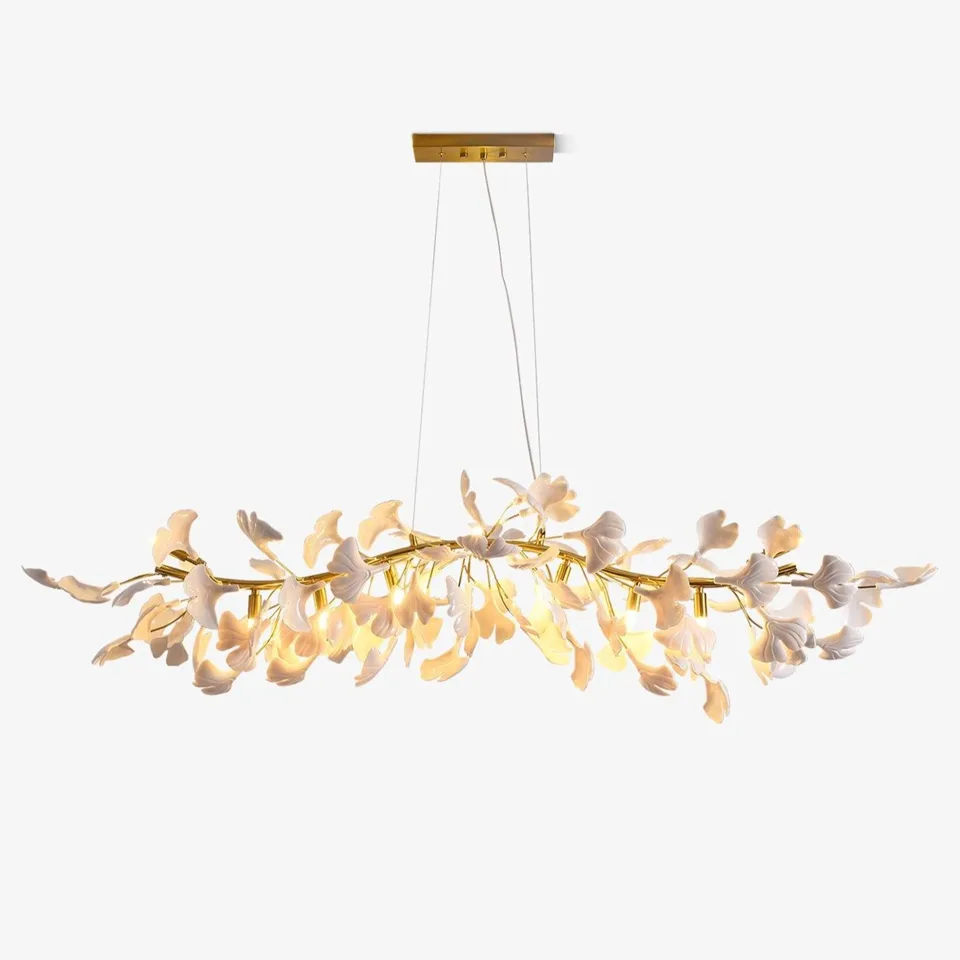
We suggest a 3000K warm-white LED for every clay light. Warm light suits the earthy colour of terracotta and the soft white of porcelain.
Clay needs fire to become terracotta. Cloth needs a loom and a pair of hands. In the next post we turn to handcrafted fabrics: linen, silk and cotton shades that soften light.
FAQs
What is terracotta?
Terracotta is clay fired in a kiln until it turns hard. Its name means “baked earth”, and iron in the clay gives it its red-brown colour.
Is terracotta the same as ceramic?
Terracotta is one kind of ceramic. Every ceramic is fired clay, and porcelain is a finer white clay fired at a higher heat.
Which JagMag lights are made of fired clay?
Seven of our lights use fired clay: our terracotta pendant light, four ceramic leaf chandeliers and two glazed ceramic table lamps. Each product page names the material.
Nature gives the material.
Human hands give it meaning.
Vastu inspires harmony.
Light brings it to life.
That is JagMag.
With you.
Read next: Natural fabrics: how linen, silk and cotton soften light
Bring fired clay into your room: see our ginkgo leaf chandelier →