Your daughter sits down to study at 9 pm. An hour later she is rubbing her eyes and asking for a break. You start to wonder whether the lamp on her desk is the problem.
Often it is. Which light is good for eyes while studying comes down to five checks: enough light on the page, no bare bulb in view, steady light, a room that is not dark around the desk, and the lamp on the correct side. Below we work through each check with real numbers, then explain why the eye cares.
The short answer
Aim for about 500 lux on the page, from a lamp whose shade hides the bulb, placed on the side opposite the writing hand. Keep the room light on so the desk is not a bright island in a dark room. For evening study, choose warm 3000K light.
Which light is good for eyes while studying: the five checks
Lux is the amount of light landing on a surface, the way rainfall is the amount of water landing on the ground. Lighting standards give a number for a reading desk, and most table lamps made for reading are judged against the same numbers.
| Check | Target | Who says so |
|---|---|---|
| Light on the page | About 500 lux | European standard EN 12464-1 for reading and writing |
| Light around the desk | One step lower, so 300 lux next to a 500 lux page, in a strip at least 0.5 m wide | EN 12464-1 |
| Bulb | Hidden by a shade | Lighting Research Center |
| Lamp side | Left for a right-handed child, right for a left-handed child | Lighting Research Center |
| Flicker | 10% or less when the flicker speed is unknown | IEEE 1789, via the US Department of Energy |
| Colour rendering (CRI) | At least 80 out of 100 | BRE, via Designing Buildings |
CRI, the colour rendering index, tells you how true colours look under a light; sunlight scores 100. A score of 80 or more keeps red ink red and blue ink blue. India’s own lighting code, IS 3646, lists 300 to 500 lux for classrooms and offices, so 500 lux on the page sits at its upper end.
How close should a study lamp be, and how many breaks does the eye need?
Three short sums turn the checks into numbers you can use tonight.
- Distance. Say your lamp gives 500 lux on the page when the head is 40 cm away. Move it to 80 cm and the distance doubles. Light falls with the square of distance: (40 ÷ 80)² = 0.25, so the page now gets 500 × 0.25 = 125 lux.
- A smaller move. From 40 cm to 60 cm: (40 ÷ 60)² = 0.44, so 500 × 0.44 = 222 lux. A 20 cm change cuts the light by more than half.
- Breaks. The 20-20-20 rule asks for a 20-second look at something 20 feet (6.1 m) away every 20 minutes. A two-hour study session is 120 ÷ 20 = 6 breaks.
- Blinks. The American Academy of Ophthalmology says we blink about 15 times a minute, but only 5 to 7 times on a screen. The drop is (15 − 7) ÷ 15 = 53% to (15 − 5) ÷ 15 = 67% fewer blinks, and fewer blinks dry the eye.
On 30 October 2026 we counted the 10 desk lamps in our own catalogue. Seven take a bulb (two E27, one GU10, one E14 and three G9 holders), and three have a built-in LED. They stand 25 cm to 66 cm tall, and the middle height is about 45 cm.
Why these rules protect the eyes: the logic and the science
Dim light does not harm the eye for good. ZEISS notes there is no evidence that reading in poor light damages eyes, but the eyes tire faster, with red eyes and headaches. The American Academy of Ophthalmology adds that light too bright or too dim tires the eyes, and eye strain does not cause permanent damage.
The side rule follows a simple chain. A right-handed child writes with the right hand. A lamp on the right throws the hand’s shadow across the line being written. A lamp on the left lights the page from the other side, so the shadow falls away from the pen.
The room light matters for the same reason a phone screen hurts in a dark bedroom. The ophthalmology academy says a screen that glows brighter than its surroundings makes the eyes work harder. A bright page in a black room asks the eye to keep adjusting each time it looks up.
Flicker is light pulsing on and off many times a second, often too fast to notice. A US Department of Energy summary of the IEEE 1789 guide links flicker with headaches, fatigue, blurred vision and eye strain. A steady, well-made LED and a shade over it remove both flicker worries and glare.
Colour temperature, measured in kelvin (K), describes whether light looks warm like a candle or cool like a cloudy sky. A 2011 study found that cool 6500K evening light sped up attention tasks, but it also cut the sleep hormone melatonin more than 3000K light. Harvard Health reports that blue-rich light at night shifted the body clock by 3 hours, against 1.5 hours for green light. So the logic splits by time: daylight from a window suits daytime study, and warm 3000K light suits the evening, when sleep comes next.
The JagMag way: stone, glass and a craftsman’s eye for comfort
A good study lamp starts with heavy, honest materials that keep it steady. Travertine and marble form beneath the earth. Borosilicate glass is melted from silica sand, boric oxide, soda ash and alumina. In our Greater Noida factory, our craftsmen have cut, polished and assembled these by hand since 2015, so the light lands on the page and not in the eye.
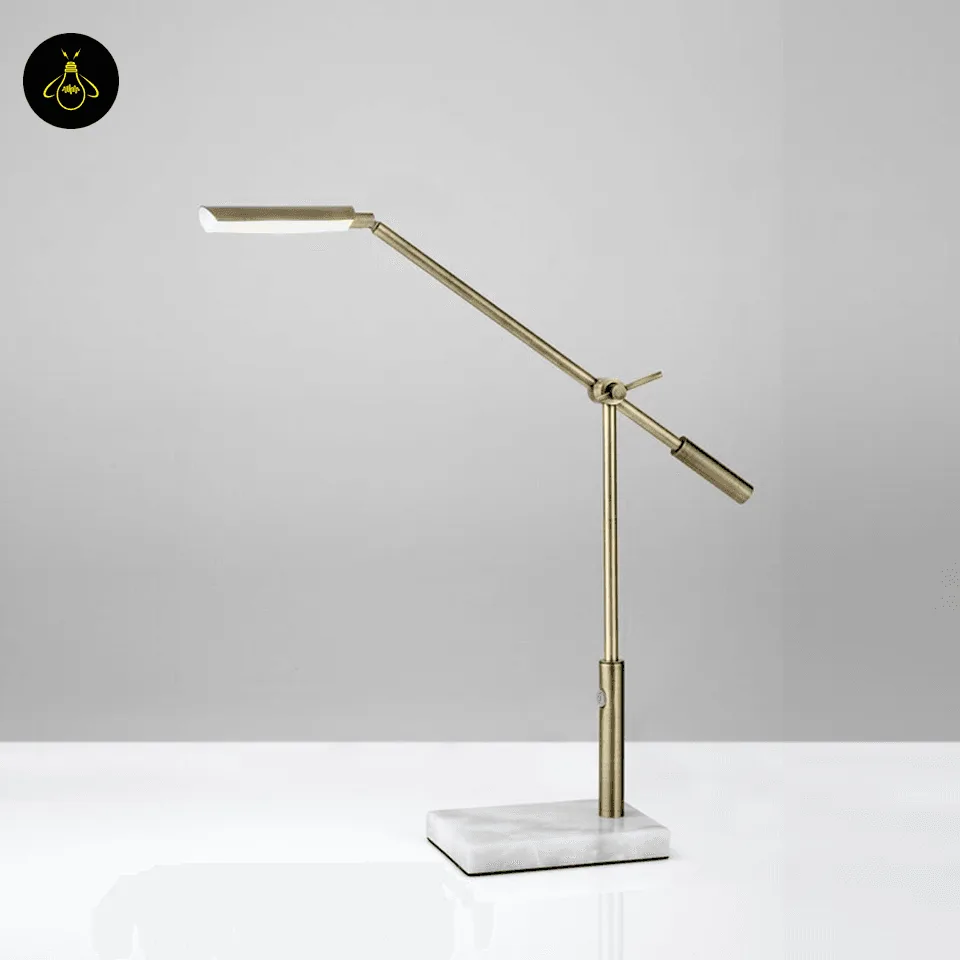
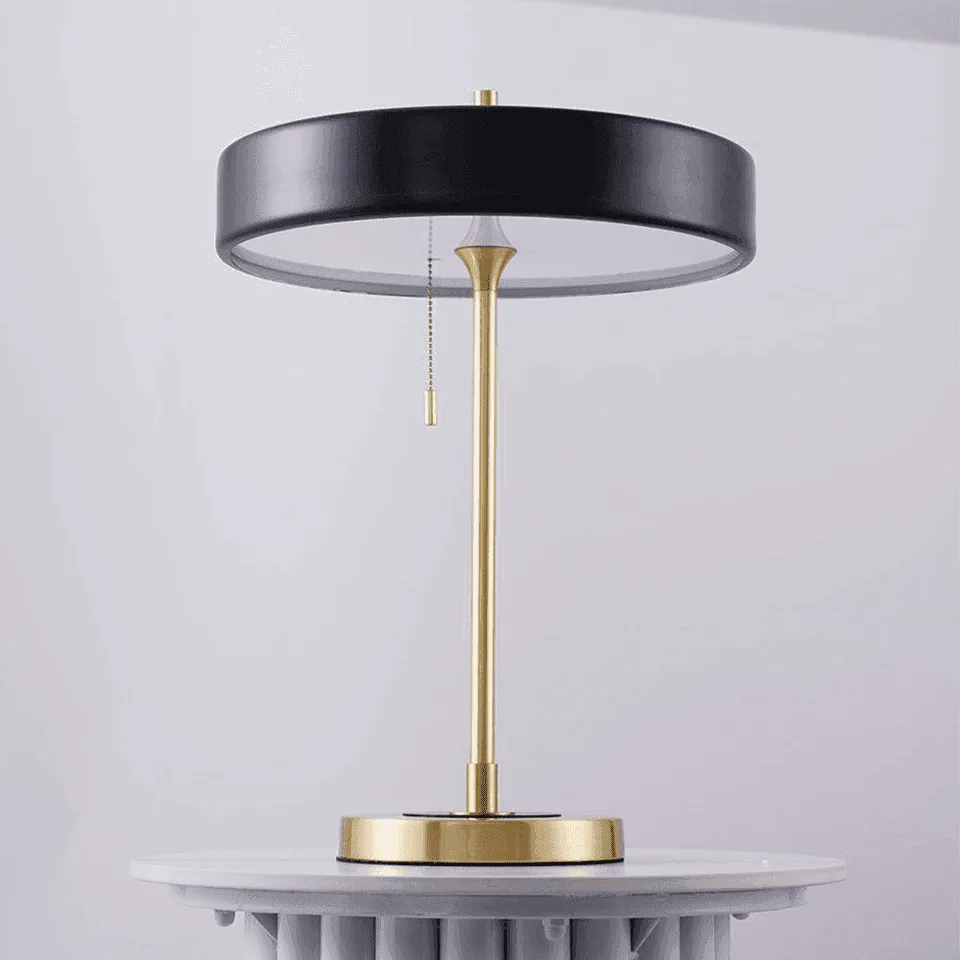
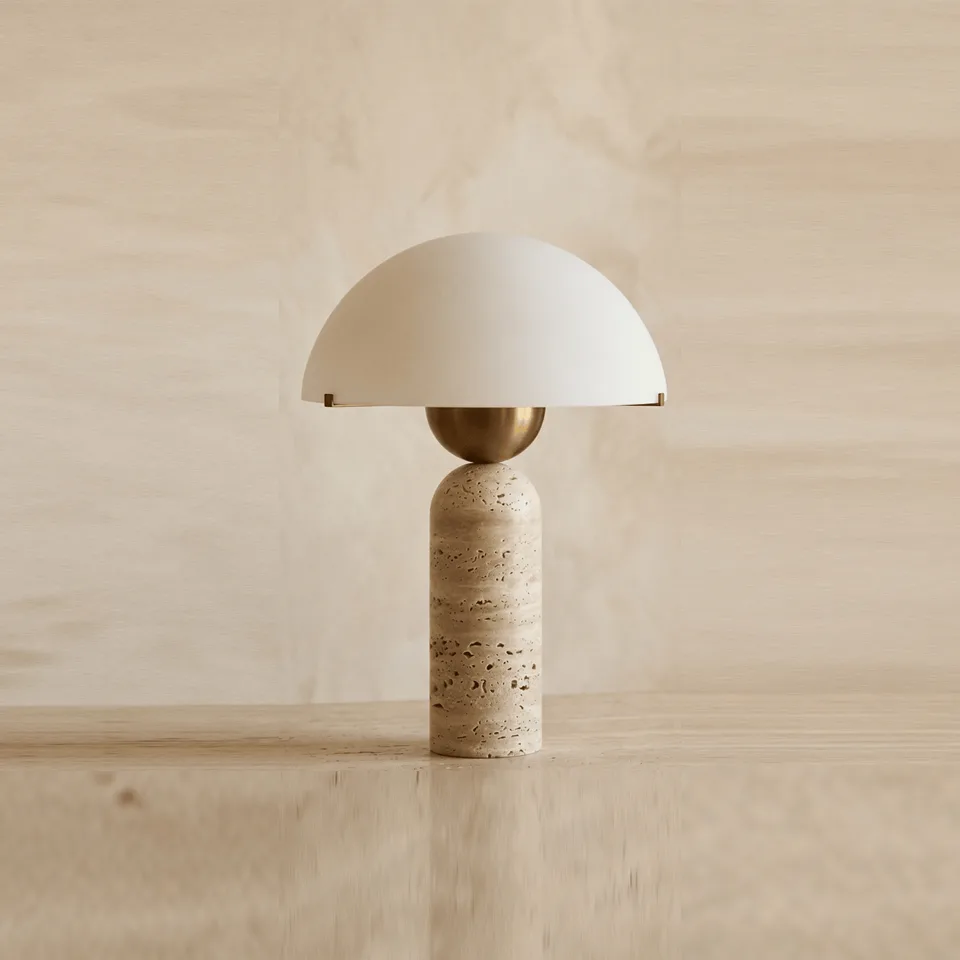
The antique brass desk lamp stands on a real white marble base, adjusts from 41 to 66 cm tall and reaches up to 56 cm across a desk. Its built-in LED is 3000K warm white. The travertine table lamp with an opal glass dome is 43 cm tall; its 25 cm dome of opal borosilicate glass hides the E27 bulb and spreads the light softly. The retro study lamp is 49 cm tall with a 35 cm disc over three G9 lights, the small two-pin bulbs used in compact lamps.
Bulb lamps come without a bulb; fit a 3000K warm-white LED. Built-in LEDs carry a one-year warranty for orders from 4 October 2026, as our legal policies set out. Stone and warm light also suit Vastu thinking, which values a calm, well-lit study corner. We see that as harmony at the desk, not a promise of marks or luck.
FAQs
Which light is good for eyes while studying at night?
Warm 3000K light, about 500 lux on the page, from a shaded lamp with the room light still on. Warm light disturbs sleep hormones less than cool light at night.
Which light is best for study, white or yellow?
By day, daylight or white light helps you stay alert; at night, warm yellow 3000K light is gentler on sleep. A 2011 study found cool light sped up attention but cut melatonin more.
Is a study lamp good for eyes in a dark room?
No, a study lamp alone in a dark room makes the eyes work harder. Keep the room lit to about one step below the desk, so 300 lux next to a 500 lux page.
Does reading in dim light damage the eyes?
No, dim light does not cause permanent damage, but the eyes tire faster. Expect red eyes and headaches after long reading in poor light.
On which side should a study lamp be placed?
Place the lamp on the left for a right-handed child and on the right for a left-handed child. The hand’s shadow then falls away from the writing.
Nature gives the material.
Human hands give it meaning.
Vastu inspires harmony.
Light brings it to life.
That is JagMag.
Ready to set up the desk? See our desk lamps. For the numbers behind 500 lux, read how many lumens for reading, and for placement, study table direction as per Vastu. Not sure? Video-call us and show us the desk.
Sources
- Fagerhult – Classroom lighting, 500 lx at reading and writing areas (read 30 Oct 2026)
- Glamox – Libraries and study halls (EN 12464-1 values) (read 30 Oct 2026)
- TRILUX – Illuminance in the immediate surrounding area (read 30 Oct 2026)
- IS 3646 summary – recommended illuminance (read 30 Oct 2026)
- Lighting Research Center – Plug-in lighting pattern book (page no longer online) (read 30 Oct 2026)
- US Department of Energy – Flicker: the IEEE recommended practice (read 30 Oct 2026)
- Designing Buildings – Colour Rendering Index (read 30 Oct 2026)
- American Academy of Ophthalmology – Computers, digital devices and eye strain (read 30 Oct 2026)
- American Academy of Ophthalmology – What is eye strain? (read 30 Oct 2026)
- ZEISS – Does reading in poor light damage your eyes? (read 30 Oct 2026)
- Powers Health – The 20-20-20 rule (read 30 Oct 2026)
- Chellappa et al., 2011 – Can light make us bright? (PMC) (read 30 Oct 2026)
- Harvard Health – Blue light has a dark side (read 30 Oct 2026)
- HyperPhysics – Inverse square law for light (read 30 Oct 2026)