
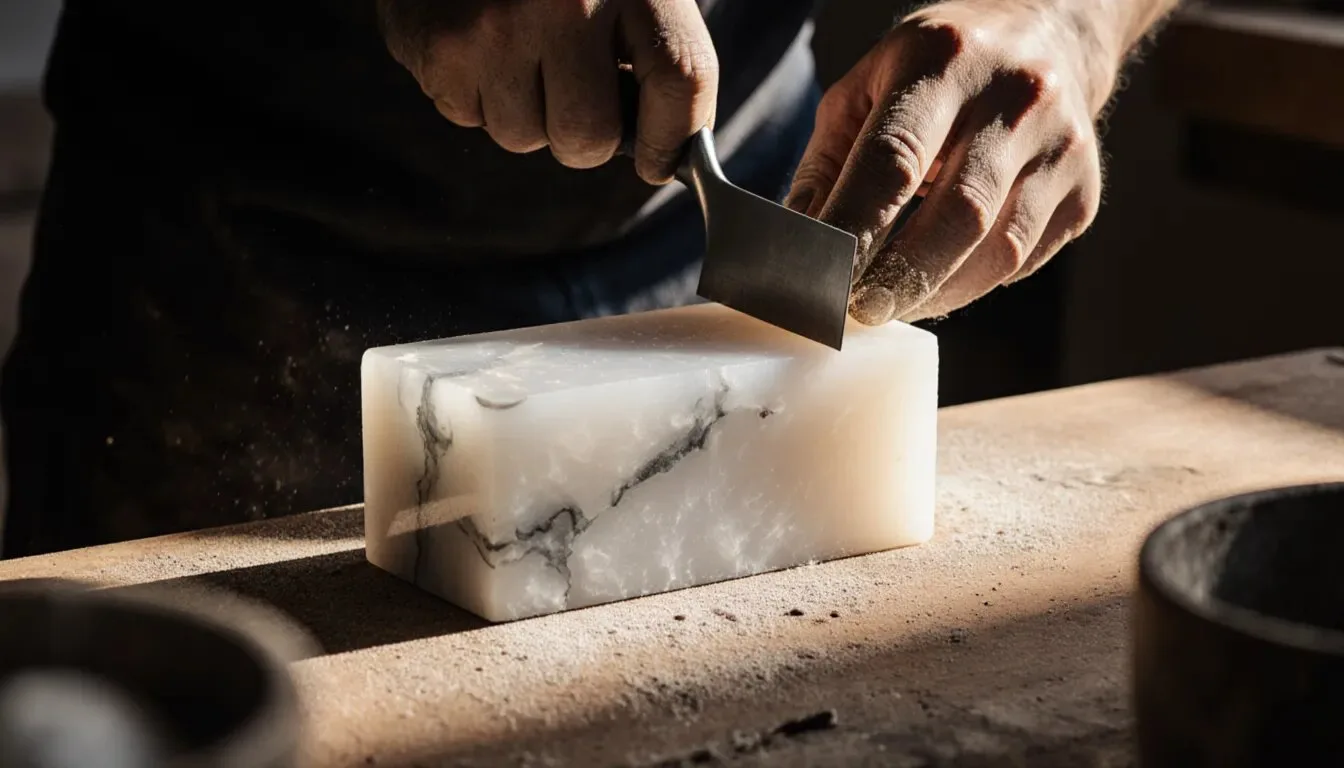
In the last post we showed how we make a custom light for one room. Our craftsmen cut every fin and hung every crystal by hand. Their skill did not begin in our factory.
India has shaped stone, wood, clay, glass and cloth by hand for centuries. Today we look at that heritage and at our small place in it.
For us, Indian craftsmanship is a skill that passes from one pair of hands to the next. Our workshop is one more link in that line.
India’s crafts grew town by town
Across India, many towns are known for one craft. Workshops and families in each town have shaped the same material for generations.
Uttar Pradesh, the state where our factory stands, shows this well. Saharanpur carves wood, often sheesham and teak. Carvers have worked there since the 14th century.
Agra sets thin pieces of coloured stone into white marble. The craft grew in the Mughal years. Firozabad melts and shapes glass, and people call it the city of glass.
In each of these towns, the skill lives in people more than in books. A young worker learns by watching a master. Then he does the work himself, again and again.
Skill passes from hand to hand
India has an old name for this way of learning: guru-shishya parampara. A guru is a teacher. A shishya is a student. Parampara means a tradition handed down.
Craft is learned this way because much of it cannot be written down. A carver learns how deep a chisel should go. A stone worker learns how hard to press before the stone cracks. Only years at the bench teach these things.
The teacher shows, the student copies, and the teacher corrects. Over the years, the student’s hands learn what his eyes once saw.
So a finished piece holds more than one person’s work. The piece also holds the lessons of everyone who taught that person.
We see our own work as part of this line.
Our workshop carries the same skill into light
We started in 2015 in a small rented room. We did not invent hand work. We brought hand work into lighting.
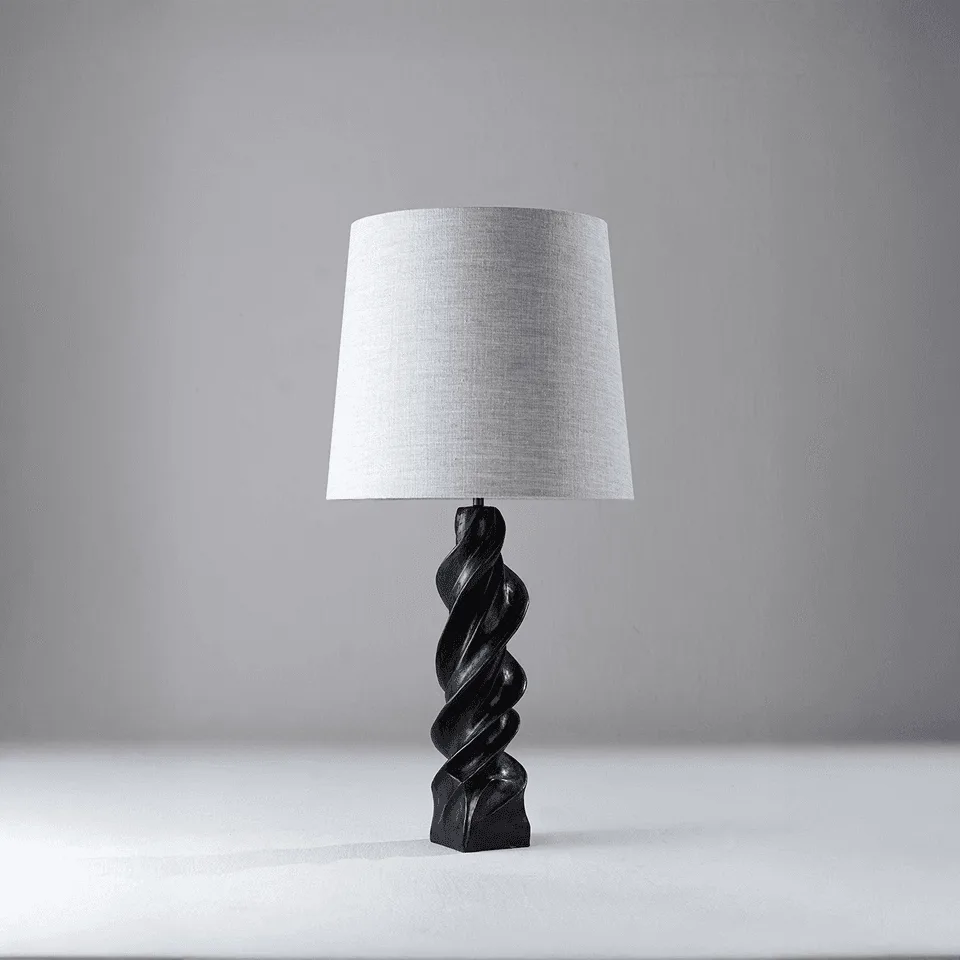
In our factory, old skills meet a new use. Our spiral table lamp shows how. Its column is a barley twist, an old carver’s pattern. Our craftsman marks the twist on solid wood and carves it one groove at a time.
Each turn of the twist has to meet the next one cleanly. The craftsman keeps that line all the way up the 46.5 cm column.
Stone work follows the same path. Our alabaster mushroom table lamp is carved from one block of natural stone. The craftsman reads the veins first. Then he hollows the bowl and polishes the stone by hand. He takes the walls thin enough for light to pass through.

Our tools have changed over the years. The decisions still sit with a person, as they always have in Indian craft.
Why we keep the old skills at work
A machine can copy a shape. A machine cannot learn to read a block of stone. Hand knowledge stays alive only while people use it.
So we keep hand work at the centre of every light we make. Each order keeps skilled hands busy at the bench.
When you bring home a hand-carved lamp, you also keep a craft in use. The lamp lights your room, and the skill behind it goes on.
Behind every piece is patient human effort, learned over many years. We want you to feel that effort each time you switch on the light. For us, Indian craftsmanship is not a word on a label. Indian craftsmanship is the work itself.
Vastu thinking values natural materials in a home, shaped with care. Indian craft has always worked with stone, wood and clay. We take that as inspiration, not as a promise.
We wrote about each hand step in our post on handmade lights. In the next part of the series, we turn to Vastu and the five elements.
FAQs
What is Indian craftsmanship?
Indian craftsmanship is the hand skill of shaping natural materials like stone, wood, clay, glass and cloth. Teachers pass this skill to students over generations, and we bring it into light.
What does guru-shishya parampara mean?
Guru-shishya parampara means the tradition of a teacher passing skill and knowledge to a student. Many Indian crafts are still learned this way, at the bench.
Where are JagMag lights made?
We make every JagMag light in our own factory, Uttar Pradesh. Our craftsmen carve, polish and assemble each piece by hand.
Nature gives the material.
Human hands give it meaning.
Vastu inspires harmony.
Light brings it to life.
That is JagMag.
With you.
Read next: Panch tatva: Vastu Shastra’s five elements and our light
See hand skill turned into light in our decorative lights →