
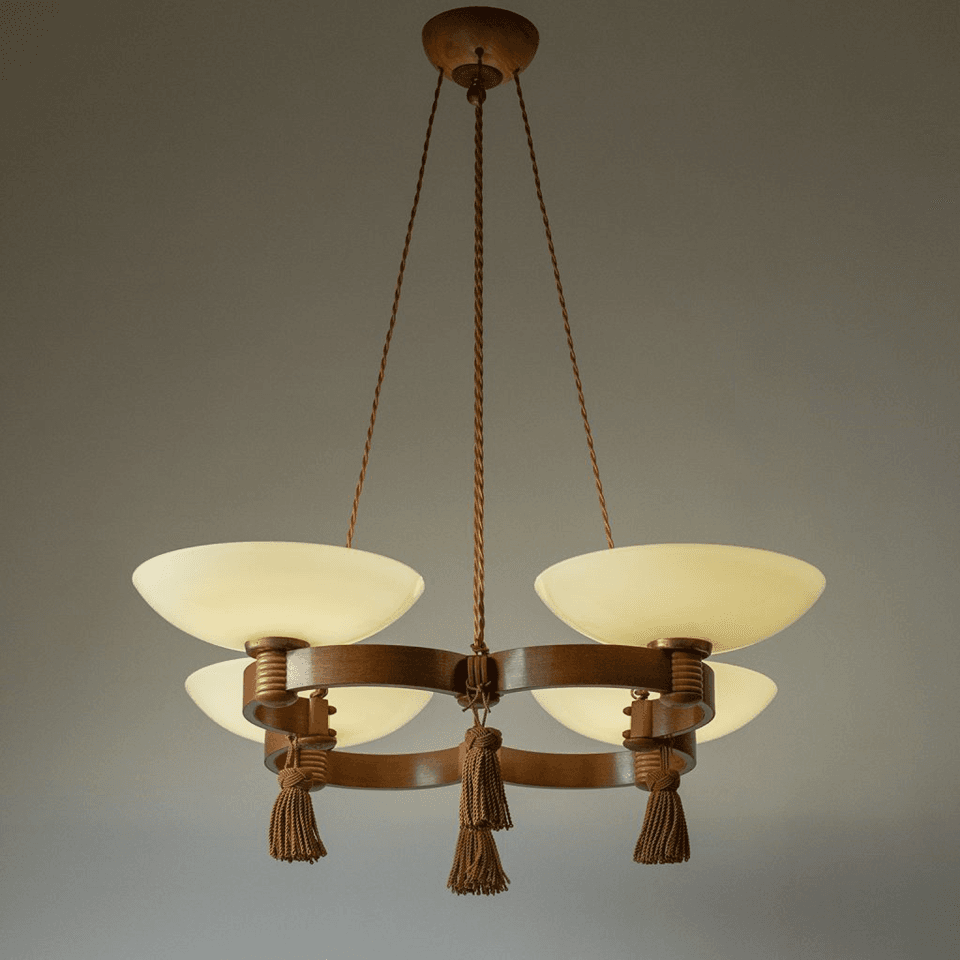
You want a wooden chandelier for the dining room. Warm, earthy, a little different from the usual crystal.
You search online and find dozens. Most photos show brown arms and a cosy glow. Many titles say “wooden”.
Then you open the details. One listing says the material is metal. Another says PVC. A third says MDF.
You wanted wood. The title promised wood. The fine print tells a different story, and it is easy to miss.
Below, you will see how to tell a real wooden chandelier from a wood-look one. You will also get five checks you can do in a minute.
The short answer
A real wooden chandelier names its wood: teak, walnut, oak, sheesham or mango. A wood-look light often names metal, aluminium, PVC or MDF in the material line. Read that line before you pay, and ask the seller to name the wood in writing.
What “wooden” really means on a listing
The word “wooden” in a product title is a description. The material line below it is the fact. The two do not always match.
We read one IndiaMART page of 28 “wooden chandelier” listings. At least 6 of them named metal, aluminium, PVC or MDF as the material, not solid wood.
One listing was titled “Metal Smart Antique Wooden Chandelier”. Its material line said metal, with PVC on the side. Another listing named only aluminium.
MDF needs a word of its own. MDF is board made from wood waste mixed with glue and wax, then pressed flat under heat. MDF starts life as wood, but MDF is not solid wood with a grain of its own.
Paint and print can make metal or board look like wood from a distance. Up close, real wood tells a different story. The grain changes from piece to piece, because every tree grew in its own way.
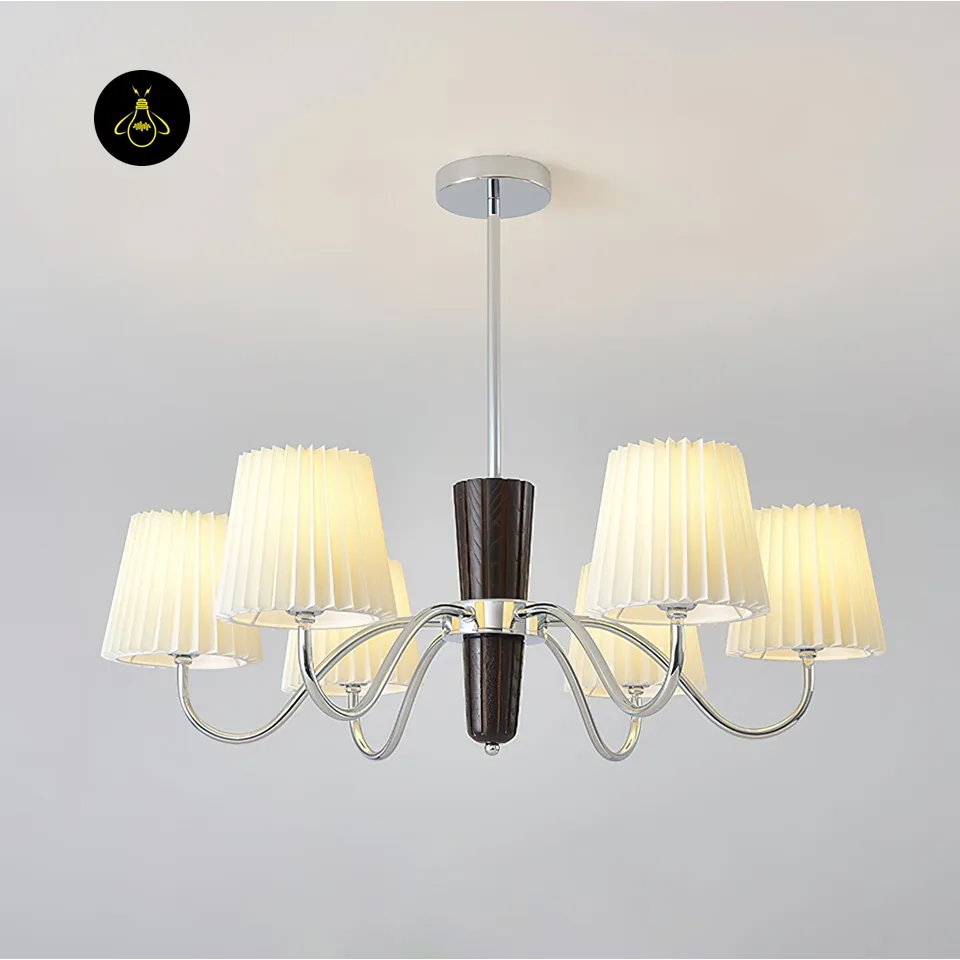
Real wood is not always the whole light, either. Many wooden chandeliers, ours included, use metal for the arms, the rod or the ceiling plate. The point is that the listing names both: the wood and the metal.
So how do you check what you are buying? Here are five simple tests.
How to check a wooden chandelier yourself
- Read the Material line, not only the title, and look for the name of a wood.
- Ask the seller which wood it is, and get the answer in writing.
- Look at two pieces of the same design side by side, because real grain never repeats exactly.
- Hold a fridge magnet to the brown part, because a magnet clings to iron but never to wood.
- Look at a cut edge or the underside for grey metal or pressed board under the brown.
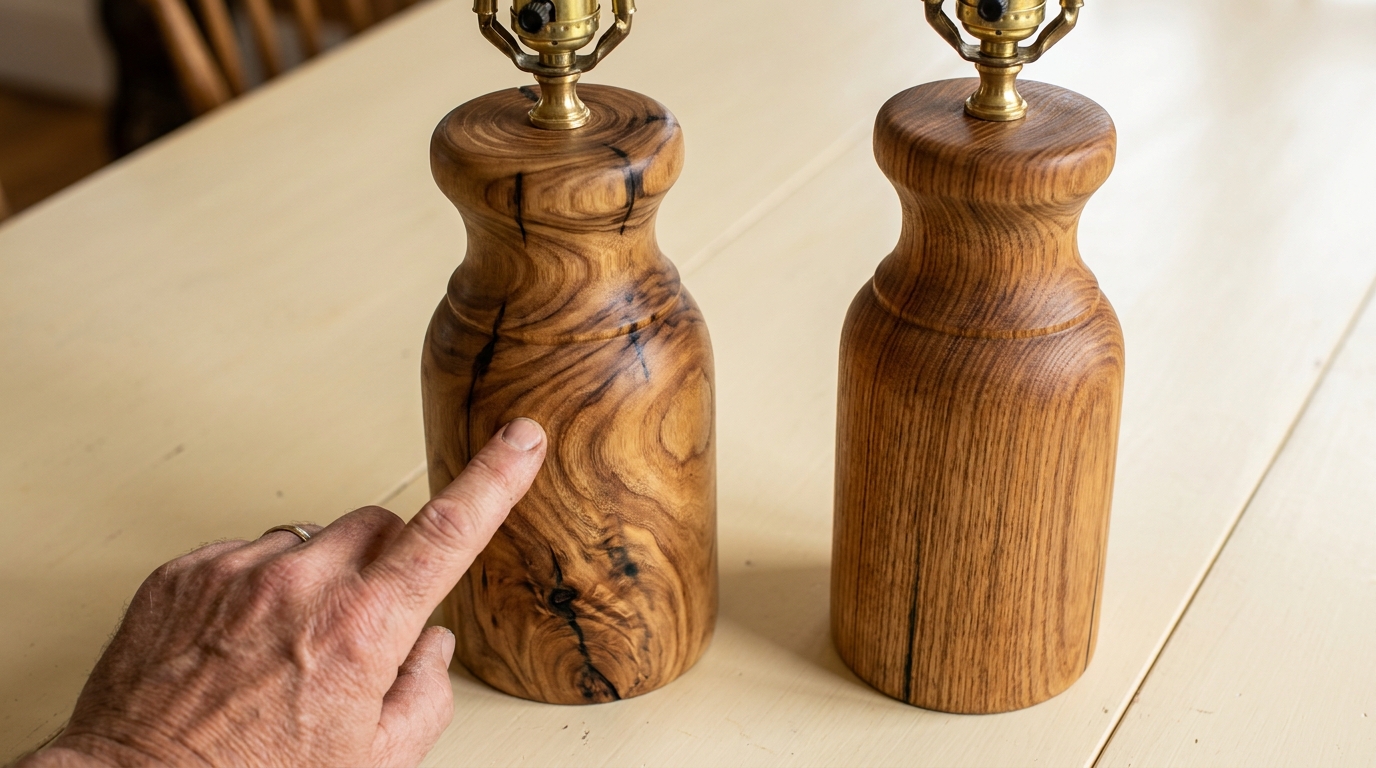
The magnet test works because mild steel and iron are magnetic metals. Fractory, a metalwork guide, lists mild steel as magnetic. Wood has no metal in it, so a magnet simply falls away.
The edge check works for a similar reason. Solid wood looks the same all the way through, grain and all. A screw hole or a cut edge in MDF shows flat, even board. On painted metal, a chip shows grey.
The five checks take a minute. The next step is to see how the two kinds compare.
Side by side
| What you care about | JagMag wooden chandelier | A “wooden” listing that names metal, PVC or MDF |
|---|---|---|
| Is the wood real? | Yes, real wood, named on the product page | The material line says metal, aluminium, PVC or MDF |
| Grain | Different in every piece | Check the photos and ask |
| Metal parts | 304 stainless steel, lifetime rust warranty | Metal grade often not stated |
| Who made it | Our own factory in Greater Noida | Ask the seller if they make it |
Where the other side is better
Not every “wooden” listing is a look-alike. On the same IndiaMART page, many sellers named real sheesham, mango wood, teak or oak.
India also has a long wood craft tradition. The Handicrafts office of the Government of India says Saharanpur woodcraft dates back to the 14th century. Carvers there prefer sheesham and teak for their strength and fine grain.
So the market gives you a huge range and real craft from many towns. You may find a style we do not make. Just read the material line before you buy.
What we do at JagMag
JagMag Lights is a decorative lighting manufacturer in Greater Noida, making lights in our own factory since 2015. Our product pages say which parts are wood and which parts are metal.
Take our teak wood chandelier, the Arlo. The hub starts as a block of teak. A craftsman turns it on a lathe, sands it smooth, oils it and leaves the grain alone.
Switch the Arlo on and the teak warms up in the glow. The light shows off the grain instead of hiding it.
Our walnut chandelier, the Shadalia, sets eight raw silk shades around a solid walnut column. We shape and finish the column by hand, so the grain shows.
For a long dining table, our oak wood chandelier, the Yaffa, hangs a single bar of solid oak. Our wood and glass chandelier uses two steam-bent wooden rings.
The metal parts are 304-grade stainless steel, the same grade as a good kitchen sink. Our legal policies give stainless steel parts a lifetime warranty against rust, for orders from 4 October 2026.
Vastu thinking links wood with growth and balance, and warm light with the fire element. A light made of real wood brings both to your dining table.
Want more on natural materials? Read our guide to real rattan vs plastic rattan, or see the magnet test on a wrought iron chandelier.
FAQs
How do I know if a wooden chandelier is real wood?
Read the material line and look for the name of a wood, such as teak, walnut or oak. Then check that the grain differs from piece to piece and that a magnet does not cling to the brown parts.
Is MDF real wood?
No. MDF is board made from wood waste mixed with glue and wax, then pressed under heat. MDF has no natural grain of its own, so it is not solid wood.
Does a wooden chandelier have metal parts?
Many do. Arms, rods and ceiling plates are often metal. Ours use 304-grade stainless steel with a lifetime warranty against rust.
Which wood is used in JagMag wooden chandeliers?
Our Arlo uses solid teak, the Shadalia solid walnut and the Yaffa solid oak. Each product page says which parts are wood, and a craftsman in our Greater Noida factory shapes the wood by hand.
Is a wooden chandelier good as per Vastu?
Vastu thinking links wood with growth and balance, and light with the fire element. We treat this as a way to make a room feel grounded, not as a promise of luck.
Nature gives the material. Human hands give it meaning. Light brings it to life. That is JagMag.
Ready to choose? See our wooden chandelier made from real teak, or browse all chandeliers. Not sure? Talk to us on WhatsApp.