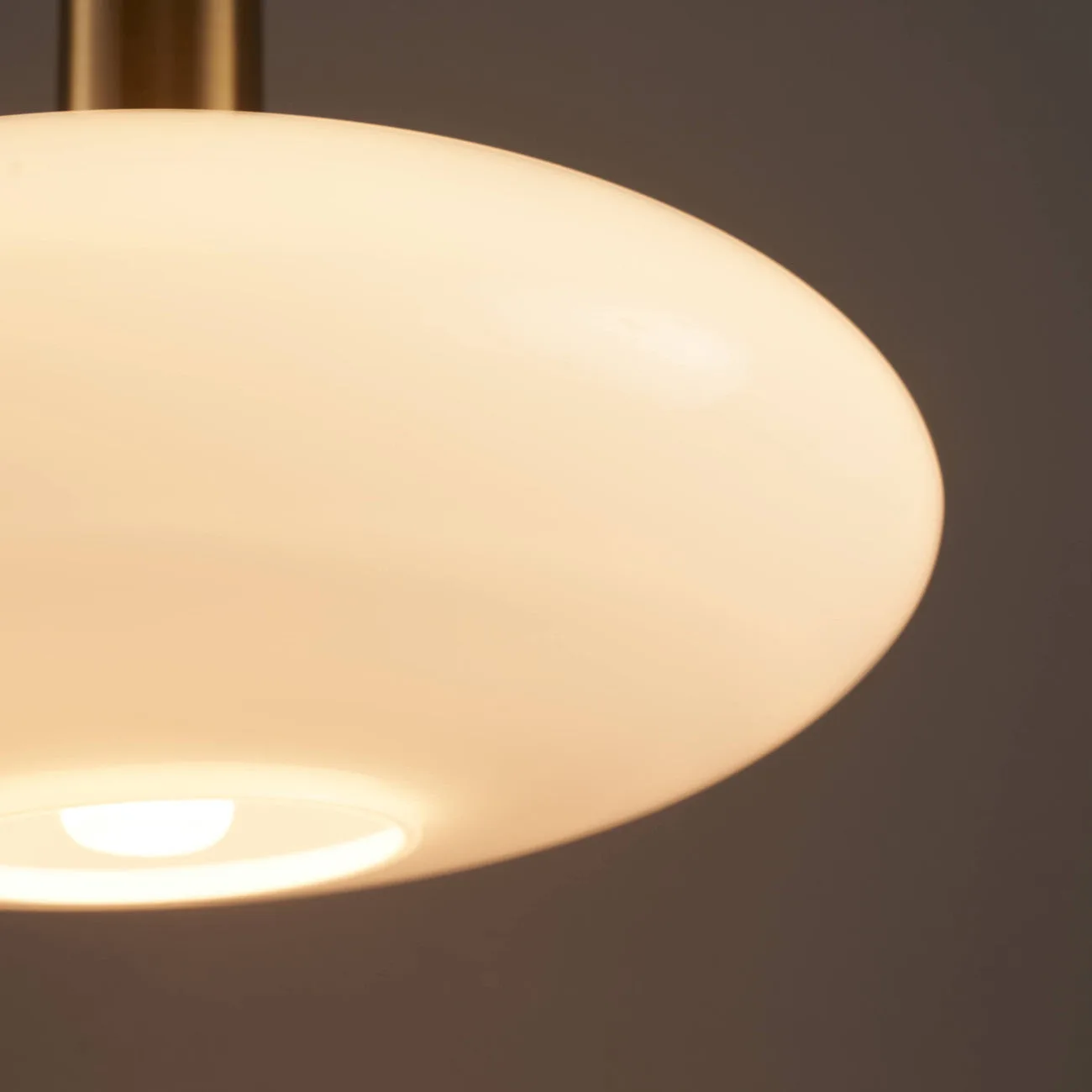
You stand under two glass pendants in a shop. One shows its bulb as a hard, bright dot. The other glows like a full moon, and your eyes stay calm.
The calm one is almost always opal glass. So what is opal glass, and why does it glow so softly? Below are the plain answer, the guide numbers, two small sums and the science of white glass.
What is opal glass? The short answer
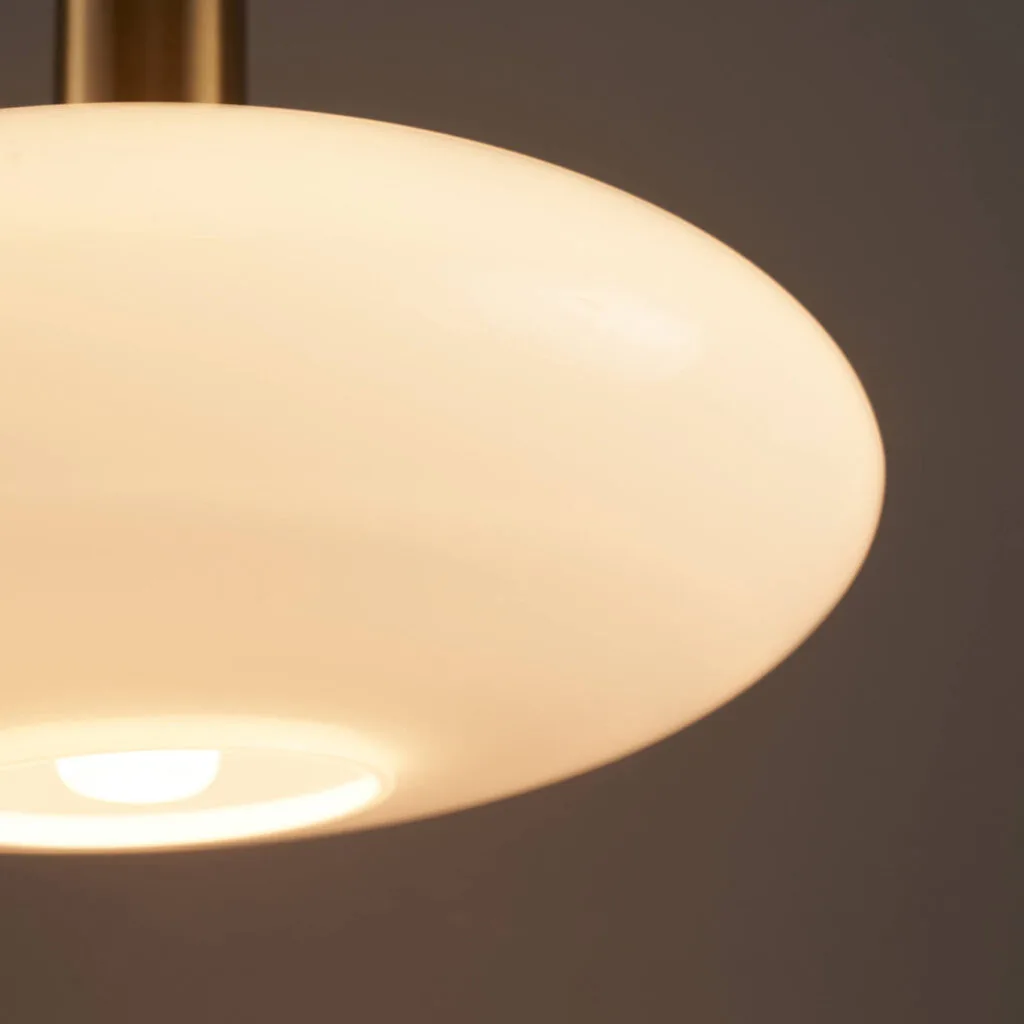
Opal glass is milky white glass. Light passes through it, but you cannot see the bulb behind it. A glass museum guide describes it as translucent and white, with a greyish or bluish tinge.
Among our pendant lights, the glass ones come mostly in five kinds: clear, opal, smoked, amber and ribbed. Opal is the one to pick when the light hangs low and you will look straight at it.
Frosted vs clear glass, opal and the rest
| Glass | How it is made | What you see when it is lit |
|---|---|---|
| Clear | Nothing added | The bulb shows; sharp light and shadows |
| Frosted | Clear glass with the surface roughened by sandblasting or acid | A soft surface; the bulb shape blurs |
| Opal | White added inside the glass itself | An even glow; the bulb disappears |
| Smoked or amber | Colour added while the glass is made | Less light, a warmer and moodier glow |
| Ribbed or fluted | Lines pressed into the glass | The bulb breaks into stripes of light |
A museum guide to materials says opal glass was first made in the mid-1800s. Bone ash whitens the glass, and fluorides make it opalescent, which means milky with a soft shine.
One glass shade maker says clear glass “lets the bulb do the talking” and shows dust easily. The same guide says frosted and opal glass spread the light evenly, so a kitchen worktop gets light without glare.
Softness has a cost. One maker of lab optics rates its opal diffusers at about 30 to 40% of visible light. Its ground glass passes 40 to 50%. A lamp shade is a thinner part, but the lesson stays: white glass trades some light for comfort.
How soft is frosted opal glass? Two simple sums
Numbers make the difference easy to see. Take one warm-white LED bulb inside a 15 cm opal globe.
- The US ENERGY STAR bulb guide lists 800 lumens as the light of an old 60 W bulb. A lumen is the total light a bulb gives, like litres from a tap.
- The globe is 15 cm wide, so its radius is 7.5 cm, or 0.075 m. Its surface is 4 × 3.14 × 0.075 × 0.075 = about 0.0707 square metres.
- Suppose all 800 lumens came through the glass. Each square metre then sends out 800 ÷ 0.0707 = about 11,318 lumens.
- For an evenly glowing surface, brightness to the eye is that number divided by 3.14. So 11,318 ÷ 3.14 = about 3,600 candela per square metre. A candela per square metre is the brightness of each small patch of a glowing surface.
- A US Department of Energy study puts a bare LED chip at over 1,000,000 candela per square metre. 1,000,000 ÷ 3,600 = about 278. So the globe looks at least 278 times gentler than the bare chip.
The second sum compares two globe sizes. A 25 cm globe against a 15 cm globe gives (25 ÷ 15) × (25 ÷ 15) = 2.78. So the bigger globe spreads the light over 2.78 times more glass, and each patch glows 2.78 times softer.
We also counted our own shelf. On 29 October 2026, 12 of the 29 glass pendants in our catalogue (41%) used opal glass somewhere. In 6 of them, an opal inner shade sits inside a smoked, clear or champagne outer shade.
What is opal glass doing to the bulb? The logic
A bulb is a small point with a lot of light in it. Your eye sees that point as far brighter than the room around it. The gap between the two is what we feel as glare.
Opal glass spreads the same light over the whole shade. Each patch of glass is then far less bright than the bulb. The gap closes, so your eye relaxes and the bulb seems to vanish.
The Lighting Research Center gives the same advice for hanging lights. Bulbs should be shielded from view to cut glare, and the light should hang above the eye level of a seated person.
So the choice depends on where your eyes will be. A clear shade works high up, where nobody looks into it. An opal shade suits a low light, like a pendant 75 to 90 cm above a dining table.
Guides differ on kitchens: some prefer clear glass for more light, others opal for glare-free work. Pick opal if the shade sits in your line of sight.
The science: how white glass scatters light
Opal glass holds tiny white particles in its body. Each ray of light hits these particles and bends in a new direction. After many bounces, the light leaves the glass evenly from every side.
Milk in water does the same thing. Add a few drops of milk to clear water, shine a torch through it, and the water glows white.
Frosted glass works only at its rough outer skin. Opal glass scatters light through its whole thickness. So opal hides the bulb more fully, while frosted glass only blurs its outline.
Scientists call this brightness per patch “luminance”. The same energy study says glare comes from luminance far above what your eyes are used to. A big, evenly lit shade keeps luminance low.
Sand, hands and a soft glow: the JagMag way
Nature gives the material. Our borosilicate glass is melted from silica sand, boric oxide, soda ash and alumina. For opal glass, white colour goes into the melt.
Human hands shape it. Our craftsmen in our Greater Noida factory have shaped glass like this since 2015. No two hand-blown shades are exactly alike. Every metal part is 304-grade stainless steel.
Light connects. Three of our pendants follow the rule above:
- Opaline Glass Pendant Light: a 30 cm opal shade, 11.3 cm tall, on a cable that drops up to 131.5 cm. The pendant takes one E27 bulb, not included; fit a 3000K warm-white LED.
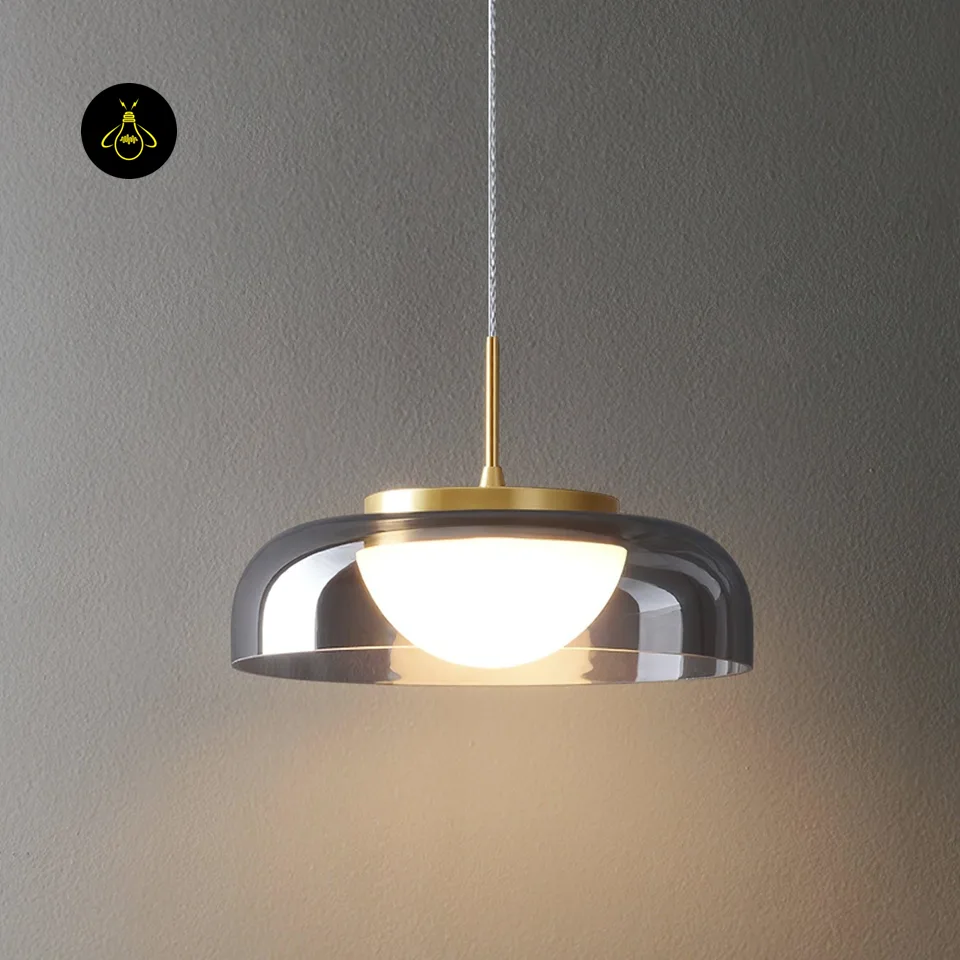
- Smoked Glass Pendant Light, 22 cm disc: smoked glass outside, an opal dome inside, and a built-in 3000K LED.
- Wood and Glass Pendant Light: a 30 cm teak disc above an opal globe, with a G9 bulb holder (bulb not included).
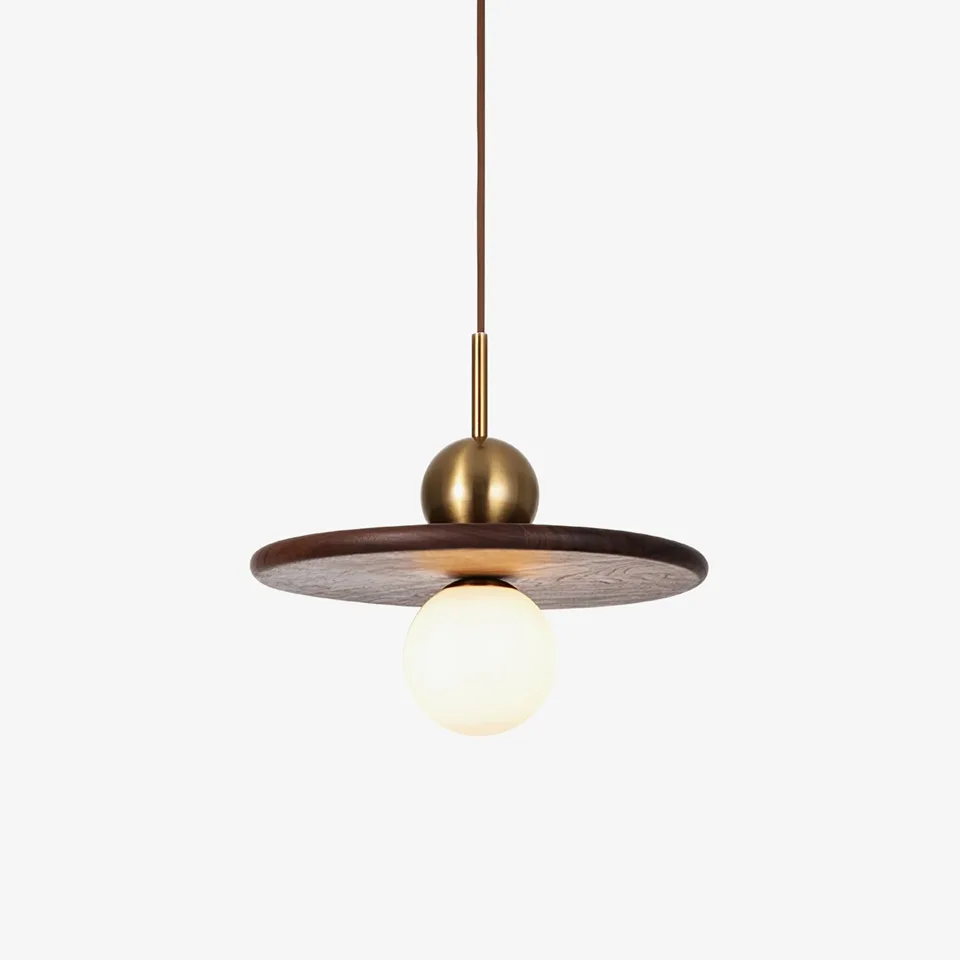
Vastu thinking values a calm, evenly lit home. A soft white globe with warm light gives a room that feeling, with no harsh glare. You can check our factory approvals on our certifications page.
FAQs
What is opal glass made of, and is it real glass?
Yes, opal glass is real glass with a white material added to the melt, such as bone ash or fluorides. Ours starts as borosilicate glass, and the white is added while the glass is made.
Is opal glass the same as frosted glass?
Not quite. Frosted glass is clear glass with a roughened surface, while opal glass is white all the way through. On our product pages, a shade called frosted, milk or white glass is opal borosilicate glass.
Frosted vs clear glass: which is better over a dining table?
Opal or frosted glass is better when the shade hangs 75 to 90 cm above the table, right in your line of sight. Clear glass suits lights that hang higher, above eye level.
Does opal glass cut some of the light?
Yes, a little, because some light stays inside the glass. Lab-grade opal diffusers pass about 30 to 40% of light, so pick a slightly brighter warm-white LED, within the holder’s wattage limit.
Nature gives the material.
Human hands give it meaning.
Vastu inspires harmony.
Light brings it to life.
That is JagMag.
See all our glass pendant lights and their glass types. For more on the glass itself, read what borosilicate glass is, or learn how to hang a pendant over a dining table. Not sure which glass suits your room? Video-call us.
Sources
- Corning Museum of Glass, All About Glass: Opal glass (read 29 Oct 2026)
- MFA Boston CAMEO: Opal glass (read 29 Oct 2026)
- Fenchel Shades: Glass shades for pendant light fixtures (read 29 Oct 2026)
- AIS Glass: Clear glass vs frosted glass (read 29 Oct 2026)
- Edmund Optics: Opal glass, ground glass and holographic diffusers (read 29 Oct 2026)
- ENERGY STAR: Light bulb purchasing guide (read 29 Oct 2026)
- US Department of Energy: Assessing glare (Davis, 2020) (read 29 Oct 2026)
- AGi32: Luminance calculator concepts (read 29 Oct 2026)
- Lighting Research Center: Suspended fixtures (page no longer online) (read 29 Oct 2026)