
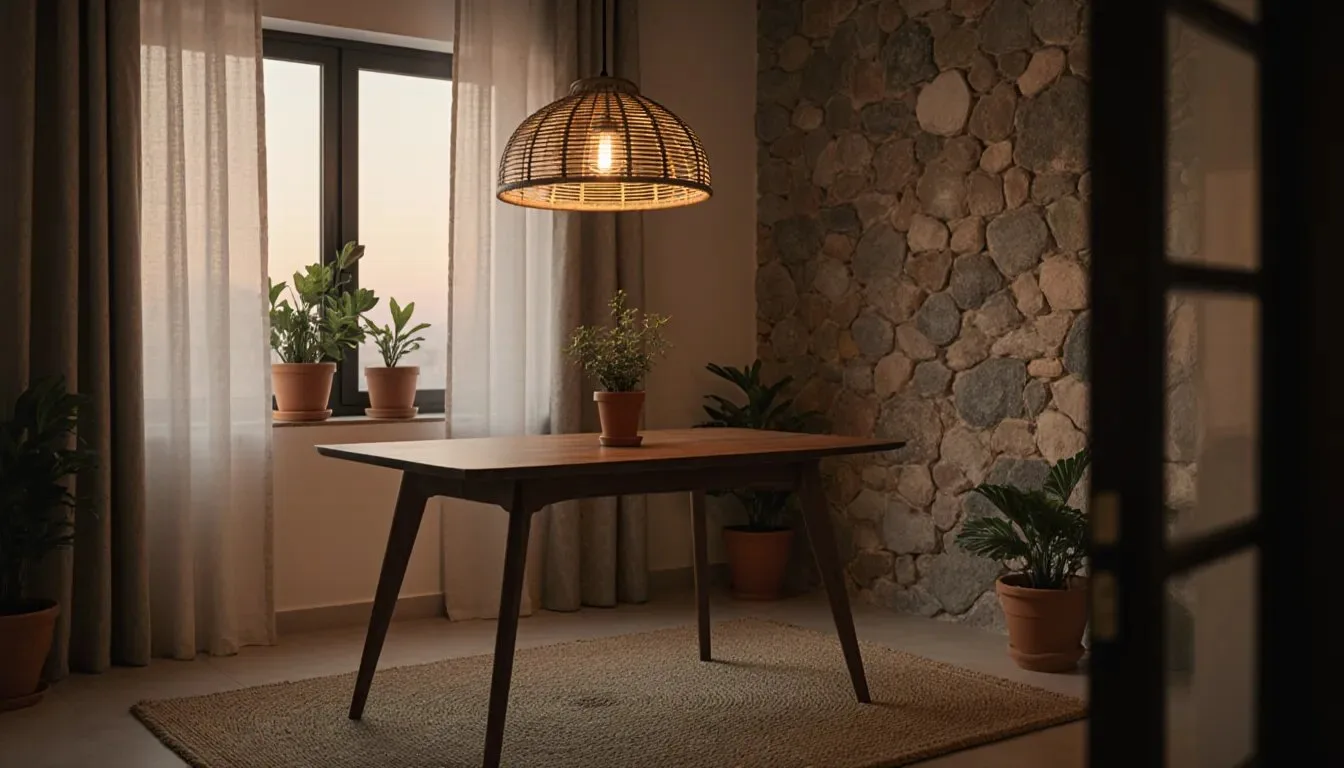
In the last post, we said plainly what we promise from Vastu and what we don’t. We said one thing we do believe: real materials help a room feel settled. Now we look at that idea more closely, in one more chapter of our story.
Designers have a name for bringing nature indoors: biophilic design. Biophilic means “loving living things”. Biophilic design means planning a home so you stay in touch with nature.
We did not start with that name. We came to the same idea through our materials. In this post, we share why we believe nature belongs inside your home.
Older Indian homes lived close to nature
Many older Indian homes had an aangan, an open courtyard in the middle of the house. Sunlight and fresh air came into the home through it. Families ate, talked and rested there.
The home itself came from nature too. Walls were often stone or brick, covered in lime plaster. A clay pot called a matka kept the drinking water cool. Cotton and jute mats covered the floors.
Nobody called this design. Nature was simply part of daily life at home.
Our homes have changed a lot since then.
Our homes today have moved away from nature
Many of us now live in flats. Flats give us safety and comfort, and we have no quarrel with them. Still, we keep the windows shut against dust and noise. We spend most of the day indoors.
Look around a new flat, and many surfaces are made, not grown. The cupboard shows a printed wood pattern. The floor tile shows a printed stone.
We do not blame anyone for this. Printed surfaces are easy to clean and easy to buy. Still, a room full of them has lost its link with nature.
You cannot add an aangan to a flat on the tenth floor. You can bring back small pieces of nature, though. Biophilic design starts there.
Biophilic design starts with small, real things
Biophilic interior design uses daylight, fresh air, plants and natural materials. You do not need a new home for it. You can start with one real object in a room you use every day.
Plants bring living nature into a room. Natural materials bring the texture of nature: the veins of stone, the grain of wood, the twist of a plant fibre. We work with the second part. We wrote about why we use only real materials early in this series.
A light is a good place to start. A light stays in one spot for years. You see it every day, and you touch it every time you clean it.
Our wood base table lamp shows how little you need. Two rounded discs of natural wood sit under a shade of hemp rope. Our craftsman shapes each disc by hand and leaves the grain alone. Then the rope goes around the frame, one turn at a time.
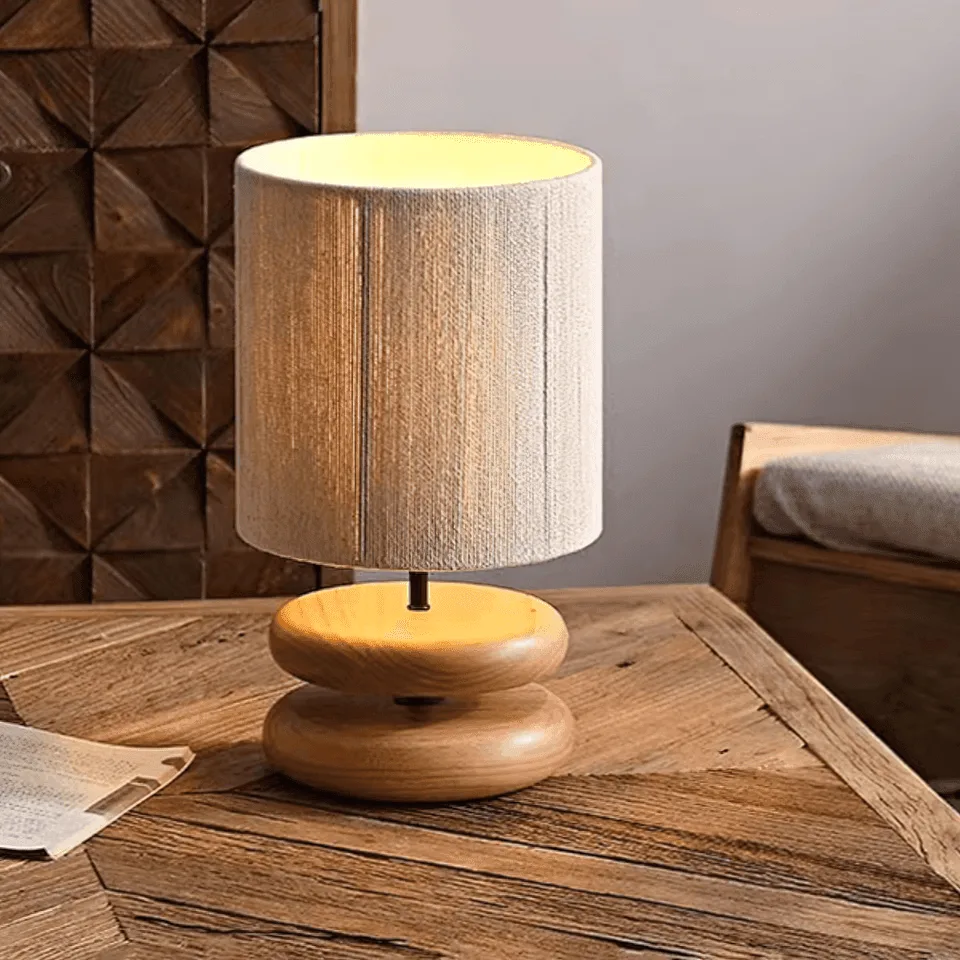
The lamp stands 40 cm tall and plugs into any socket. So one small lamp holds two plants: a tree and a fibre crop.
By day, the window does much of this work. After sunset, your light has to do it.
Light keeps nature with you after sunset
During the day, a window gives you daylight, sky and maybe a tree. After sunset, the window goes dark. Your room then has only what you put inside it.
So we think about natural materials in the evening first. Warm light falls on wood, stone or fibre, and the grain and the weave show clearly. You keep your link with nature after sunset.
Our large table lamp in fluted wood does this on a console or sideboard. The lamp stands 65 cm tall. The base is real wood in a deep walnut tone, with long grooves called flutes. Our craftsman cuts the flutes by hand, one groove at a time. Light passes through the linen shade and falls down the flutes.
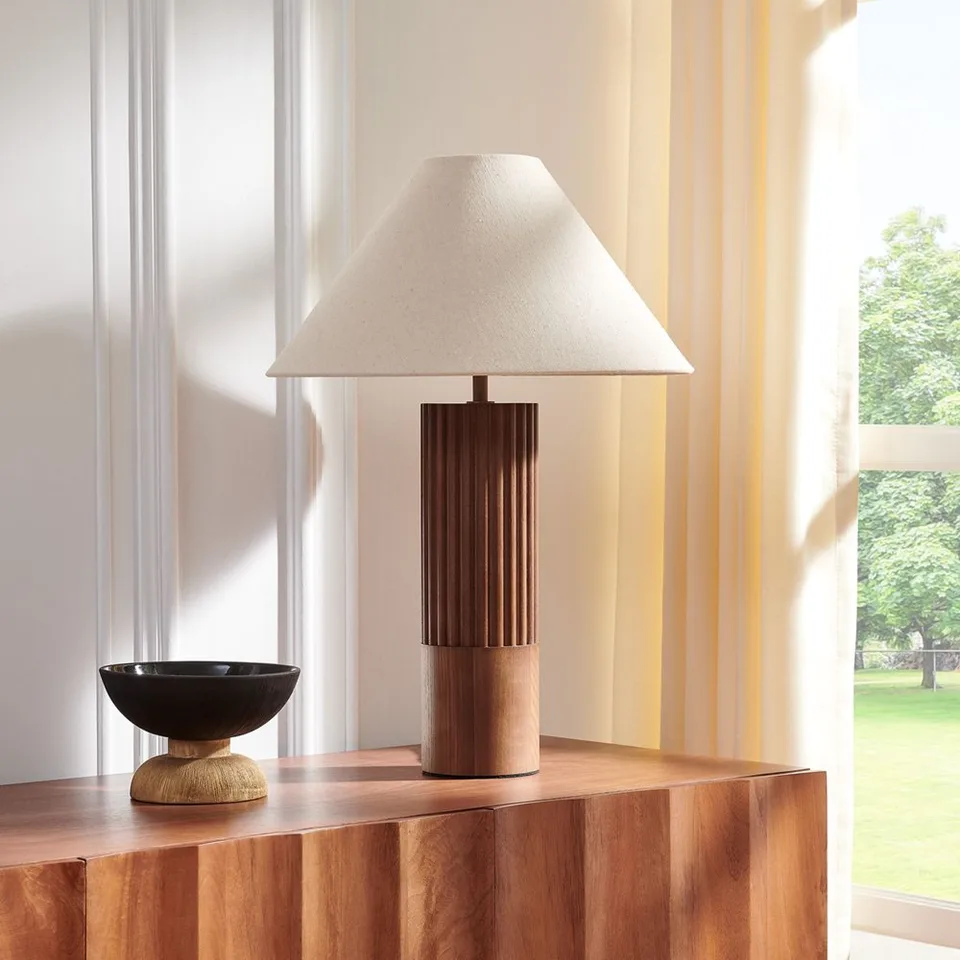
Behind each of these pieces is patient human effort. You see that effort every time the light comes on.
We make no health promise here. A lamp will not cure anything. We say only what we see and feel: a room feels warmer and more settled with real nature in it. Vastu thinking also values the elements of nature inside a home, and we take that as inspiration.
Warm light does much of this work, so the colour of the light matters. In the next post, we explain why we choose 3000K.
FAQs
What is biophilic design?
Biophilic design means planning a home or building so people stay in touch with nature. Biophilic design uses daylight, fresh air, plants and natural materials such as stone and wood.
Do natural materials count as biophilic design?
Yes, natural materials are part of biophilic design. Stone, wood, clay and plant fibres bring the texture of nature into a room, even without plants.
How can I start bringing nature indoors in a flat?
Start with one real natural object in a room you use every day. A table lamp of wood and fibre is an easy first step, and the lamp plugs into any socket. Our decorative lamps in real wood, stone and fibre are a good place to start.
Nature gives the material.
Human hands give it meaning.
Vastu inspires harmony.
Light brings it to life.
That is JagMag.
With you.
Read next: Warm light for home: why we choose 3000K for evenings
See bamboo, cane and rattan in our hanging lights →