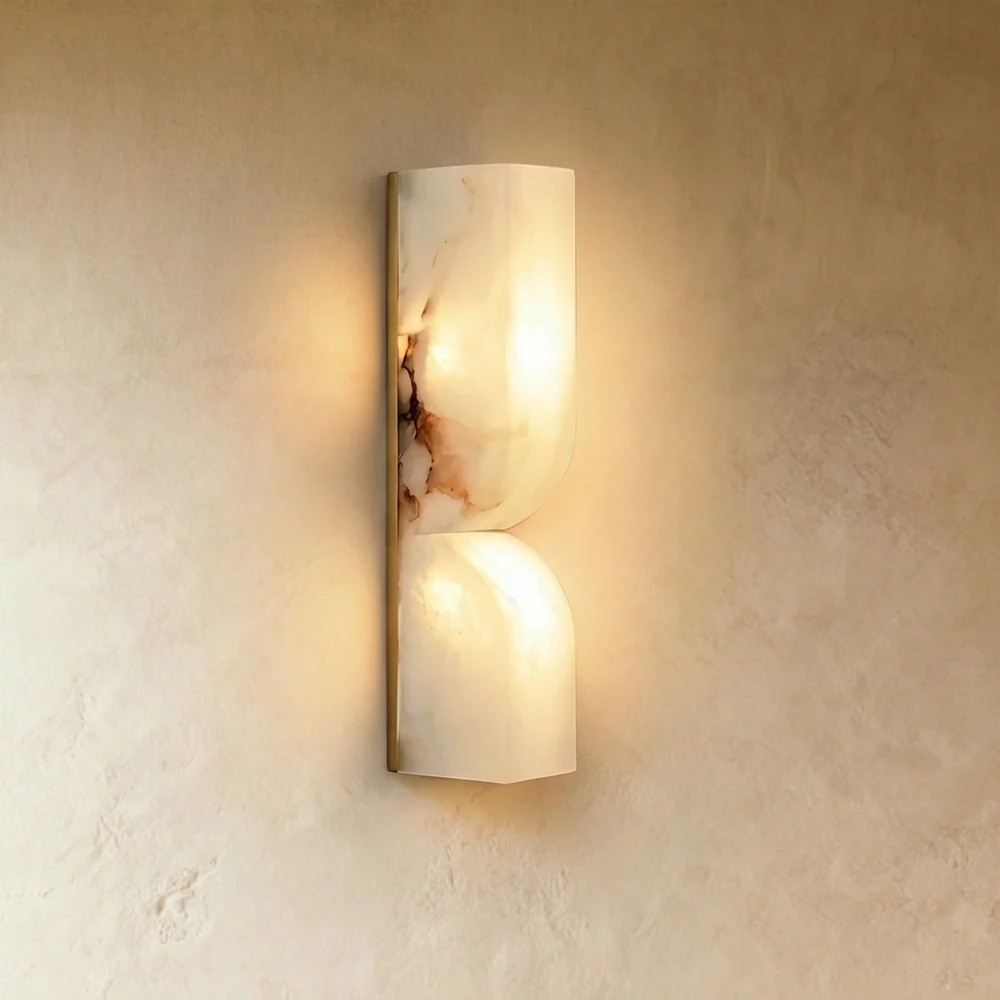
An up and down wall light sends light in two principal directions. The result can be a pair of defined accents, a broad wash, or a glowing shade with light above and below. The effect depends on the fitting and its surroundings.
Quick answer: Choose the effect first, then check the actual fixture’s beam, dimensions, viewing angles and suitability for its location. Ask for an illuminated photograph or demonstration: an upward and downward distribution does not guarantee a particular pattern or eliminate glare.
- Compare the upper and lower light distributions; they may be different.
- Check the fitting from seated and standing positions, including reflections in screens or framed glass.
- For outdoor use, select a model and connections intended for the site’s exposure.
- Test its position on the finished wall before fixing the wiring point.
What are up and down wall lights?
These wall-mounted fittings direct some light upward and some downward. A solid housing may restrict sideways light; a translucent stone or glass component may also glow. A fitting described only as an uplighter directs its main output upwards, though sellers’ names can vary.
Ask the supplier for separate up and down beam information, light output where available, and a photo of the actual model on a wall. A small bright source can remain visible from certain angles, and a glossy surface can reflect it.
Where do up and down wall lights look best?
- Passages: Test whether the floor and any changes in level are visible; a decorative pattern alone does not ensure useful route lighting.
- Living rooms: Frame a wall or artwork and check for reflections from each seat. Our living-room wall-light guide explains planning around furniture and screens.
- Bedrooms: Check the view from the bed, and provide a separate reading light if the accent does not illuminate a page comfortably.
- Outdoor walls: Check whether the upward beam spills beyond the wall. Consider a shielded downward light if the goal is to reduce skyward spill or light entering neighbours’ windows.
Stone, glass or steel: which up and down wall light should you choose?
Material affects the visible fitting and may affect how light passes through it, but the optic, lamp and openings also shape the distribution.
Natural stone: alabaster and travertine
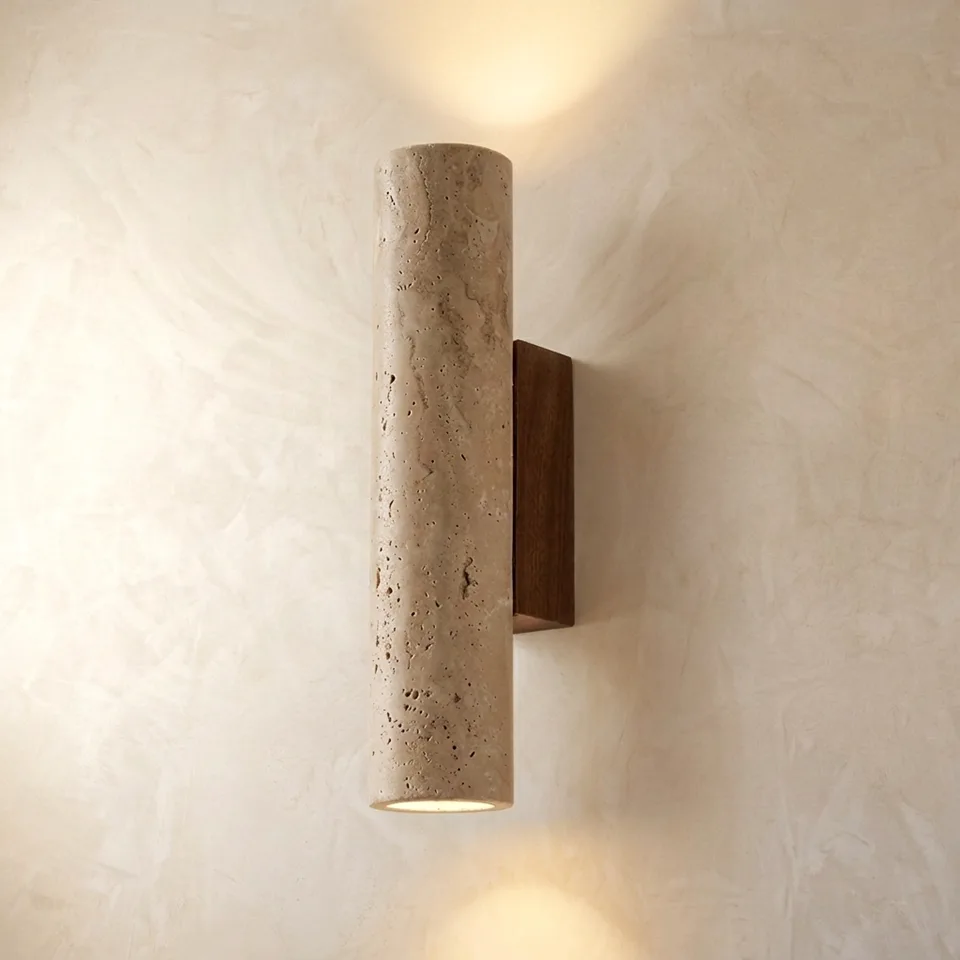
A translucent alabaster element may glow when lit from within; a more opaque stone can instead show its texture in reflected light. Thickness, colour and construction matter. Compare the alabaster up and down light and the travertine cylinder wall light using the current specifications and photos of the actual product.
Opal and fluted borosilicate glass
Opal glass can diffuse the view of a lamp; clear or fluted glass can show more detail or sparkle. Neither material guarantees freedom from glare. Look from the intended positions and ask which lamps are compatible with the fitting.
304-grade stainless steel
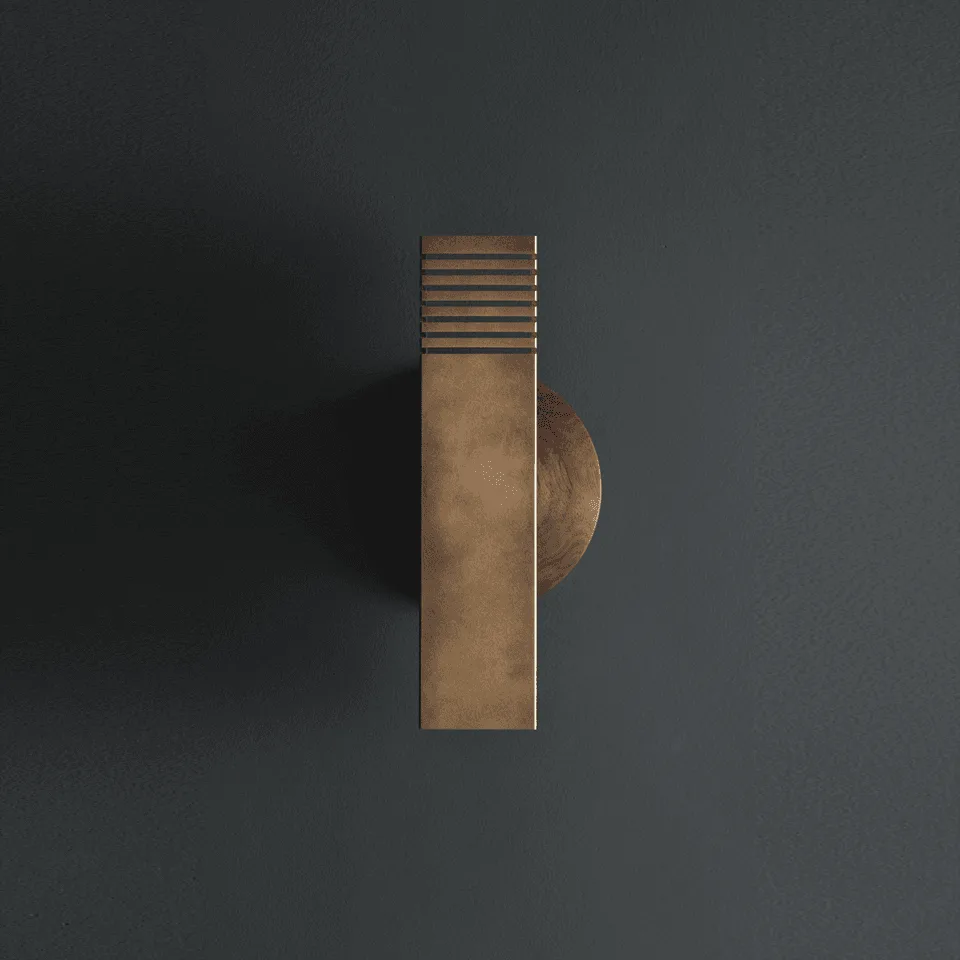
A metal housing can shield a source and create a directional effect, but its shape and internal optic determine the beam. Stainless steel resists corrosion but can still stain or corrode in demanding conditions. Check the specific material and the warranty terms for the product.
Indoor or outdoor: why the IP rating matters
The IEC 60529 IP code describes protection against entry of solids and water under specified tests. IP65, for example, means dust-tight protection and protection against water jets under the prescribed conditions. It does not establish resistance to immersion, corrosion or every weather condition.
Match the model, mounting orientation and its driver, cable entries and connections to the actual exposure. IP65 is not a universal requirement for every location, and an IP rating alone does not establish that the complete installation is safe. Ask a qualified electrician and the supplier to assess it. See the outdoor lighting guide for a fuller exposure checklist.
For outdoor installations, the DarkSky and Illuminating Engineering Society principles recommend using light where and when needed, aiming it carefully and avoiding unnecessary brightness. An upward beam outdoors can work against these aims if it escapes the intended surface.
How high should you fix up and down wall lights?
There is no height that fits every wall. Mark the fixture’s full outline and its connection point, then check the view from seats, the bed or the route people use. Consider ceiling height, nearby curtains, mirrors, furniture and manufacturer clearances. A qualified electrician can advise on the installation.
Worked example: comparing beam spread. Imagine an ideal symmetric 30° cone and a flat screen at 90° to its axis, 1 metre away. Its diameter at the beam-angle boundary is 2 × 1 m × tan(15°) ≈ 0.54 m. At 2 metres it is about 1.07 m. This is geometry, not a measured result for a Jagmag fitting.
The CIE defines beam angle at 50% of centre-beam intensity; light can extend beyond that boundary. A wall alongside an up-and-down fitting is not the perpendicular screen in the example, so this calculation cannot predict the wall pattern or tell you where to install it. Actual optics, shade shape and the wall surface must be considered.
Built-in LED or a bulb holder?
Built-in LED: Ask whether the LED module and driver can be replaced, who performs the repair and whether the fitting is dimmable.
Bulb holder: Ask for the permitted bulb base, shape, wattage and lamp type. A replaceable bulb can offer choice, provided the selected lamp is compatible with the fitting. Switch off and allow it to cool before handling.
Colour temperature describes the appearance of white light, not brightness or glare. If you prefer warm white, check the exact model’s specifications and look at the fitting when lit.
Why buy up and down wall lights from JagMag?
Jagmag makes decorative lights in India using materials including stone, glass and stainless steel. Ask us for the dimensions, finish, lamp specification, suitable location and current lead time for the model you are considering. Ask about replacement parts and check the written warranty.
Browse the wall-light collection or contact us with a photo and wall measurements.
FAQs
Do up and down lights always eliminate glare?
No. Source visibility, brightness and reflections all matter. Test the actual fitting from the positions where people sit and walk.
Can they provide all the light in a room?
It depends on the fitting, room and activity. Check whether adequate light reaches the places people use; additional general or task lighting may be needed.
Can I use one outdoors?
Only if the exact product and its installation are suitable for the exposure. Check the stated IP rating, orientation, connections and maker’s instructions.
How far apart should they be?
There is no fixed spacing for every model. Ask for its light-distribution information and test positions on the finished wall, including gaps and overlaps.
Does a 30° beam stop at the edge of the cone?
No. Beam angle identifies a specified intensity boundary, not a hard cutoff. Light can extend beyond it.
Do they need special wiring?
Requirements vary with the model, driver and location. Have a qualified electrician check the instructions and existing wall point before installation.
See our indoor wall lights and outdoor wall lights.