
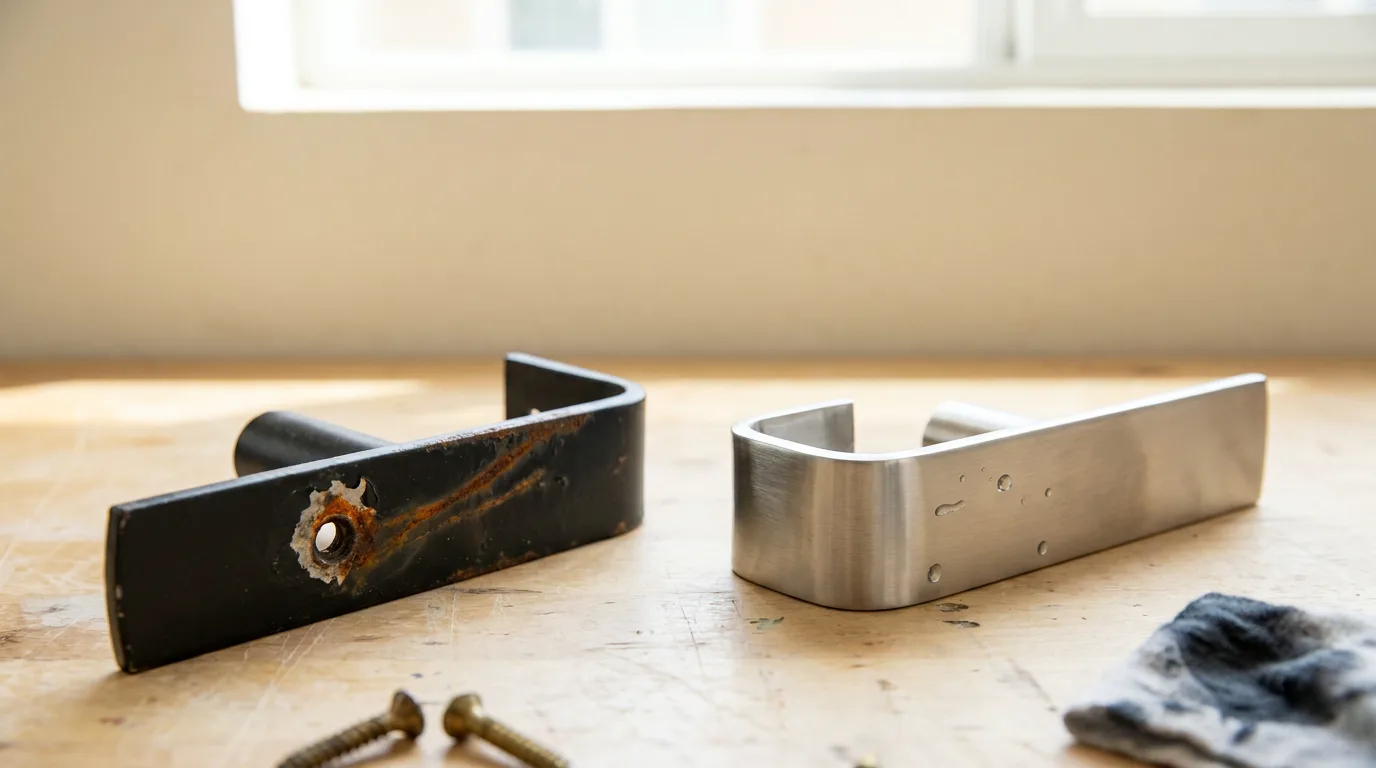
A brown streak beneath a wall light is a reason to inspect it, but it is not proof that the whole fitting is made of mild steel. The mark may come from a screw, iron contamination on a stainless surface, or corrosion of the fitting itself.
This guide explains the different ways mild steel and stainless steel resist corrosion, what a scratch means, and which questions give you better evidence before buying.
The short answer
Unprotected mild steel can rust when moisture and oxygen are present. Stainless steel has a chromium-rich protective surface film and generally resists corrosion better, but it can still stain, pit or rust in demanding conditions. Coatings, fabrication, location and maintenance matter for both.
For a particular Jagmag light, check the specified body and component materials and read the rust warranty and its conditions. A warranty is a remedy if a covered problem occurs, not a claim that corrosion is physically impossible.
Mild steel vs stainless steel: what is really going on
Mild steel: This is a low-carbon steel. Paint or powder coating can form a barrier that reduces contact with moisture. If the barrier is damaged, exposed steel can corrode; how quickly depends on the environment and protection system. Some steel is also zinc-galvanised: zinc can provide sacrificial protection at some damaged areas, so not every scratched coating behaves the same way. The American Galvanizers Association explains the distinction.
Stainless steel: Chromium in the alloy helps form a very thin passive film on the surface. When oxygen is available, that film can reform after damage. It is the film that reforms, not a deep scratch or dent that disappears. World Stainless explains both passivity and the corrosion mechanisms that can defeat it, including pitting and crevice corrosion.
Salty deposits, moisture trapped around joints, unsuitable cleaners and iron particles from fabrication can all influence the result. A decorative colour finish is an additional layer; it may scratch or wear even if the steel below remains sound. Check the body, screws, brackets and joints separately.
Worked example: a small damaged area. Imagine a 100 mm × 100 mm painted steel plate with a scratch 20 mm long and 2 mm wide. The plate area is 10,000 mm²; the scratch area is about 40 mm², or 0.4% of the plate. This shows why even a small local defect deserves inspection. It does not predict the rust rate or prove that rust will occur: the steel, coating layers and exposure determine what happens.
How to check it yourself
- Ask for the body material and, where it is stainless steel, the grade in writing. Ask separately about screws and mounting parts.
- Ask what protective finish is applied and whether zinc protection, paint or powder coating is used on a mild-steel fitting.
- Describe the actual location: dry room, damp bathroom, exposed balcony or a salt-laden coastal site. Ask the supplier whether that specific product and grade suit it.
- Inspect accessible edges, joints and screw holes for coating damage or brown marks; a mark needs investigation rather than an instant material diagnosis.
- Ask for care instructions and the warranty in writing, including the covered parts, exclusions and claim process.
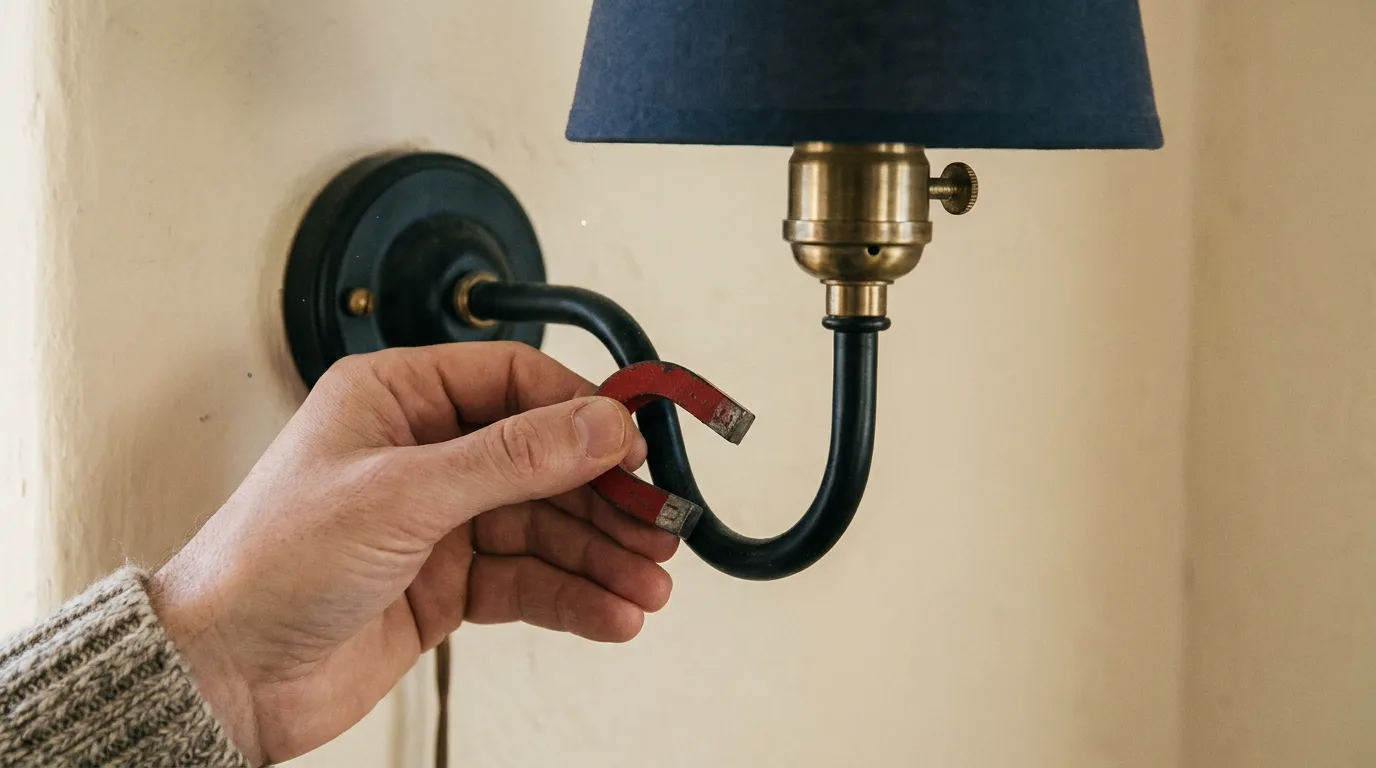
A magnet is not a grade test. Some stainless steel families are strongly magnetic, while forming or welding can increase the magnetic response of some normally weakly magnetic types. The British Stainless Steel Association explains why. For greater assurance, request traceable material documentation or independent professional analysis rather than relying on a fridge magnet.
Side by side
| What to compare | Stainless steel | Coated mild steel |
|---|---|---|
| Basic protection | Chromium-rich passive film; coatings may also be used | Depends on the specified coating system and its condition |
| If the surface is scratched | The passive film can reform with oxygen, but corrosion remains possible | Exposed steel may corrode; zinc protection, if present, behaves differently from paint |
| Near salt or damp | Grade, crevices, finish and maintenance matter | Coating specification, exposure and maintenance matter |
| Magnet test | Some grades or worked areas can attract a magnet | Attraction alone does not establish the material |
| Before ordering | Ask for the grade and warranty terms | Ask for the coating system and warranty terms |
Where the other side is better
A well-finished mild-steel light can be a reasonable choice for a dry interior, depending on the quoted price, design and care. Compare actual quotations rather than assuming every mild-steel product is cheaper.
Stainless steel is not maintenance-free. Near the sea, salt deposits can cause surface discoloration known as tea staining; serious local corrosion is also possible under more demanding conditions. The Australian Stainless Steel Development Association discusses grade selection, drainage and cleaning for coastal exposure. Ask for site-specific advice, particularly near surf or in unwashed sheltered areas.
For cleaning a light, switch it off and let it cool. Follow its manufacturer’s instructions, keep liquid out of electrical parts, and avoid abrasive pads and chloride-containing cleaners such as bleach or hydrochloric acid. Ask the manufacturer how to clean its particular decorative finish.
What we do at JagMag
Jagmag manufactures decorative lights in India. Its published warranty, clause 4.1A, states that metal parts manufactured by Jagmag are 304-grade stainless steel and gives lifetime cover against rusting for orders placed from 4 October 2026, subject to its conditions.
For covered rust under normal indoor or outdoor domestic use, the policy provides free repair or replacement of the affected part with the original invoice. The policy excludes finishes and coatings, electrical components and specified damage including chemical-cleaner damage or improper installation. Read the full terms for eligibility and claims.
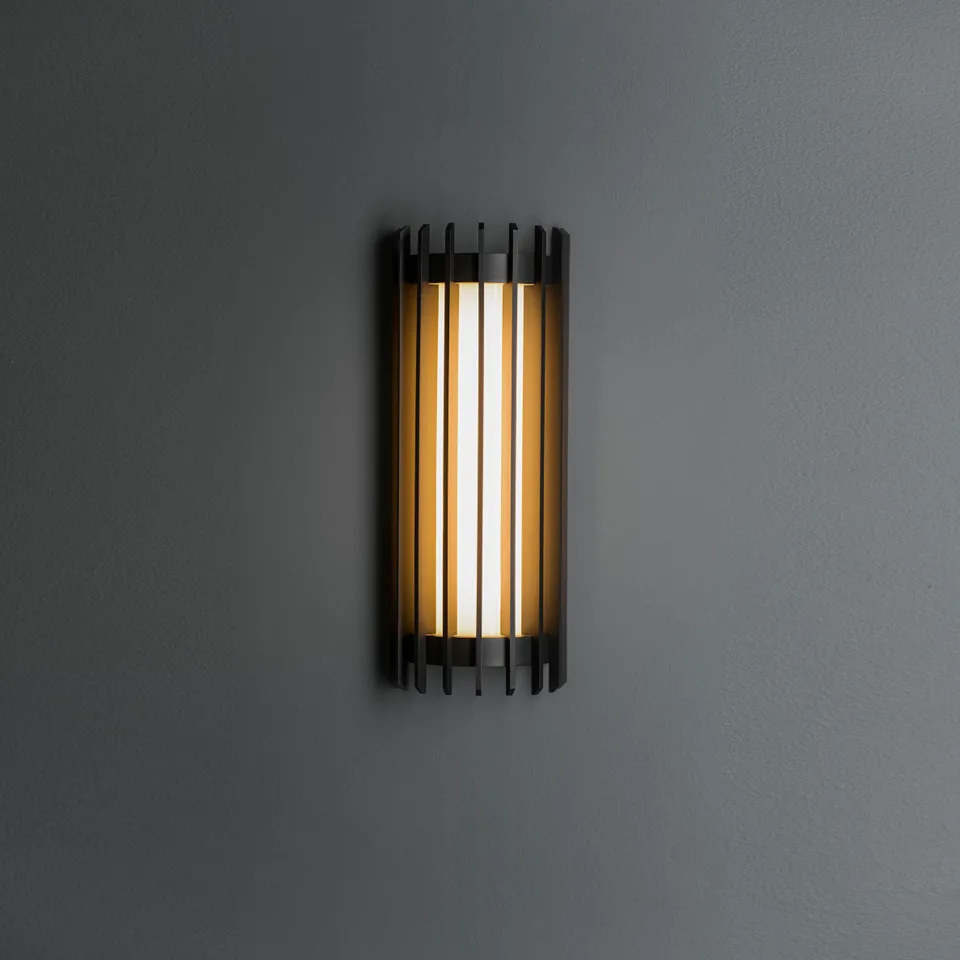
For example, review the material and suitability details of our modern outdoor wall light before selecting it for a specific exposed location.
For a more detailed comparison of grades, see 202 vs 304 stainless steel; for finishes, see PVD and powder coating. Product suitability also depends on electrical protection, installation and the location, not metal alone.
FAQs
Does mild steel rust faster than stainless steel?
Under comparable corrosive exposure, unprotected mild steel generally corrodes more readily, but a particular coated mild-steel fitting and a particular stainless fitting can age differently. Conditions and protective systems matter.
Can stainless steel rust?
Yes. Chlorides, trapped moisture, contamination or unsuitable cleaning chemicals can cause staining or local corrosion. A grade should be selected for the environment.
Can a magnet prove a light is 304 stainless steel?
No. Magnetic attraction varies between stainless families and can change with forming. Ask for material documentation or independent professional verification.
Are powder-coated lights rust-proof?
No coating makes a universal rust-proof promise. Ask what lies under the coating, whether there is additional zinc protection, and how to maintain or repair the finish.
Do Jagmag lights have a rust warranty?
For orders from 4 October 2026, Jagmag’s stated lifetime rust warranty applies to its manufactured 304 stainless-steel parts under the conditions in clause 4.1A. Finishes and several other items are excluded; keep your invoice.
Compare a fitting’s materials, design, exposure and written terms before you choose. Explore our outdoor wall lights or contact us with the installation location.
Sources
- World Stainless: corrosion properties and passive films
- British Stainless Steel Association: magnetic behaviour
- British Stainless Steel Association: iron contamination and rust staining
- Australian Stainless Steel Development Association: preventing coastal tea staining
- American Galvanizers Association: zinc coating protection
- Jagmag Lights: legal policies and warranty terms