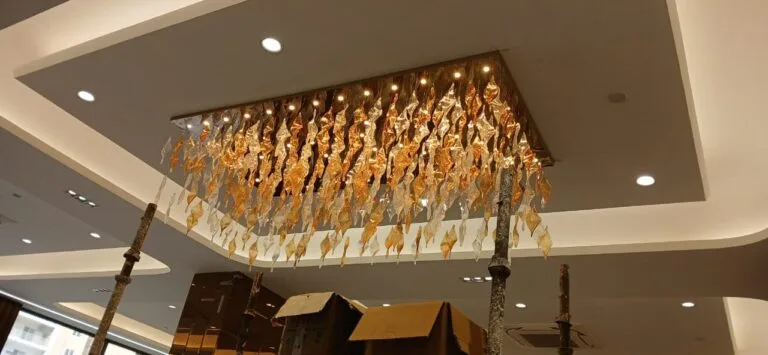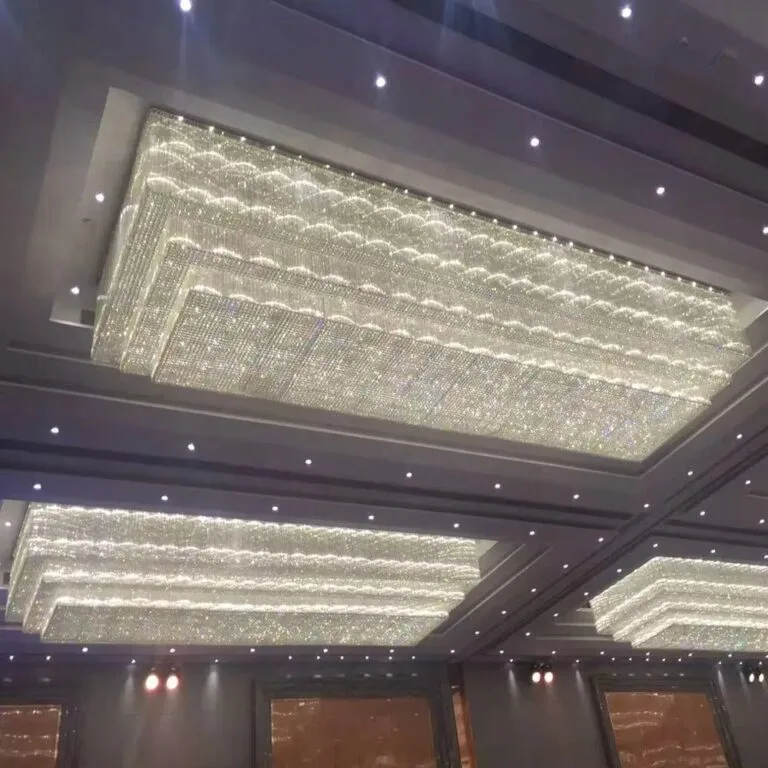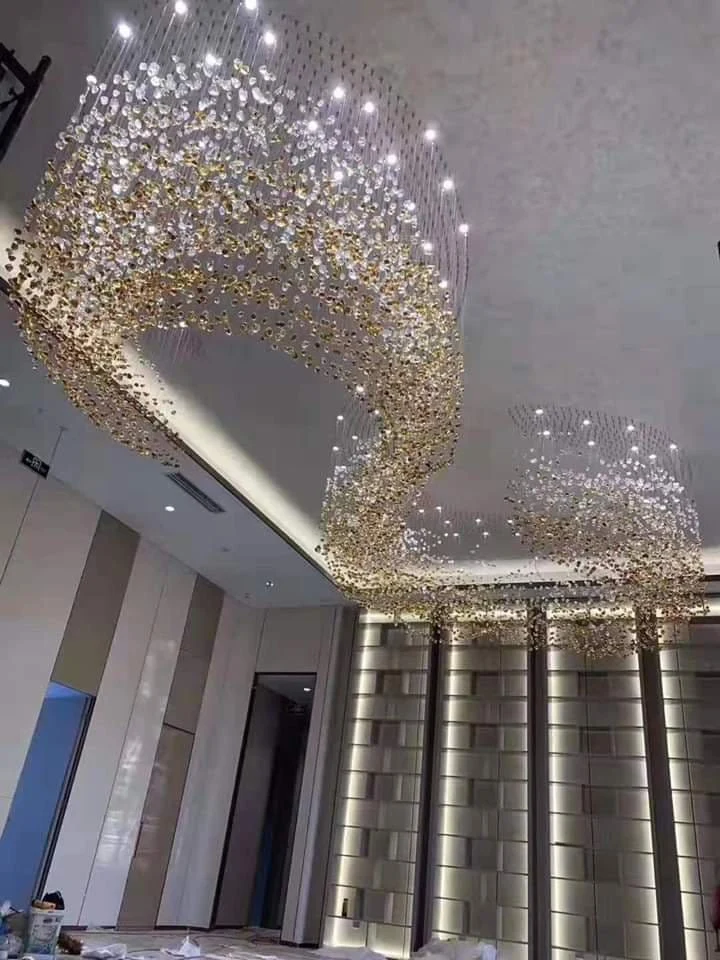
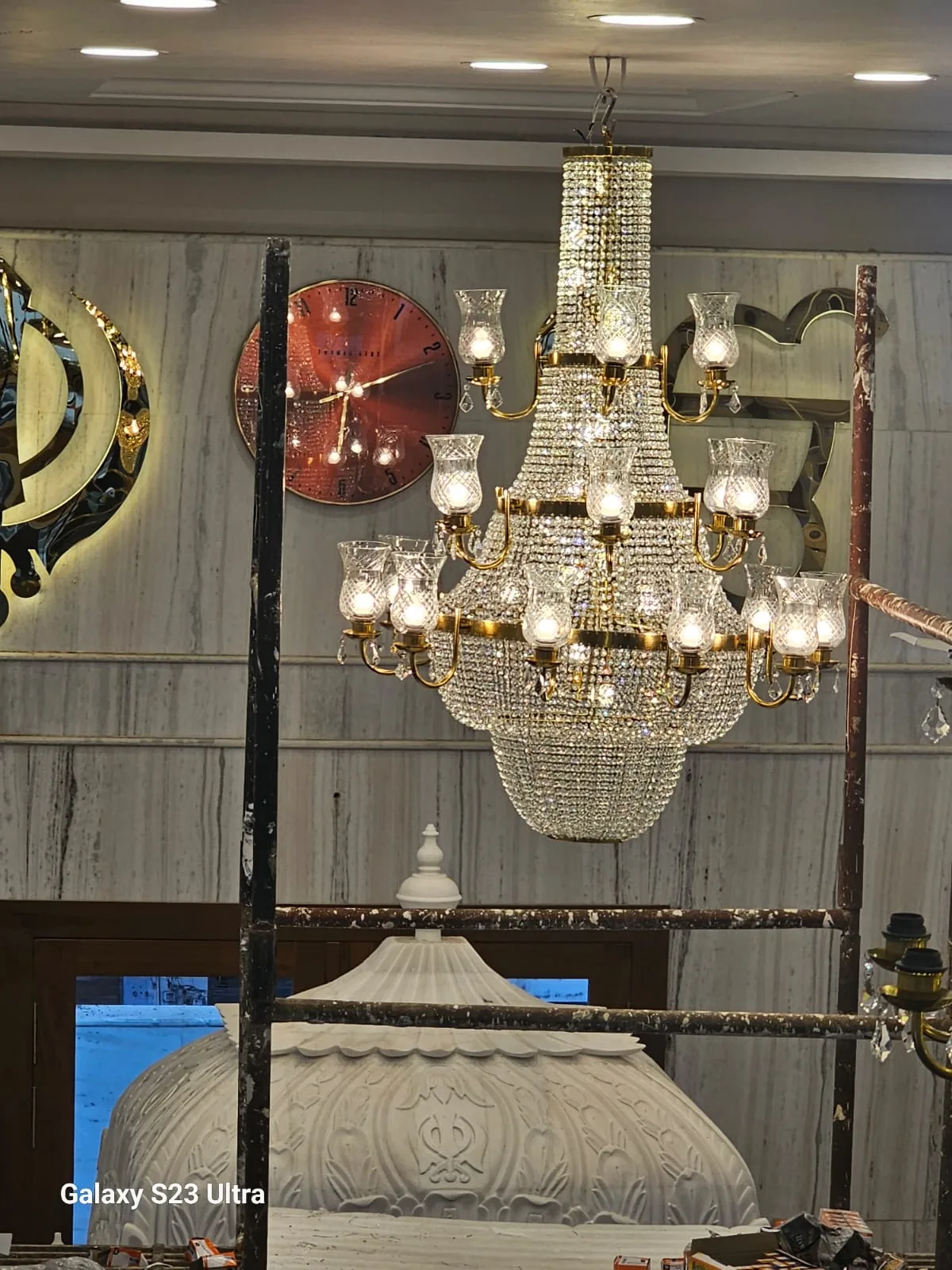
Have you ever sat in a darbar hall during evening kirtan and noticed how the light itself feels like part of the prayer? That glow is exactly what this gurudwara chandelier project in Jalna was built to honour.
The venue is Gurudwara Shri Prabhu Prem Seva Devi Saheb. The brief was beautiful in its simplicity: light worthy of the Guru Granth Sahib.
What did this Jalna gurudwara need?
A gurudwara is not a banquet hall. You cannot light it like one.
The darbar hall here is finished in soft white marble. The Ek Onkar and Khanda shine in gold on the walls. At the centre sits the carved marble palki, the most sacred spot in the room.
Here’s the thing. Light in this space has a job beyond brightness. It has to feel warm, still and respectful — the kind of glow that helps the sangat settle into the shabad, not a glare that distracts from it.
The committee wanted grandeur too. Gurudwaras across the world honour the Guru with the finest craft — the Guru Nanak Darbar in Dubai famously lit its Italian-marble prayer hall with chandeliers from Murano, Italy. Jalna deserved nothing less. But it deserved it made in India.
What did we install? The Maharaja crystal chandeliers
Four Maharaja-style chandeliers now light this darbar hall. And they are everything the name promises.
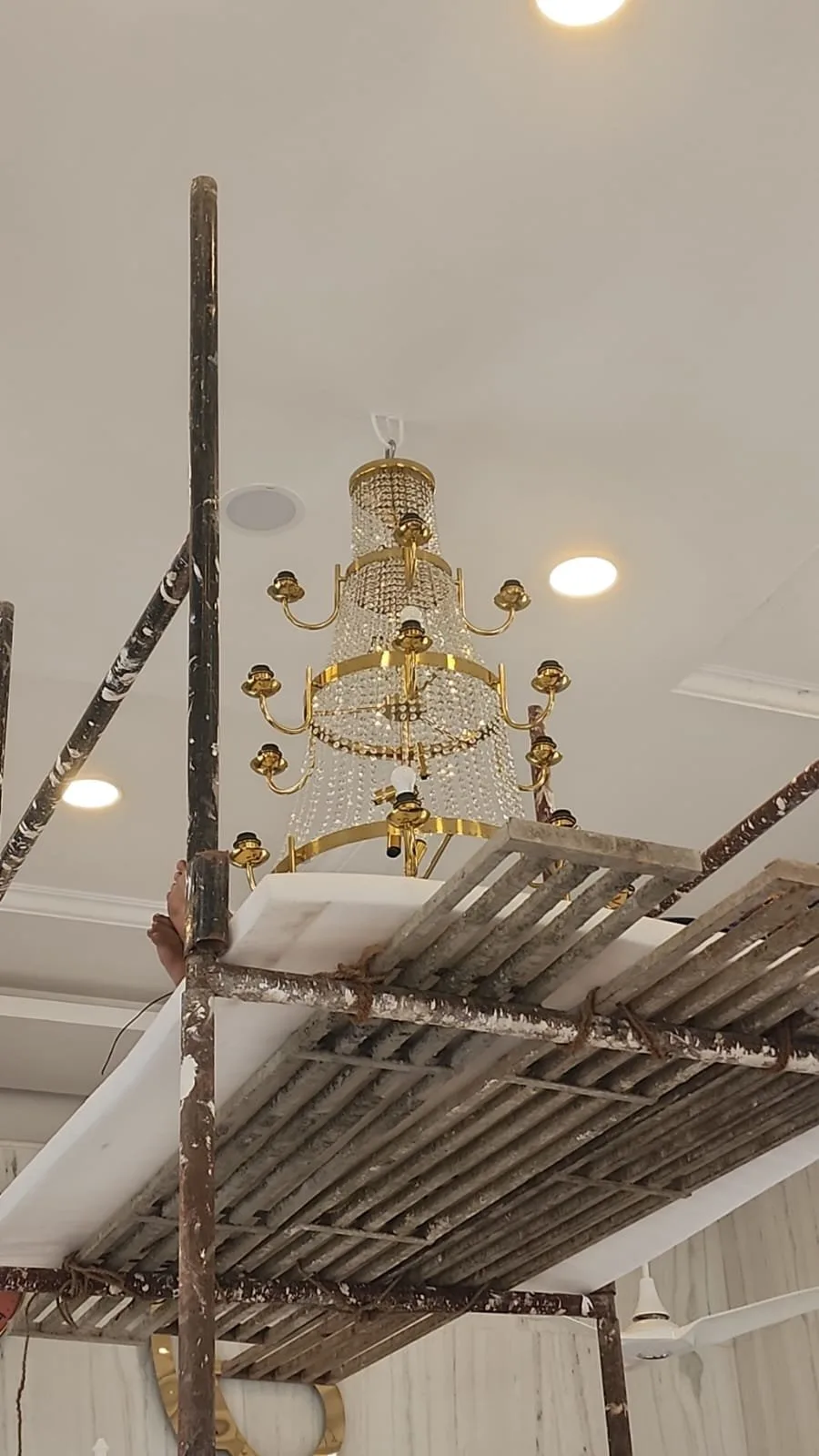
Look at the showpiece above the palki. Three tiers of gold-finish arms step outward like a crown. Each arm ends in a candle-style holder wrapped in a cut-glass shade — the same hurricane shades you see in royal Indian palaces.
Between the tiers, thousands of crystal beads hang in tight curtains, from the slim top column down to the full basket at the bottom. When the lamps come on, every strand catches the light and the whole fixture glows like a diya magnified a hundred times.
Now here is the detail most visitors miss. Those candle-style holders run on LED lamps, not flames or hot filaments. You get the romance of candlelight with none of the heat, soot or fire risk — exactly what a crowded prayer hall needs.
Each gurudwara chandelier was hung while the marble work was still being finished, so the mounting points, wiring and ceiling supports all went in cleanly — nothing retrofitted, nothing exposed.
Why a Maharaja-style gurudwara chandelier works in a darbar hall
Now you might be thinking — why this traditional style? Our hotel and banquet projects use sleek crystal rafts and modern sculptures. Why not here?
Because in a sacred space, tradition is the design language. The Maharaja form — tiered gold arms, candle shades, dense crystal — speaks the same visual language as the palki carvings and the gold Ek Onkar. A minimalist fixture would feel like it wandered in from an office lobby.
| What matters in a darbar hall | Maharaja crystal chandelier | Modern flat crystal raft |
|---|---|---|
| Feel | Royal, devotional, timeless | Sleek, contemporary, hotel-like |
| Matches sacred architecture | Yes — echoes palki and gold detailing | Often clashes with traditional interiors |
| Light quality | Warm candle-like glow, gentle sparkle | Even wash, less depth |
| Ceiling suited | Tall halls and domes | Standard or low ceilings |
| Symbolism | Light stepping down in tiers — fits the seat of the Guru | Neutral |
Lighting designers reach the same conclusion at the holiest Sikh site of all. The illumination of Sri Harmandir Sahib in Amritsar uses soft, warm, glare-free light so the architecture leads and the light serves — BEGA’s Golden Temple lighting reference shows that principle at work. Warm gold light, never harsh white. We tuned every fixture in Jalna to that same rule.
How was this sacred-space project built?
Let me explain why a gurudwara committee buying from a manufacturer — not an importer — changes everything.
Every chandelier in this project was manufactured in-house at our Greater Noida unit: the gold-finish framework, the candle arms, the cut-glass shades, the crystal dressing. No containers from China, no 60–120 day import wait. Custom builds like these ship in 15–20 working days.
That matters even more after installation. A gurudwara chandelier works hard — daily use, festival deep-cleans before Gurpurab, decades of service. Because JagMag builds what it sells, this gurudwara can get matching spare crystals, shades and parts even 10+ years from now, and our own technical team resolves any issue overnight. No waiting for a foreign technician.
JagMag Lights is a DPIIT-recognised, government-funded Make-in-India lighting manufacturer. Lighting the seat of the Guru with Indian-made craft felt right to the committee — and to us.
This is the same approach behind our other sacred-space work, like the clubhouse and temple chandeliers at SKA Divya Towers.
Planning lighting for your own gurudwara or temple?
If you serve on a gurudwara or mandir committee, here is what this Jalna project teaches:
1. Go warm. Keep the light golden and gentle, around the colour of a diya flame. Save crisp white light for the langar kitchen, never the darbar hall.
2. Choose LED candle styles. You get the traditional look with low power bills, no heat over the sangat and long lamp life.
3. Match the architecture. Gold frames beside gold detailing, crystal beside marble. Our story on chandeliers in India and their cultural meaning explains why these forms feel so much like home.
4. Plan the cleaning before you buy. Tiered crystal needs sewa too — our guide on how to clean a crystal chandelier shows the simple gloves-and-cloth method volunteers can follow.
5. Buy from a manufacturer. Custom sizes for your hall, faster delivery, spares for life. For smaller halls and homes, pieces like our gold amber crystal candelabra chandelier or a traditional cascading glass jhumar bring the same royal glow at house-of-worship or home scale.