
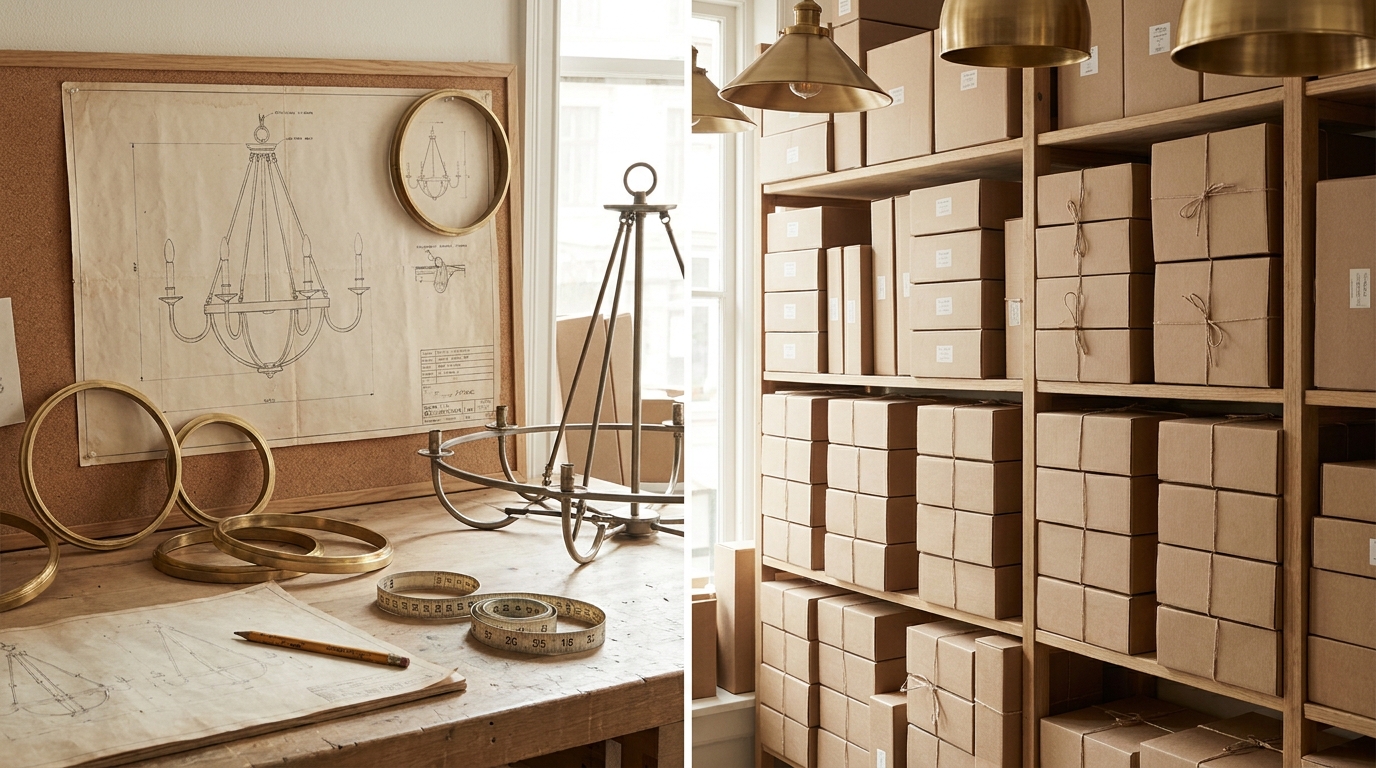
You are an interior designer. You promised a client a grand chandelier for the hotel lobby. The client signed off on the photo. The opening date is fixed.
Then the seller calls. The lobby needs a bigger size than the catalogue offers. A bigger size means a fresh order from abroad. Nobody can give you a firm date.
A year later, one arm cracks. You call the same seller. The model is no longer in the catalogue, so no spare arm exists.
Below, you will see how to tell a lighting manufacturer from a trader before you sign. You will also see why the difference matters on a project.
The short answer
A lighting manufacturer makes the light in its own factory, so it can change the size, match a reorder and keep spares. A trader buys finished lights and sells them on. So a trader can only offer what is in stock or in a catalogue. For a project with a fixed space and a fixed date, work with a manufacturer, and check the paperwork first.
Why a lighting manufacturer gives you more control
The real difference is control. A trader sells a finished product. If your ceiling needs a different size, the trader has to go back to whoever made the light.
If that maker is abroad, the wait gets long. First the factory has to make your batch. One export lamp factory in China lists 15 days for production alone.
Then the lights travel by sea. Shipping from China to India takes 15 to 30 days.
Then customs has to clear the cargo. A study by Indian Customs found that clearing imports at seaports took about three and a half days on average in 2023.
Then a truck takes the lights to the seller, and a courier brings them to your site. Add it all up, and a new size from abroad can take well over a month.
A manufacturer controls every step on its own floor. The team draws the light, builds the metal frame, applies the finish and puts it together. A change in size happens at the drawing stage, before any metal is cut.
Reorders work the same way. Say the hotel opens a second wing next year. A manufacturer still has the drawing and can make the second batch to match the first.
Spares follow the same logic. The company that built a chandelier can build one arm of the same chandelier again. A seller who never built the chandelier can only check the shelf.
How to check a maker yourself
Many visiting cards say “manufacturer and supplier”. The paperwork tells you which one is true. Here are five checks.
- Ask for the GST number and look it up on the GST portal’s “Search Taxpayer” page, where the record shows the main business activity.
- Look for “Factory / Manufacturing” there, because the official GST form lists it apart from “Wholesale Business” and “Retail Business”.
- Ask for the ZED certificate, because the government gives ZED only to manufacturing MSMEs (micro, small and medium businesses).
- Send your drawing, ask for one change such as a new width, and wait for a firm date.
- Ask in writing how many years the company will keep spare parts and whether a reorder will match the first batch.
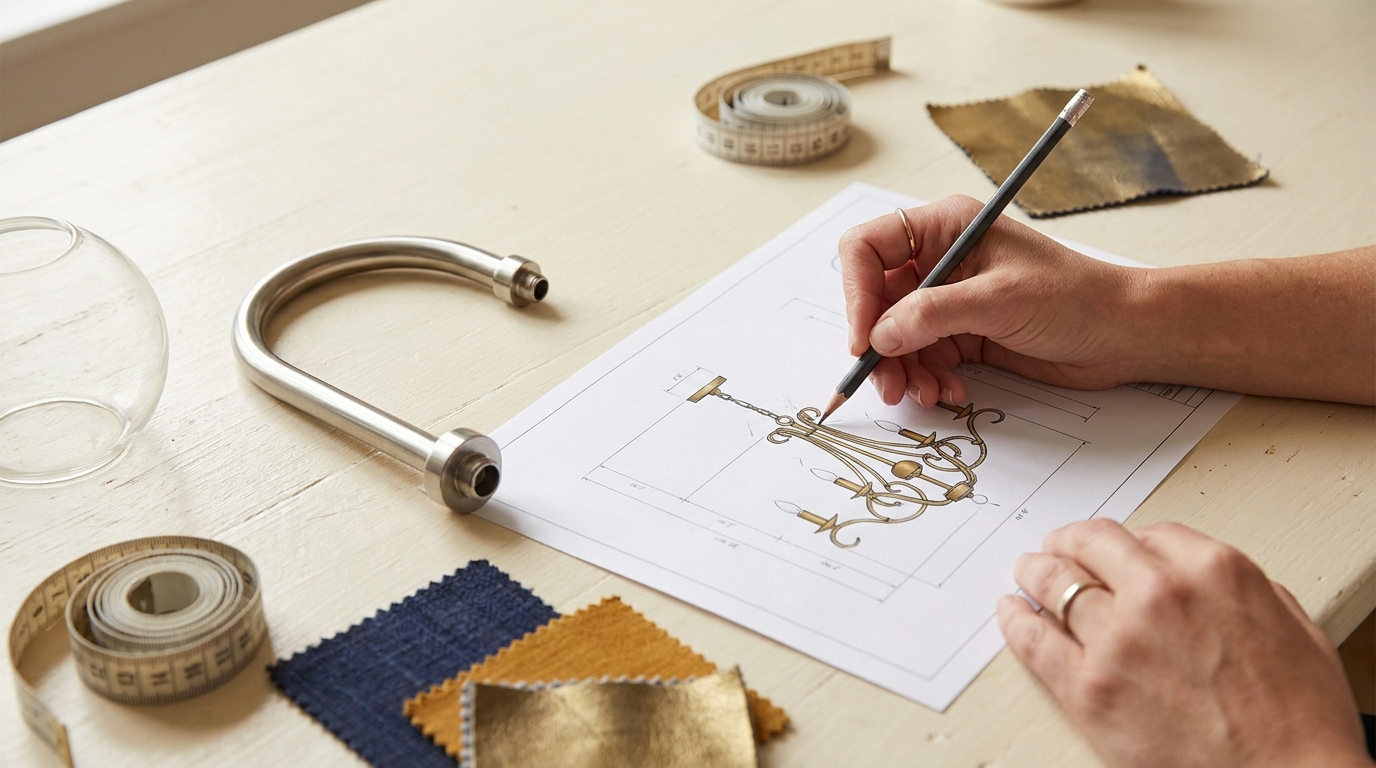
A maker can answer the last two checks on its own. A trader has to ask the maker first.
Side by side
| What you care about | JagMag (manufacturer) | A lighting trader |
|---|---|---|
| A different size | Yes, custom in 15 to 20 working days | Only the sizes in the catalogue |
| A reorder that matches | Made again in our own factory | Depends on the next batch from the maker |
| A spare part later | Kept for 10+ years | Only if stock is left |
| Brands to choose from | One maker’s range | Many brands under one roof |
Where a trader is better
A good trader gives you range. In a market like Delhi’s Bhagirath Palace, one lane sells everything from small bulbs to crystal lights.
A trader can also hand you a standard light the same day. For a small home job in a standard size, that speed is useful. A maker is the better choice when the size, the date or the second batch matters.
What we do at JagMag
JagMag Lights is a decorative lighting manufacturer in Greater Noida, Uttar Pradesh. We have made lights in our own factory since 2015. Metalwork, crystal work and assembly all happen on our own floor.
Our custom lights start from a photo, a sketch or your drawing. We check the width, the drop and the ceiling height early. Most custom pieces are ready in 15 to 20 working days, and we confirm the date before work starts.
For one clubhouse lobby in Greater Noida, we made a custom crystal chandelier about 18 feet tall. We revised the drawings with the project team and the architect. You can read the full story on the Purvanchal crystal chandelier project page.
Our K9 crystal raindrop chandelier shows the range a maker can offer. One design comes in many round and rectangular sizes, up to 4 ft by 8 ft. The frame is 304 stainless steel, the same grade as a good kitchen sink.

Every reorder is made in the same factory, so a reorder matches the first batch. We keep spare parts for 10+ years.
Our stainless steel parts carry a lifetime warranty against rust on orders from 4 October 2026, as our legal policies explain. You can see our ZED certificate and DPIIT recognition on our certifications page.
Behind every frame are people. They shape the metal, prepare the crystal and put each piece together. A lobby with warm light and a well-placed centrepiece feels calm and welcoming, the kind of harmony Vastu thinking values.
FAQs
What is a lighting manufacturer?
A lighting manufacturer is a company that makes lights in its own factory. The company builds the frame, adds the finish and puts the light together. So it can change sizes, make matching reorders and supply spare parts.
What is the difference between a lighting manufacturer and a trader?
A manufacturer makes the lights, while a trader buys finished lights and sells them on. A trader often offers more brands. A manufacturer offers custom sizes, matching reorders and spares.
How do I check if a lighting company is a real manufacturer?
Look up the company’s GST number on the GST portal and read the business activity. Then ask for a ZED certificate, send a drawing for a size change, and ask about spares in writing.
Can I get a custom size for just one project?
Yes, a manufacturer can usually make a custom size, even for a single light. At JagMag, most custom pieces are ready in 15 to 20 working days.
Is JagMag Lights a manufacturer or a trader?
JagMag Lights is a manufacturer. We make our lights in our own factory in Greater Noida, Uttar Pradesh, and we have done so since 2015.
Nature gives the material. Human hands give it meaning. Light brings it to life. That is JagMag.
Planning a project? Browse our crystal chandeliers and all chandeliers, or compare hotel lighting suppliers. Learn what ZED certification really means. Need a part for an old light? See chandelier repair. Not sure? Video-call us.
Sources
- HKTDC Lighting Fair – export lamp maker listing (15-day production lead time)
- Shipa Freight – China to India ocean freight transit times
- CBIC National Time Release Study 2023 – import release time at seaports (85 hours 42 minutes)
- Form GST REG-01 – nature of business activity at each premises
- Tally Solutions – how to verify a supplier’s GSTIN on the GST portal
- LookupTax – GSTIN search returns the nature of core business activity
- Ministry of MSME – ZED certification scheme guidelines (eligibility)
- So Delhi – lighting shops in Bhagirath Palace