
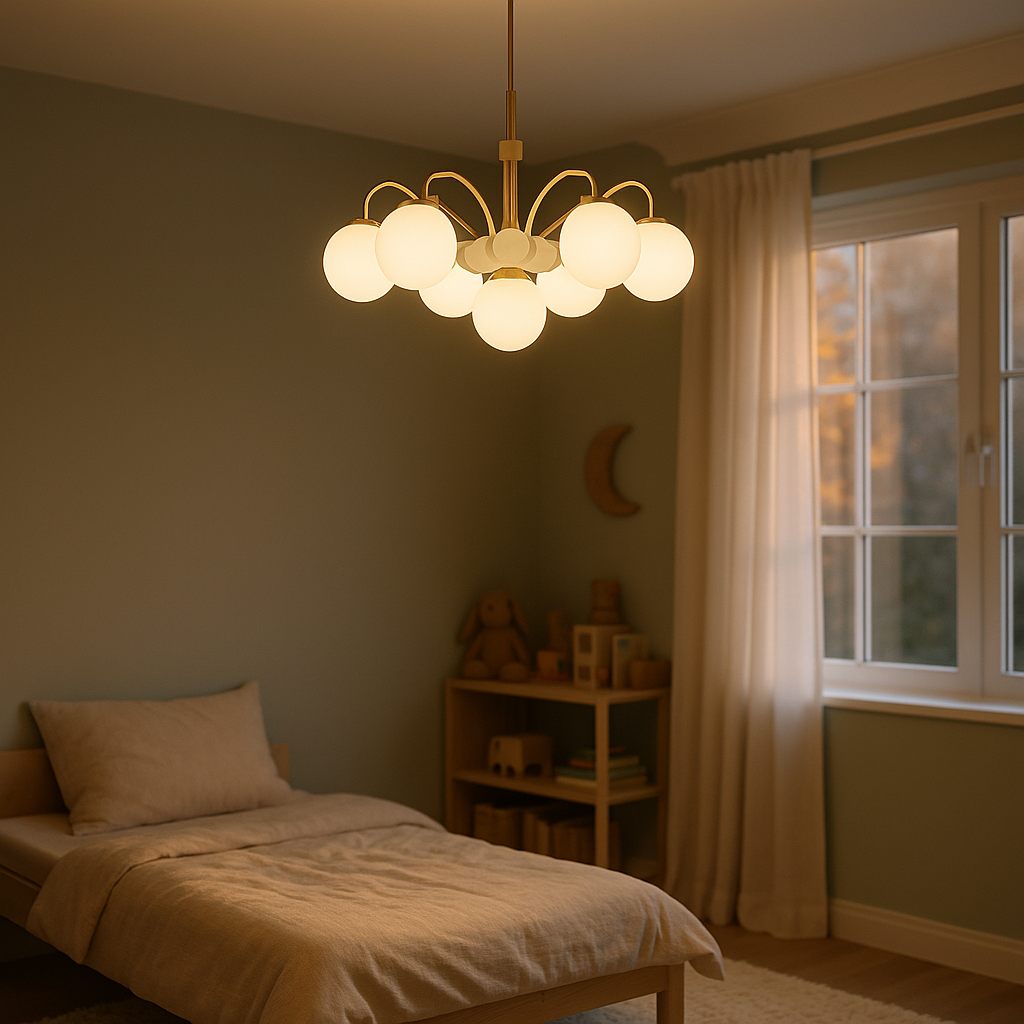
A child’s room is so much more than a place to sleep. It’s where bedtime stories are read in a low voice, where a soft glow keeps the monsters away, where homework gets finished and blanket forts get built. The right chandelier can turn an ordinary bedroom into a warm, comforting space that feels safe and just a little bit magical — and the wrong one can leave it feeling harsh, glaring, or unsafe.
The good news? Choosing a beautiful, kid-friendly chandelier is easier than it looks. Here’s how to get it right — with the styles we love for every age along the way. A quick note on who is behind these picks: JagMag Lights is a Make-in-India lighting manufacturer based in Greater Noida. We design and build these chandeliers ourselves, keep spare parts available for 10+ years, and ship across India with clear, upfront pricing.
The little mistakes that make a lovely room feel wrong
Most parents fall for a light because of how it looks in the showroom, then live with the surprises later. The usual ones: a cool, bluish “white” light that makes a cosy bedroom feel like a classroom; a fixture hung low enough for a bouncing toddler or a top-bunk adventurer to reach; or delicate glass crystal right above the play zone, where one flying pillow becomes a real problem.
None of this means “no chandelier.” It simply means choosing with your child’s real day in mind — the 2am feed, the fear of the dark, the reading-in-bed phase, and yes, the inevitable airborne toy.
Light that helps little ones wind down
Picture your child lying in bed under a soft, golden glow — the colour of a sunset, not a hospital corridor. That feeling is the whole game. Warm light gently says “the day is ending” and helps children settle; cool, bright white does the opposite and can leave them wired right at bedtime.
You don’t need to overthink it. Choose LED bulbs in a warm white tone (around 2700-3000K) and, if you can, put them on a dimmer so the same light can go bright for play and soft for stories. Add a small amber night-light for feeds and midnight trips, and the room quietly does its job. That’s honestly about all the science you need.
Beautiful and safe — you don’t have to choose
Safety in a child’s room is mostly common sense once you know what to look for. LED fixtures stay cool to the touch, so there’s no hot bulb to worry about. Rounded shapes and smooth edges are far kinder than sharp faceted crystal. A secure ceiling mount and a sensible hanging height keep everything well out of reach.
For lower ceilings, a flush or semi-flush fixture sits close to the ceiling and stays safely overhead. For tall, airy rooms, a hanging chandelier becomes a gorgeous focal point with plenty of room to spare.
Styles we love for children’s rooms
Ceramic chandeliers cast a soft, diffused glow and have a gentle, organic shape that suits nurseries and younger children beautifully. The Lotus Ceramic Petal Chandelier is a favourite of ours for exactly this — its petal-shaped shades scatter light softly with no harsh glare, and it looks elegant enough that you’ll still love it when your toddler has become a teenager.
Nature-inspired designs bring a quiet sense of wonder. The Ginkgo Leaf Ceramic Chandelier drapes leaf shapes overhead like a calm little canopy — imaginative for a child, and tasteful enough for the rest of the home.
Modern LED fixtures are the practical heroes: even, efficient light with almost no upkeep. For lower ceilings, a round LED disc sits close overhead and keeps glare down — lovely above a study desk or a bunk.
Acrylic decorative pieces give you the sparkle of crystal that so many parents love, but lighter and far more forgiving when life gets boisterous.
Ideas by age
Nursery (0-3): keep it soft and soothing — warm, dimmable light, a rounded ceramic fixture, nothing within reach, and a gentle night-light for those 2am feeds.
Young children (4-8): personality starts to matter. Pick a playful-but-grown-up shape they won’t outgrow, with good, kind light for reading and drawing at the desk.
Tweens & teens (9+): let their taste lead. A sleek, modern designer piece feels special — just keep that warm, dimmable evening setting that protects sleep.
Our favourites at JagMag Lights
If you’d like somewhere to start: the Lotus Ceramic Petal Chandelier is our go-to for nurseries and young children — soft, safe, and quietly elegant. The Ginkgo Leaf Ceramic Chandelier brings nature indoors with a calming, diffused light. And for lower ceilings or a desk corner, a round LED fixture keeps things bright and clutter-free. Browse the full chandelier collection to see finishes and sizes, and if you’re weighing up brightness or fitting, our guides on getting the light level right and hanging a chandelier safely are there when you need them.
A few questions parents often ask
Which chandelier should I buy for a young child’s room? Start with a rounded ceramic or acrylic design in warm light. The Lotus Petal is a lovely first choice — soft, safe, and elegant enough to grow with the room.
Warm light or cool light? Warm, around 2700-3000K. It helps children relax and wind down at bedtime.
Is a hanging chandelier safe for kids? Yes, as long as it hangs well out of reach. For low ceilings, choose a flush or semi-flush fixture instead.
Will my child outgrow it? Not if you skip the cartoon themes and choose an elegant shape — the right piece carries a room from cot to teenager.