
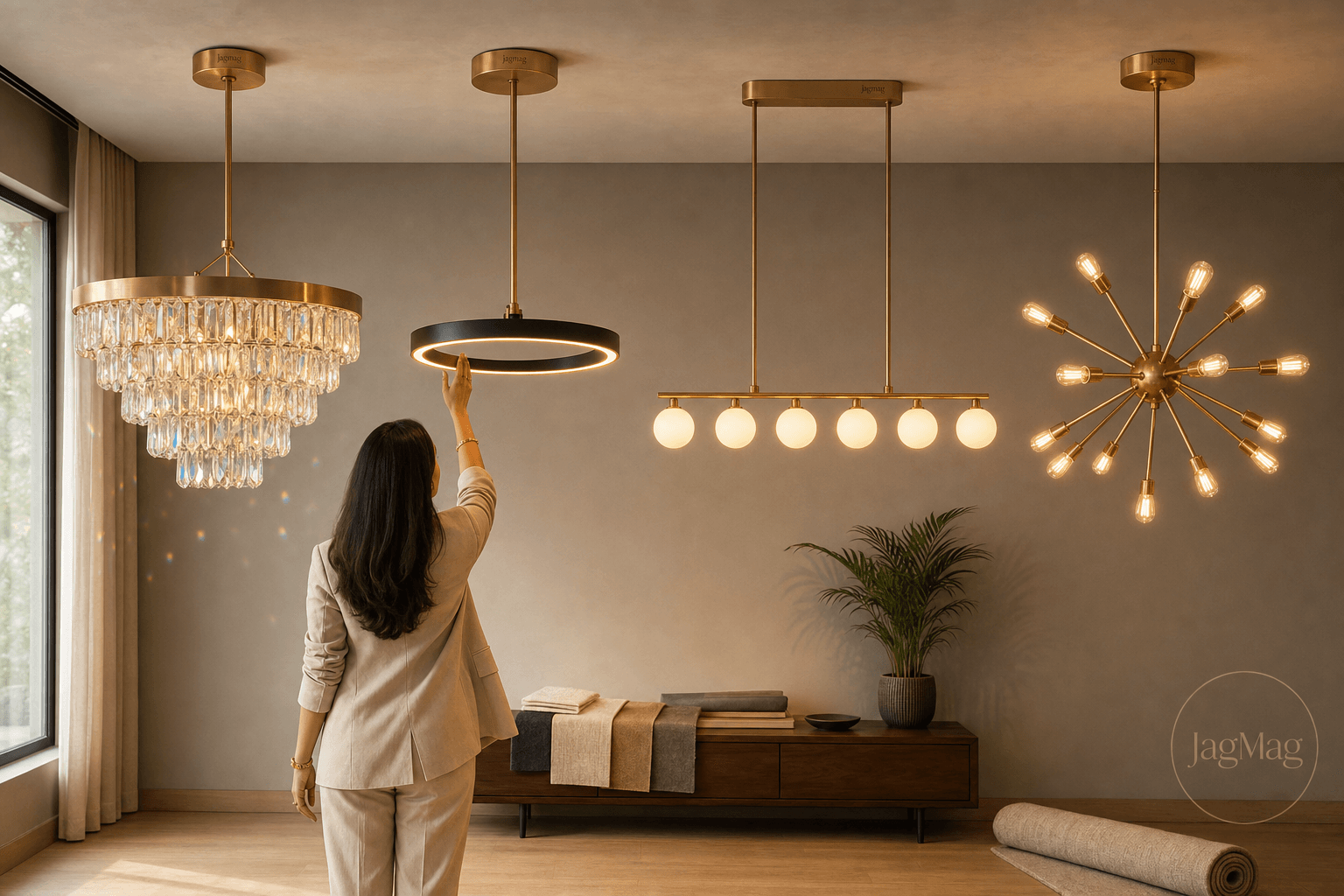
Walk into a room and look up. The light hanging from the ceiling changes everything — the mood, the warmth, the way the whole space feels. That is the magic of a chandelier. But once you start shopping, the many types of chandeliers can leave your head spinning.
Here’s the thing. You don’t need to know every fancy name. You just need to know which style fits your room, your ceiling, and your budget.
Let me make it simple for you. In this guide we’ll walk through the 9 main types of chandeliers, one by one, in plain language — no jargon, no confusion.
Types of chandeliers, made simple
There are 9 popular types of chandeliers: crystal, ring, linear, drum, cascade, sputnik, candle (empire), glass, and modern LED sculptural designs. Crystal and candle styles suit classic Indian homes. Ring, linear, and sputnik suit modern flats. Drum and glass work almost anywhere.
Pick the one that matches your room’s size and your taste. That’s really the whole game.
On this page:
- 1. Crystal chandeliers
- 2. Ring chandeliers
- 3. Linear chandeliers
- 4. Drum chandeliers
- 5. Cascade chandeliers
- 6. Sputnik chandeliers
- 7. Candle (empire) chandeliers
- 8. Glass chandeliers
- 9. LED sculptural chandeliers
- Which one should you buy?
- Quick comparison table
- FAQs
1. Crystal chandeliers — the showstopper
This is the one most people picture. Tiny cut-glass drops that catch the light and throw little sparkles across the room.
Switch it on at night, and the whole space feels warmer and richer. Perfect for a formal living room or a big foyer where you want guests to go “wow”.
Want to compare more options? Browse the full range of crystal chandeliers made in India — every shape, size and price in one place.
Love that sparkle? Our Wisteria Crystal Branch Chandelier gives you that drama in a slim, modern shape — not the heavy old-fashioned look. Want the full story on crystal? Read our ultimate guide to crystal chandeliers.
2. Ring chandeliers — clean and modern
Picture a glowing circle floating in the air. No fuss, no clutter.
Ring chandeliers (some call them halo lights) are a favourite in new flats and open kitchens. They give bright, even light and keep your sightlines open, so the room feels bigger.
Our Modern Ring Chandelier in black is a clean pick for a contemporary Indian home.
3. Linear chandeliers — made for long tables
Got a long dining table or a kitchen island? A round light over it always looks a little off.
A linear chandelier runs side to side, like a bar of light. It spreads the glow evenly across the whole table, so no one eats in shadow.
The Glass Ring Linear Light is a lovely fit here. See more ideas in our dining room chandelier guide.
4. Drum chandeliers — soft and cosy
A drum chandelier wraps the bulbs inside a round fabric or metal shade. The light comes out soft and gentle, never harsh. Browse JagMag’s fabric chandeliers for cloth-shade drum designs.
This is the easy-going one. It suits a bedroom, a study, or a small living room — and it blends with almost any decor. If you can’t decide, a drum is a safe, stylish bet.
5. Cascade chandeliers — drama for tall ceilings
Now, do you have a double-height living room or a grand staircase? This is your moment.
A cascade chandelier pours down in layers, like a waterfall of light. Strands of crystal or glass tumble from top to bottom and fill that tall empty space beautifully.
It’s a bold choice. But in the right spot, nothing else comes close. Design site Houzz has a lovely photo gallery of cascading chandeliers if you want inspiration.
6. Sputnik chandeliers — bold and playful
Named after the old space satellite, this one has thin arms shooting out from a centre ball, each tipped with a small bulb. It looks like a starburst.
Sputnik chandeliers are fun, modern, and full of personality. Great over a bar counter or in a room that needs a little edge.
7. Candle (empire) chandeliers — old-world charm
This is the classic royal look. Curved arms, each holding a candle-shaped bulb, often stacked in tiers.
It brings that grand, heritage feel — think a Rajasthani haveli or a formal pooja-and-dining space. For a traditional Indian home, a candle-style chandelier never goes out of fashion.
The Bronze 12-Light Branch Chandelier carries that warm, classic charm with a twist.
8. Glass chandeliers — calm, warm light
Not everyone wants sparkle. Some of us just want a calm, pretty glow.
Glass chandeliers do exactly that. The light passes through the glass and comes out soft and warm. No sharp glare. Just a cosy, settled feeling — lovely for a relaxed living room.
9. LED sculptural chandeliers — modern art
These look less like a light and more like a piece of art. Branches, waves, or geometric shapes, all lit with tiny LEDs.
They use very little power and last for years. If your style is modern and minimal, this is the type of chandelier that makes people stop and stare.
Which type of chandelier should you buy?
You might be thinking, “Okay, but which one is right for MY home?” Fair question. With so many types of chandeliers out there, the choice comes down to two things: your room size and your taste. Here’s my simple advice:
For a classic, formal home, go crystal or candle. For a modern flat, pick ring, linear, or sputnik. For a bedroom or small room, a drum or glass chandelier feels just right. And for a tall, double-height space, only a cascade does it justice.
Still unsure? Our chandelier buying guide walks you through size and budget too. You can also browse room-by-room ideas in our living room chandelier guide.
Quick comparison table
| Type | Best room | The feeling |
|---|---|---|
| Crystal | Living room, foyer | Sparkle and luxury |
| Ring | Modern flat, kitchen | Clean and open |
| Linear | Long dining table, island | Even, balanced light |
| Drum | Bedroom, study | Soft and cosy |
| Cascade | Stairwell, double-height hall | Big drama |
| Sputnik | Bar, modern lounge | Bold and playful |
| Candle / empire | Formal dining, haveli style | Royal and classic |
| Glass | Relaxed living room | Calm, warm glow |
| LED sculptural | Minimal modern home | Like a piece of art |
Want to compare materials too? Big retailer Wayfair has a handy overview of chandelier types worth a look.
FAQs about types of chandeliers
What are the most common types of chandeliers?
The most common types of chandeliers are crystal, ring, linear, drum, cascade, sputnik, candle (empire), glass, and modern LED designs. Each one suits a different room and mood.
Which chandelier is best for an Indian living room?
For most Indian living rooms, a crystal or glass chandelier works beautifully. Crystal gives sparkle and a rich feel; glass gives a soft, warm, everyday glow.
What type of chandelier suits a small room?
A drum or a small ring chandelier is perfect for a small room. They give gentle light without crowding the ceiling.
Are crystal chandeliers hard to clean?
Not really. A gentle wipe every few months keeps them sparkling. Choose acrylic-style drops if you want even less fuss.
Now you know the main types of chandeliers and what each one does best. So, which one is calling your name? Tell us your room and ceiling height — we’ll happily help you pick the perfect one.