
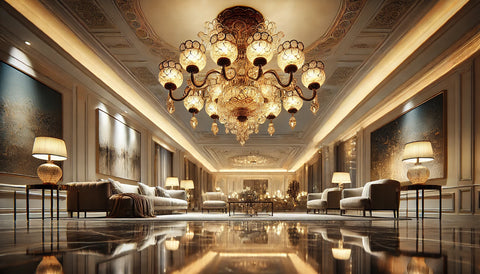
Many homeowners ask about Vastu for chandeliers because lighting affects both mood and the visual energy of a room. The most useful way to approach the topic is practically: use Vastu as a placement framework, but also respect how a room actually functions. A chandelier should not only align with directional beliefs. It should also feel proportionate, comfortable, and well placed in the real space.
Key Takeaways
- Vastu guidance is most useful when combined with practical lighting logic.
- Direction, placement, and room function should all be considered together.
- A chandelier should support harmony, not create visual or physical imbalance.
- Warm, calm lighting usually feels better in living and rest areas.
- Even within Vastu thinking, bad scale and bad placement are still mistakes.
Why Lighting Matters in Vastu Conversations
In Vastu discussions, lighting is often associated with energy, clarity, and the emotional feel of a room. That does not mean every room needs a chandelier, or that every chandelier placement must be symbolic first and functional second. The better approach is to use Vastu as one decision layer within a broader lighting plan.
General Placement Logic
Most Vastu-oriented guidance emphasizes balance, uncluttered light flow, and avoiding heavy visual pressure in sensitive zones. In practice, that means a chandelier should feel centered, intentional, and comfortable rather than awkwardly forced into a spot for symbolic reasons alone.
Room-by-Room Thinking
Living Room
A chandelier in the living room often works best as a welcoming central feature, provided it is scaled well and not hung oppressively low. Warm light generally helps the room feel calmer and more inviting.
Dining Room
Dining chandeliers often suit a centered position over the table because that creates both visual order and practical focus. The chandelier should support gathering, not dominate uncomfortably.
Bedroom
Many people prefer restraint here. If a chandelier is used in a bedroom, avoid heavy, low, or overly intense placement directly above the main resting zone unless the room has enough height and the design feels calm.
Prayer or Meditation Areas
These spaces usually benefit from simple, clean, and calm lighting rather than dramatic chandelier statements.
What to Avoid
- oversized chandeliers in low-height rooms
- harsh glare in rest-oriented spaces
- low hanging fixtures over sensitive circulation or bed zones
- placing a chandelier only for symbolic reasons when the room layout clearly rejects it
Where Practical Lighting and Vastu Agree
Interestingly, many practical lighting principles already support what people seek from Vastu: balance, calmness, good flow, and a room that feels clear rather than heavy. Good proportion, controlled brightness, and intentional placement usually improve both everyday comfort and Vastu confidence.
Frequently Asked Questions
Can I use a chandelier in a Vastu-conscious home?
Yes. The key is to place it thoughtfully, with attention to both room function and the placement logic you want to follow.
Should a chandelier always be centered?
Often yes, but not blindly. It should feel visually balanced and appropriate to the room layout.
Is a bedroom chandelier okay according to Vastu?
It can be, but it should be calm in scale and lighting behavior, and should not create visual or physical pressure over the sleeping zone.
Does Vastu replace practical lighting design?
No. The strongest results come when Vastu thinking and practical lighting design support each other.
Further Reading
Explore More
Explore Jagmag Lights? chandelier collection and the project archive to compare placement thinking across real spaces.