
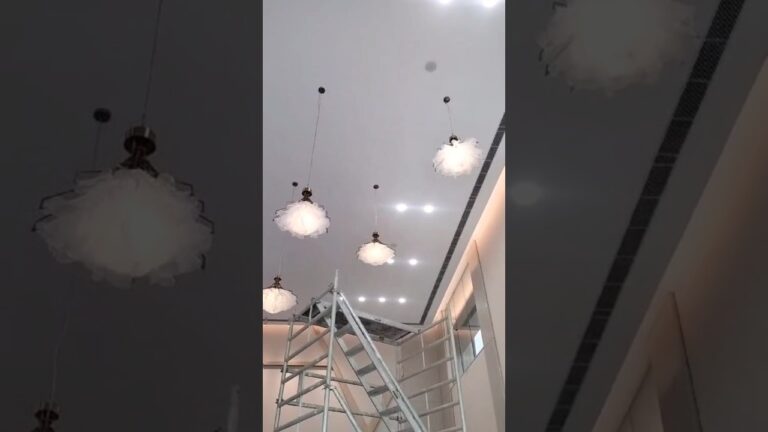
Kinetic chandeliers are often described as the future of chandeliers, but that phrase only makes sense if we understand what they actually do. A kinetic chandelier is not simply a decorative fixture with a dramatic shape. It is a chandelier that uses motion as part of its design language, its spatial impact, or both.
That movement can be subtle or theatrical. It might open, rotate, rise, descend, ripple, or shift in programmed cycles. The important point is that motion becomes part of the lighting experience. In premium interiors, that can turn a chandelier from a static centerpiece into a timed, responsive, and immersive architectural element.
Key Takeaways
- Kinetic chandeliers use designed motion, not just dramatic shape.
- They work best in spaces with volume, sightlines, and experiential goals.
- LED integration made kinetic lighting more practical.
- Maintenance and service access matter from day one.
- Not every room benefits from motion-based lighting.
What Makes a Chandelier Kinetic?
A chandelier becomes kinetic when movement is intentionally designed into the fixture. That movement may come from motorized assemblies, controlled lift systems, articulated parts, or programmed modules that change the silhouette over time. In other words, the chandelier is no longer defined only by shape, material, and light output. It is also defined by sequence and behavior.
Why Motion Matters in Lighting
In many luxury spaces, people are not only buying illumination. They are buying atmosphere, identity, memory, and visual distinction. Motion helps with that because it adds a time-based layer to the installation. The chandelier does not just exist in the room. It performs in the room.
This is one reason kinetic chandeliers are becoming more relevant in hotel lobbies, premium sales galleries, clubhouses, event spaces, double-height residences, and brand-driven commercial interiors.
How Kinetic Chandeliers Usually Work
Most kinetic chandeliers combine four systems: structure, motion, light, and control. The best fixtures are the ones where those systems feel unified. The worst are the ones where motion feels added on rather than designed in.
- Structure: frame, suspension, and engineered load path
- Motion: motors, actuators, winches, gears, or linkage assemblies
- Light: usually integrated LED systems or carefully placed luminous elements
- Control: programmed movement logic, timing, dimming, and show behavior
Why LEDs Accelerated the Rise of Kinetic Chandeliers
Kinetic chandeliers became more practical as LED technology improved. LEDs are smaller, more efficient, and easier to integrate into compact or moving forms than traditional lamps. Lower heat also helps when decorative components, fabrics, diffusers, or tight assemblies are involved.
Where Kinetic Chandeliers Add Real Value
The strongest use case is not every room. Kinetic chandeliers are at their best when the ceiling volume, sightlines, and audience behavior all support them. In contrast, a simple low-height living room may benefit more from a well-scaled static chandelier than an overcomplicated moving one.
What Buyers Should Check Before Choosing One
- ceiling structure and engineered load support
- service access for motors, drivers, and control components
- movement noise in quiet spaces
- control behavior during normal operation and maintenance
- replacement parts and long-term support
Frequently Asked Questions
Are kinetic chandeliers suitable for homes?
Yes, but usually in larger, carefully planned homes where ceiling height, service access, and architectural intent support the installation.
Do kinetic chandeliers provide enough general light?
Sometimes, but many work best as statement pieces supported by architectural lighting and secondary layers.
Do moving chandeliers require more maintenance?
Usually yes. Motion systems introduce additional components that need access, monitoring, and long-term service planning.
Why are kinetic chandeliers expensive?
Because they combine decorative design with engineered structure, control logic, and motion hardware rather than functioning as simple static fixtures.
Further Reading
Explore More
To evaluate kinetic ideas in real installations, review Jagmag Lights’ project archive and explore the chandelier collection for static, LED, and custom directions.